Nature · 35 free printables
Solar System Coloring Pages
Ringed planets and astronauts driving rovers, space pages for a classroom unit on the solar system.
35 free printable solar system coloring pages
Tap a drawing to see it full size and flip through the set. Press + to collect several and print them as one PDF.
- See it on Amazon
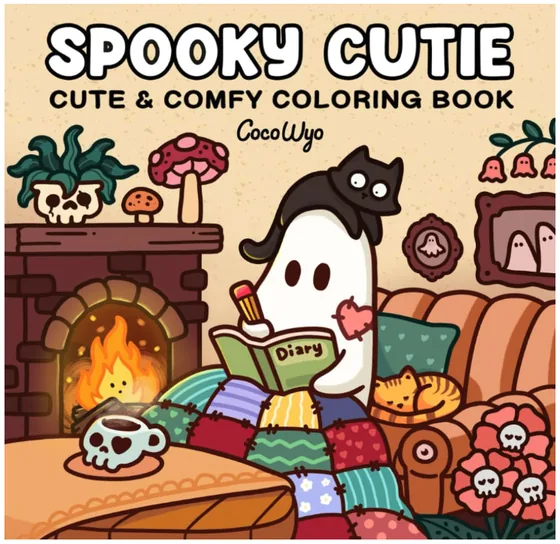
The original: weird and comfy, a world of mystical yet cozy creatures deep in their quirky vibes. Printed by Amazon: 88 pages at 8.5 by 8.5 inches, drawings on one side only.
Creepy characters drawn round and friendly, printed one side only.
- See it on Amazon
Guangna acrylic paint markers, 240 colorsMarkers
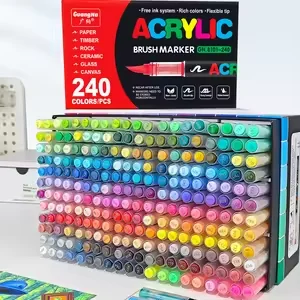
Opaque acrylic ink through a brush tip that goes from 1 mm to 6 mm, for the flat solid color that bold-and-easy pages look best in and a felt tip cannot match. They need weight under them: a single-sided book page or 120 gsm paper, not ordinary copy paper.
Opaque brush-tip acrylic for flat, solid color on bold pages.

- See it on Amazon
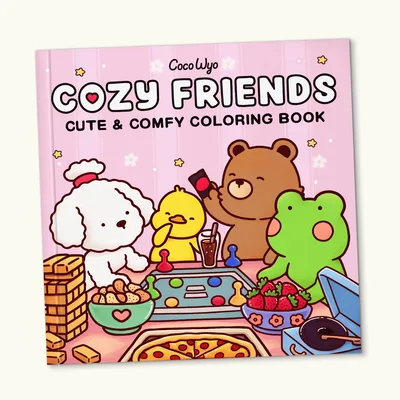
The book most people mean by Coco Wyo: animal friends doing laundry, cooking and cleaning, with small stories hidden in each scene. Printed by Amazon: 88 pages at 8.5 by 8.5 inches, drawings on one side only.
Bold, simple outlines and cute animals, done in an evening.
- See it on Amazon
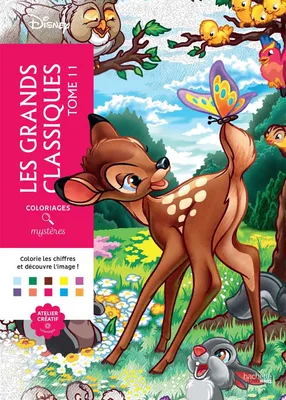
Coloriages Mystères: Grands Classiques 11Book
The eleventh volume of the French series, illustrated by Jeremy Mariez. A hundred numbered pages across Encanto, Tangled and Cars, in the large format the series keeps. French edition: the pages are numbers and a color key, so nothing needs reading.
Numbered mystery pages across Encanto, Tangled and Cars.

- See it on Amazon
The original: weird and comfy, a world of mystical yet cozy creatures deep in their quirky vibes. Printed by Amazon: 88 pages at 8.5 by 8.5 inches, drawings on one side only.
Creepy characters drawn round and friendly, printed one side only.
- See it on Amazon
Guangna acrylic paint markers, 240 colorsMarkers
Opaque acrylic ink through a brush tip that goes from 1 mm to 6 mm, for the flat solid color that bold-and-easy pages look best in and a felt tip cannot match. They need weight under them: a single-sided book page or 120 gsm paper, not ordinary copy paper.
Opaque brush-tip acrylic for flat, solid color on bold pages.
Keep going
More free coloring pages to print next
Same 300 dpi PDFs, still free. Sheets you added to your pack stay there when you switch collections.
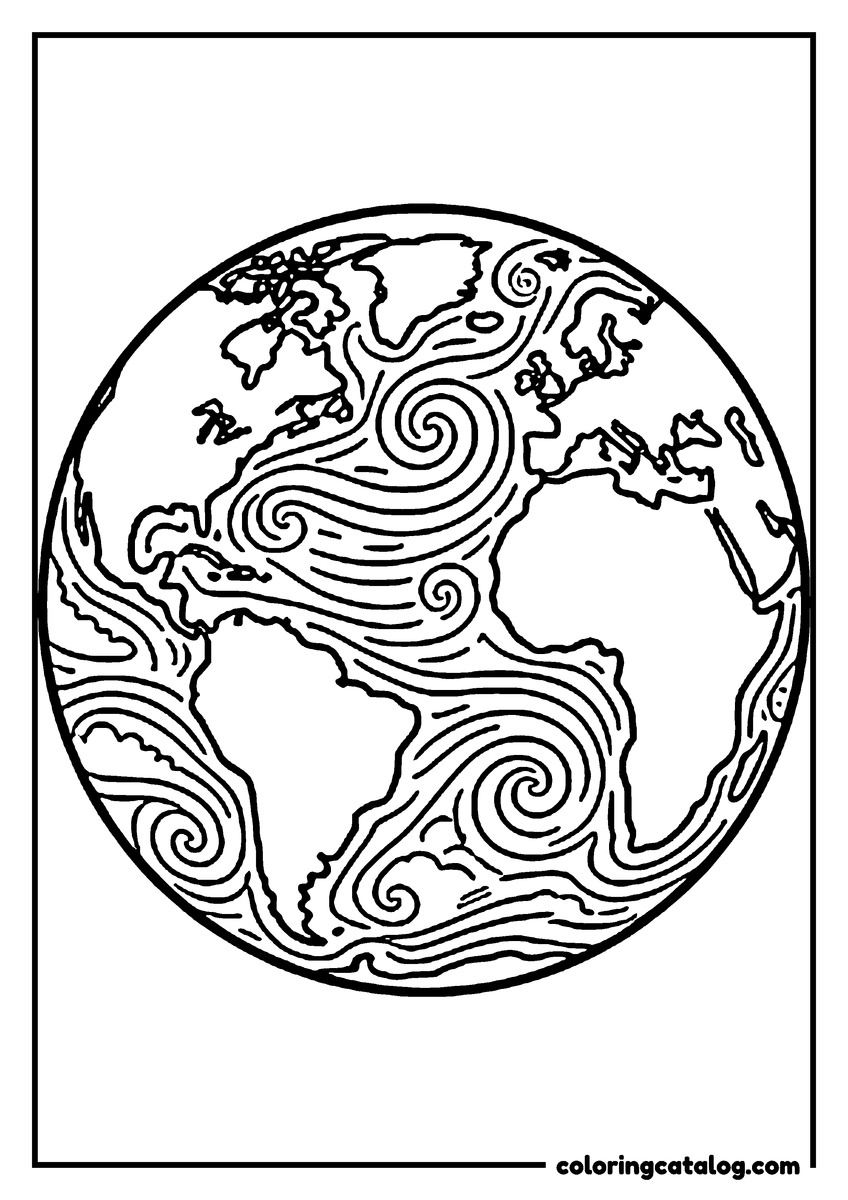
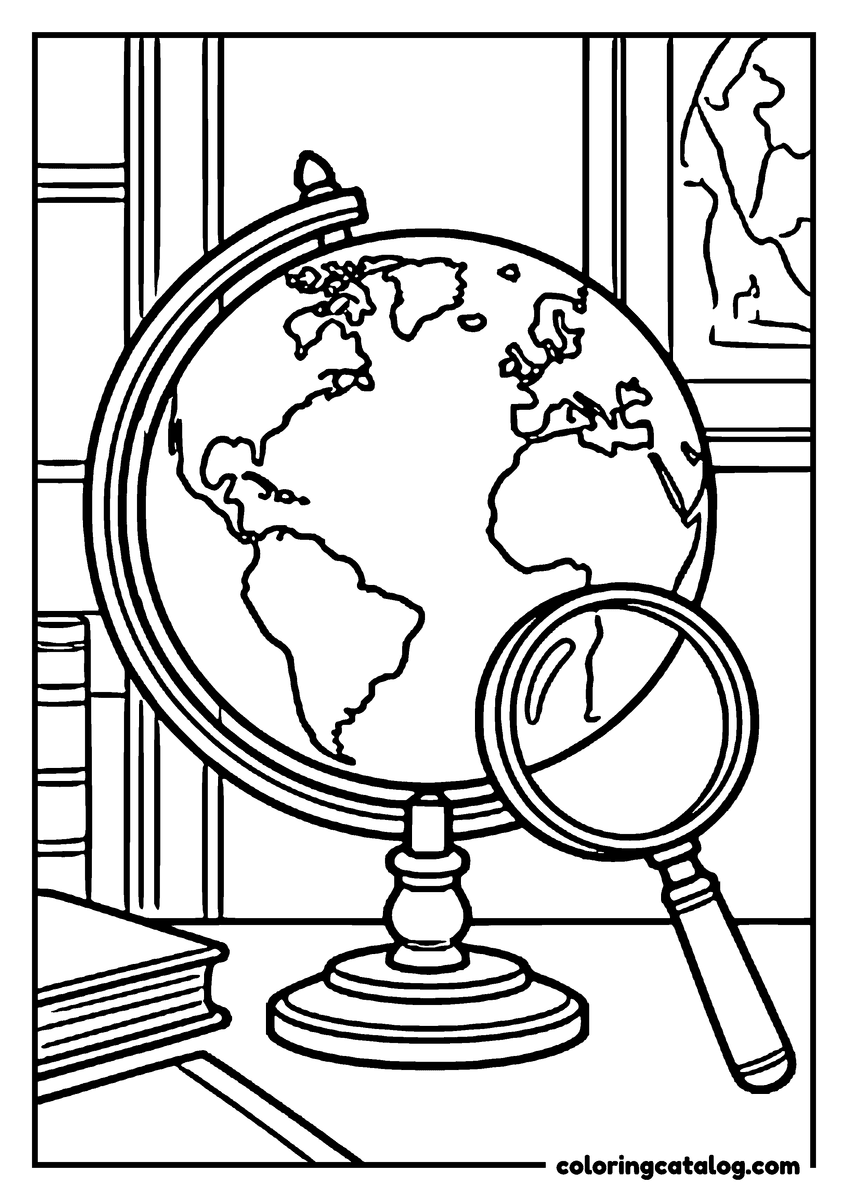
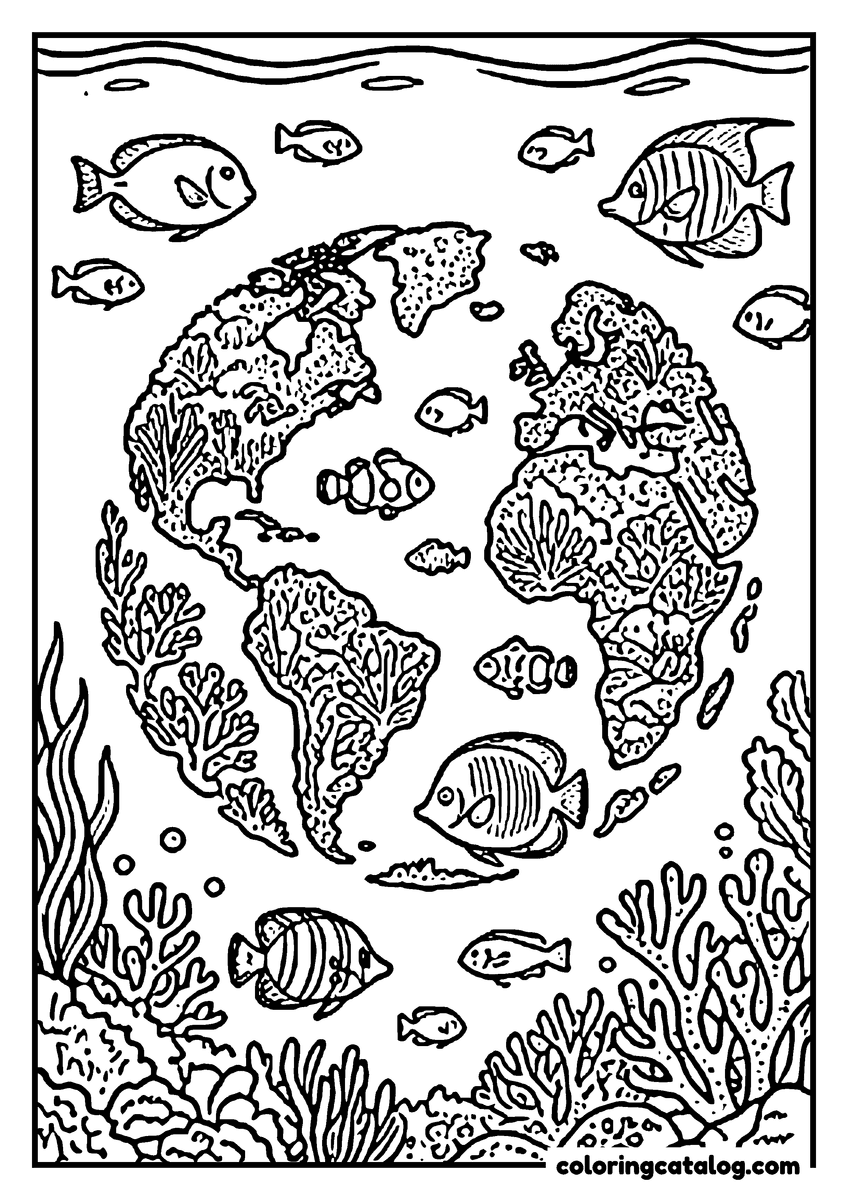
Our planet hugged, watered and seen from the Moon, Earth Day pages with a cutaway of the crust and core.
Shooting stars and constellations over sleepy towns, a wish-on-a-star theme for bedtime and Christmas.
Budding pilots can loop biplanes over farm fields or wait at the gate with the big jets, cockpit view included.
Adults who color to unwind will find floral rosettes and Celtic knots woven edge to edge in dense designs.
About these solar system coloring pages
Updated October 2026
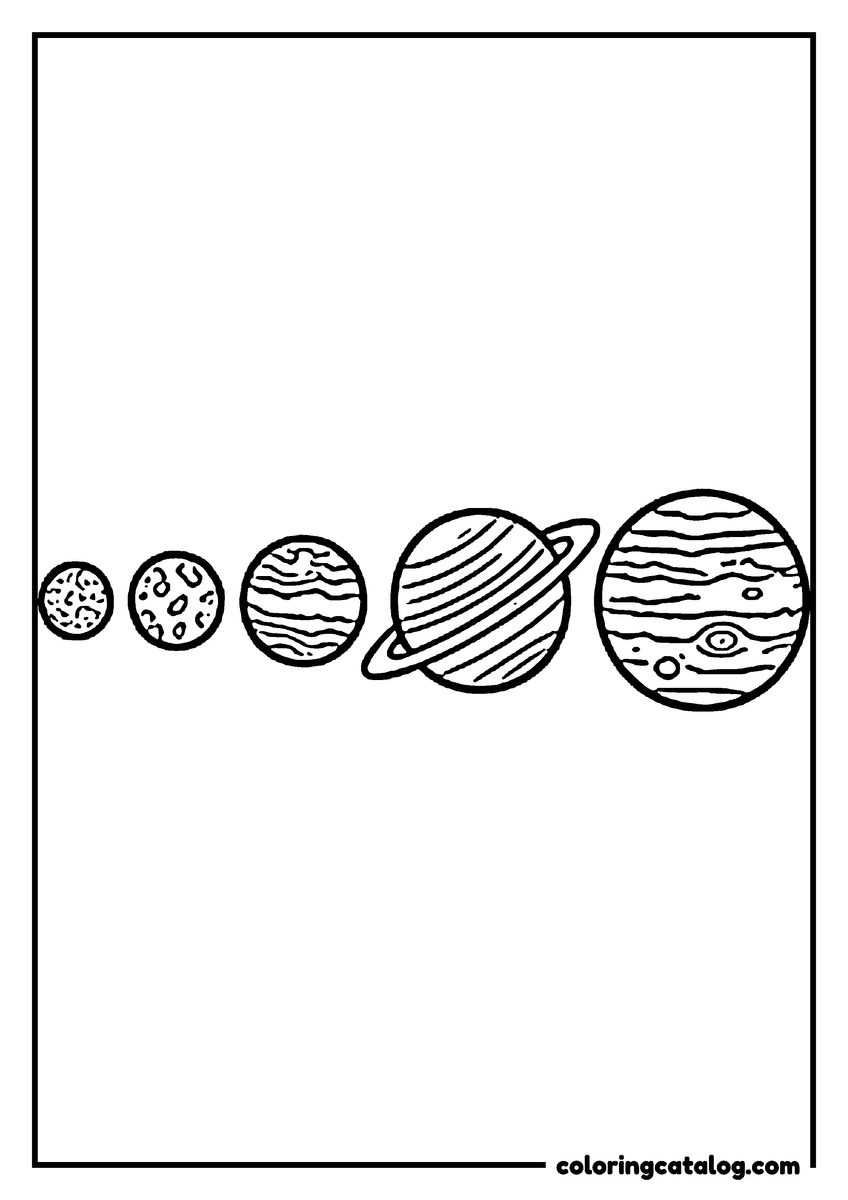
Most of the free solar system coloring pages here start from a row of planets lined up across the page. From there the collection moves out to the sun and the moon, past comets and asteroids, and on to the astronauts and rockets that go to look at them up close. Each drawing downloads as a printable PDF.
Out from the sun, the sheets cover:
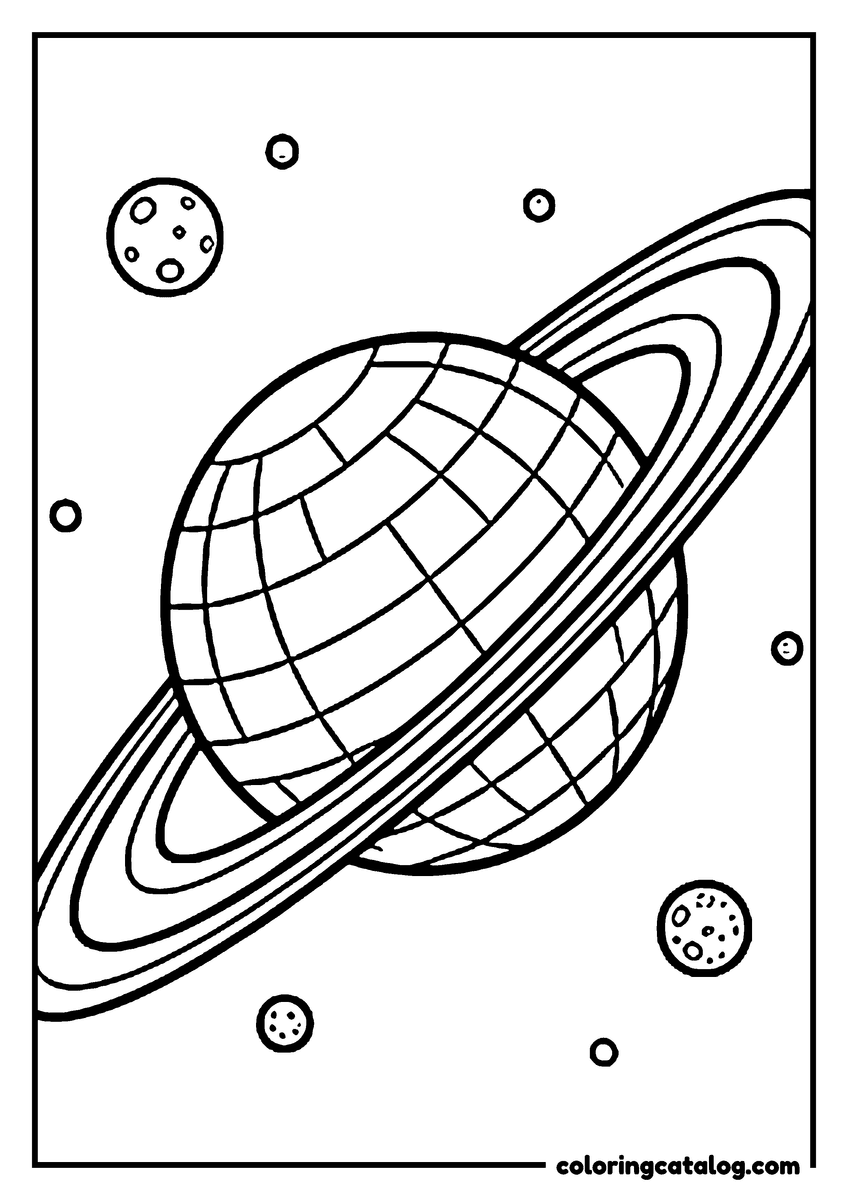
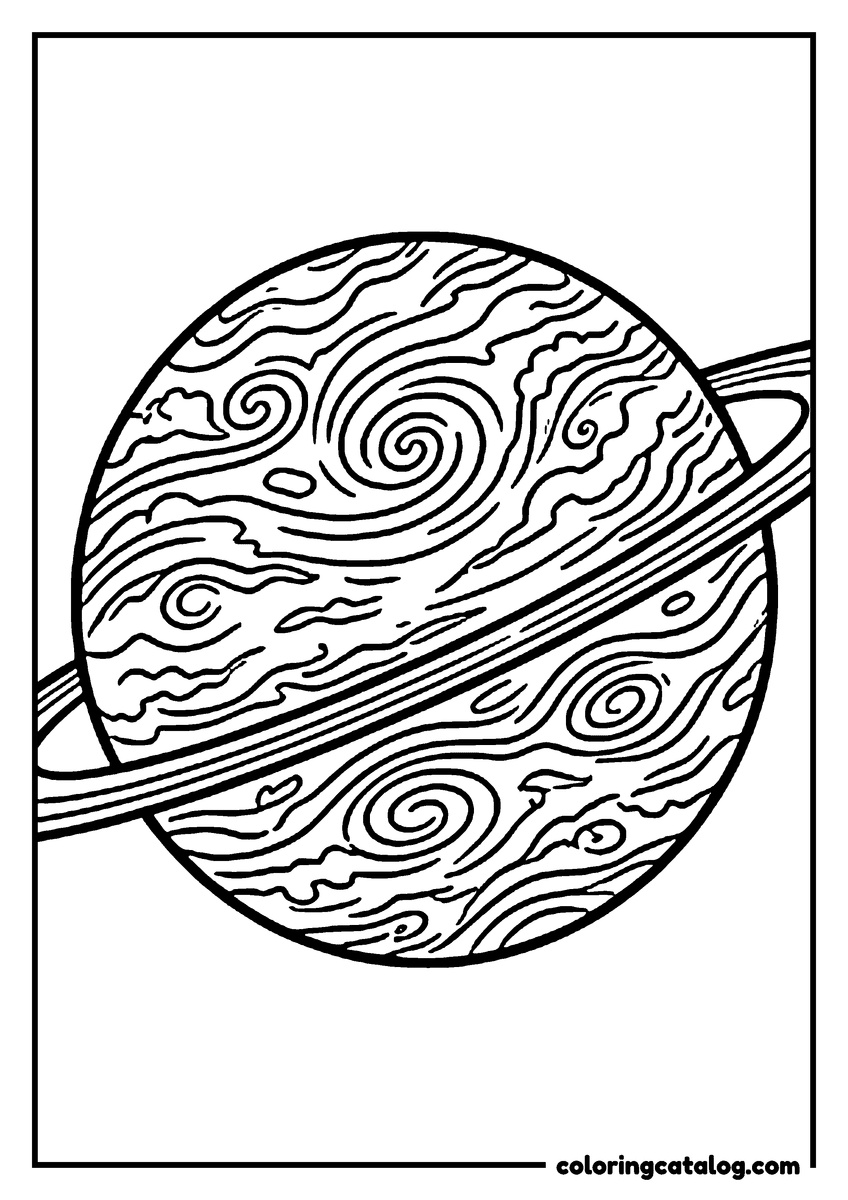
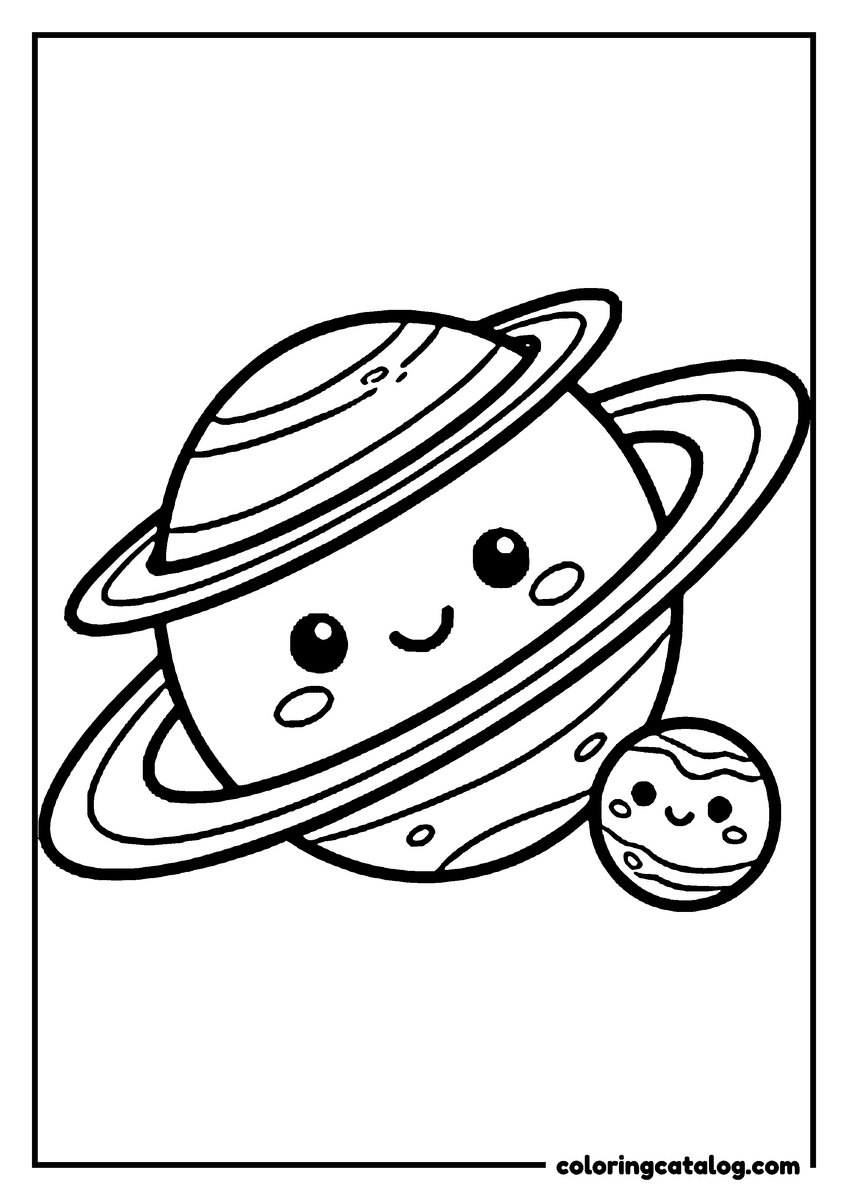
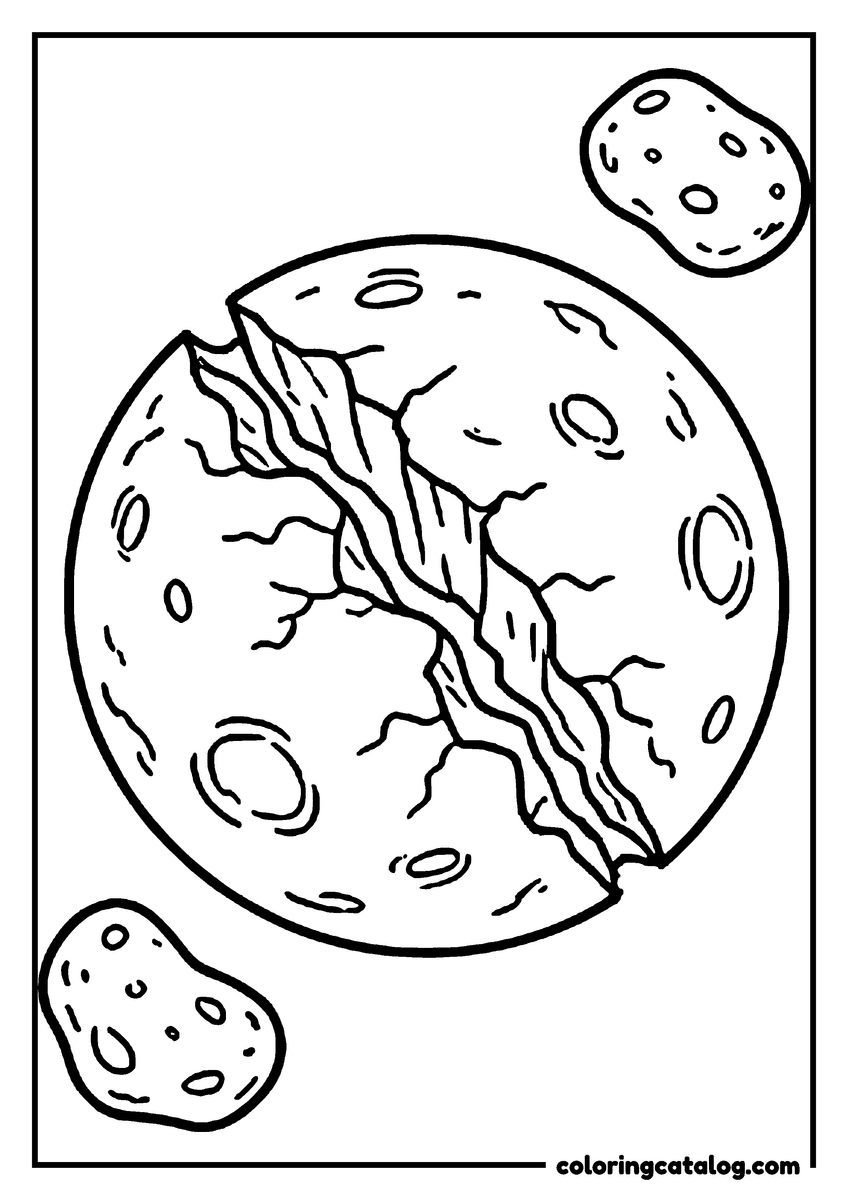
- Planets: the row of planets, a ringed planet among small moons, a striped gas giant with a great storm, a stormy planet with one thin ring, a rocky planet split by a canyon, and a cratered planet near the sun.
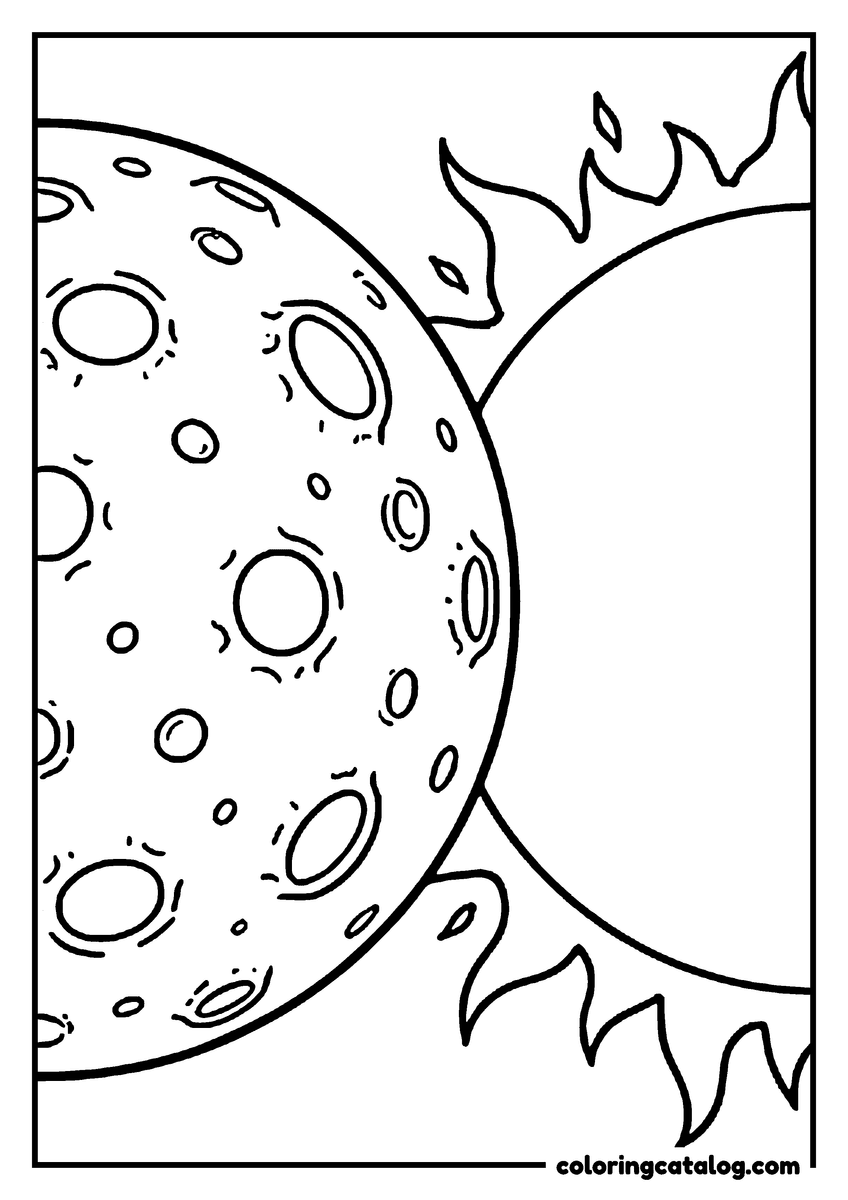
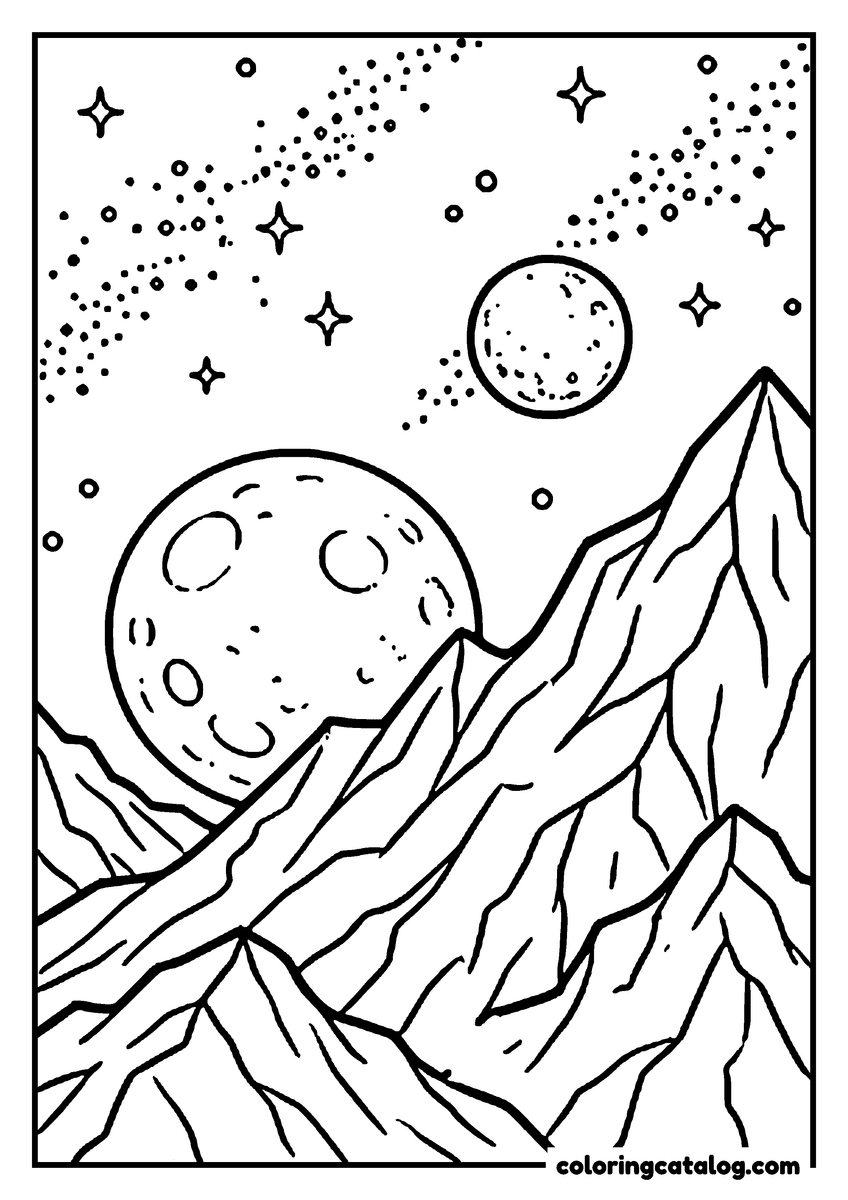
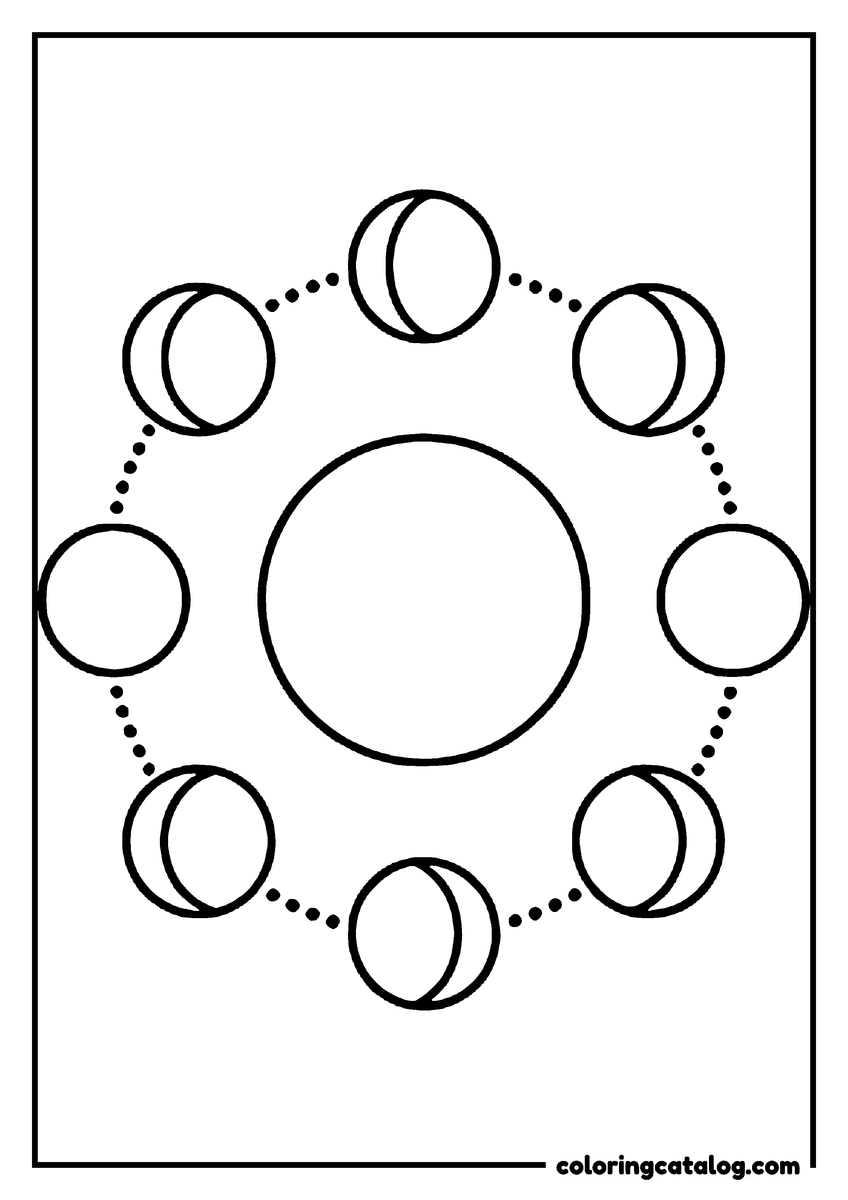
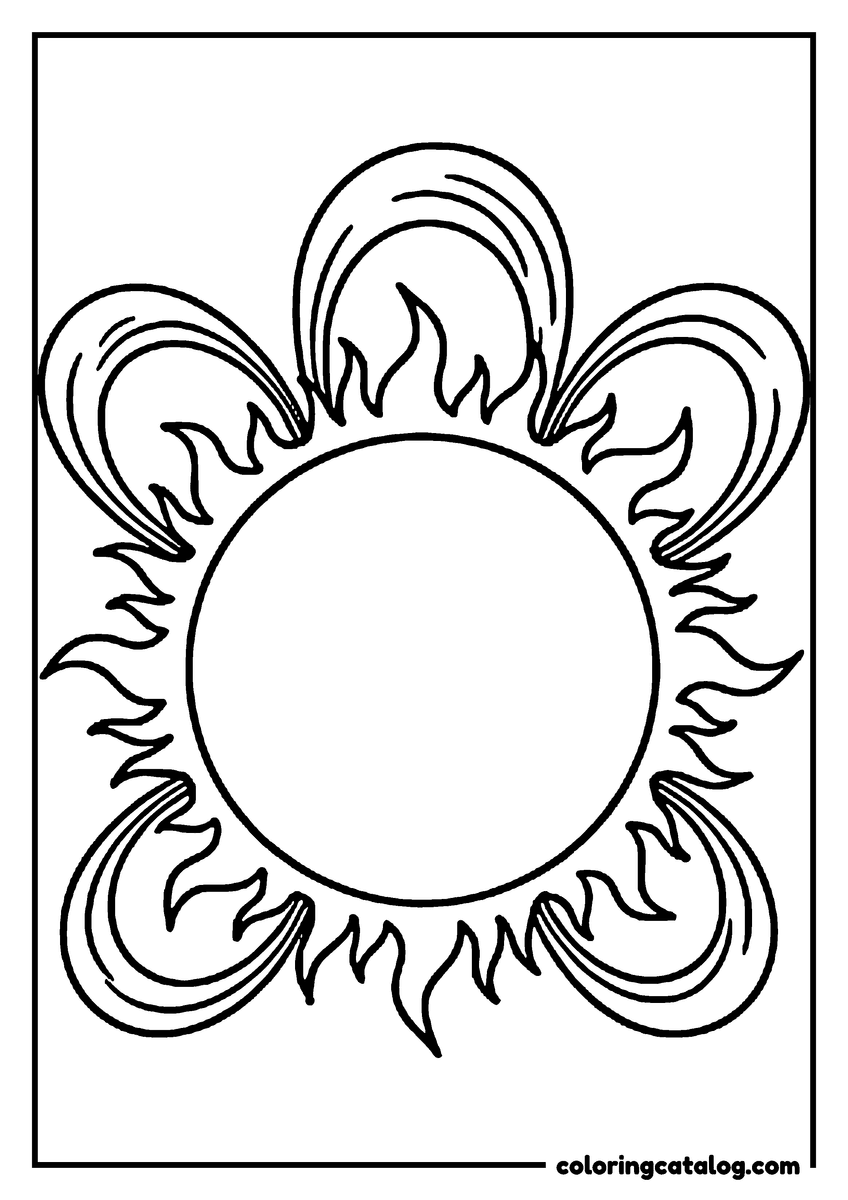
- The sun and the moon: the sun with flames and looping arcs on its rim, a wheel of moon phases, and two moons rising over a jagged ridge.
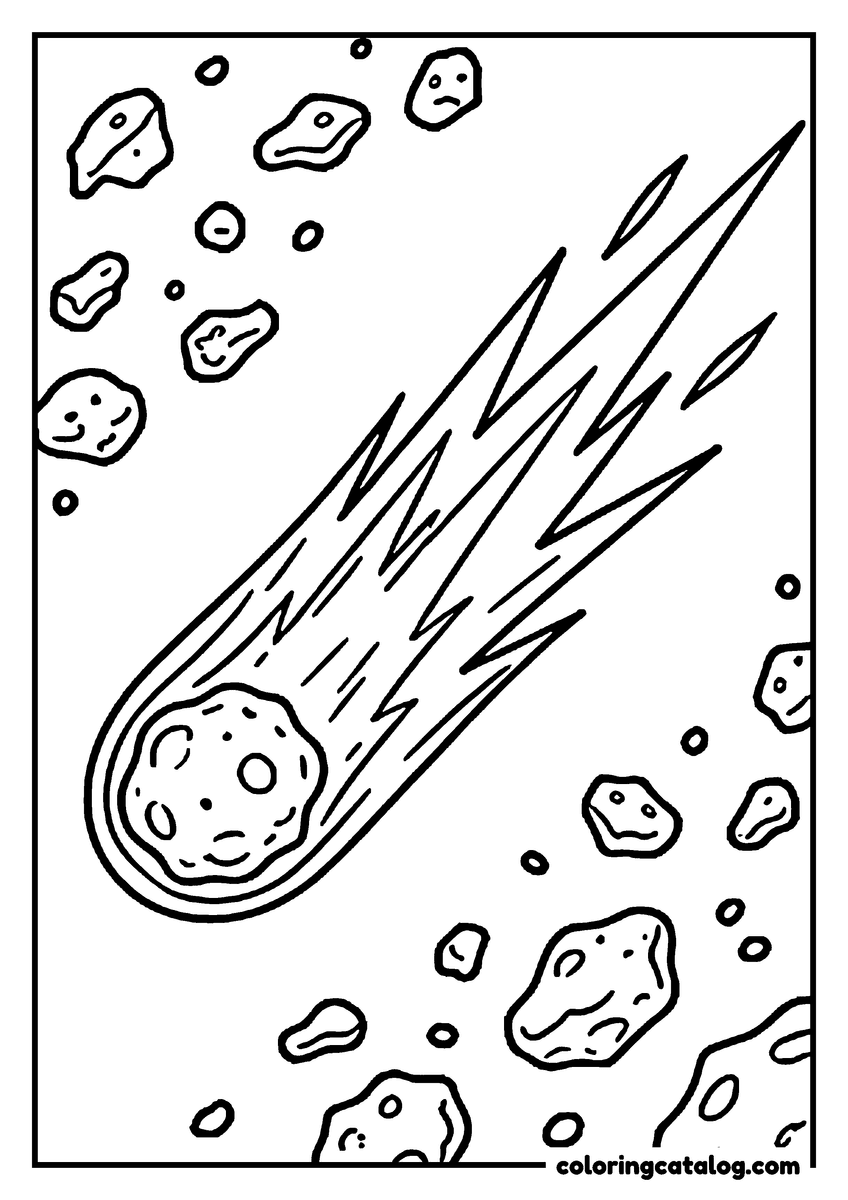
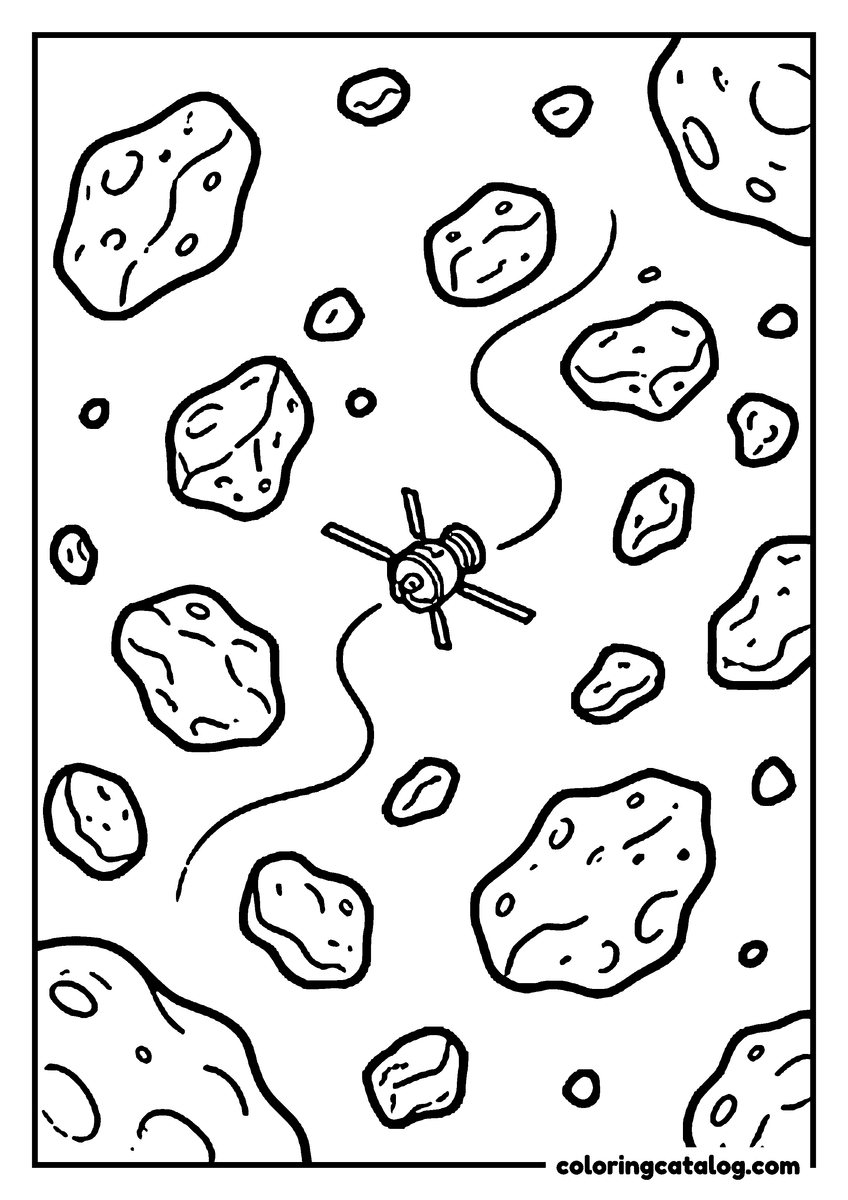
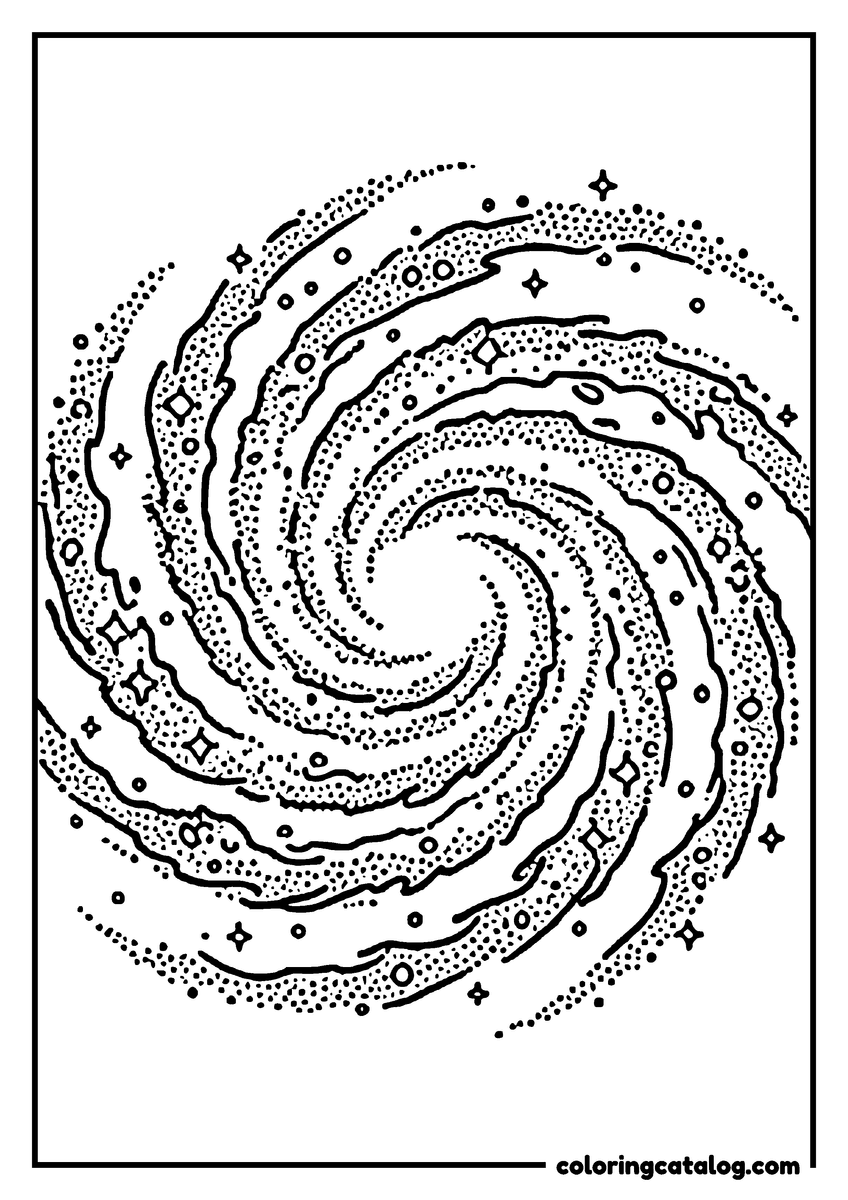
- Comets, asteroids and a galaxy: a comet with a forked tail, an icy comet, a probe weaving between asteroids and a spiral galaxy.
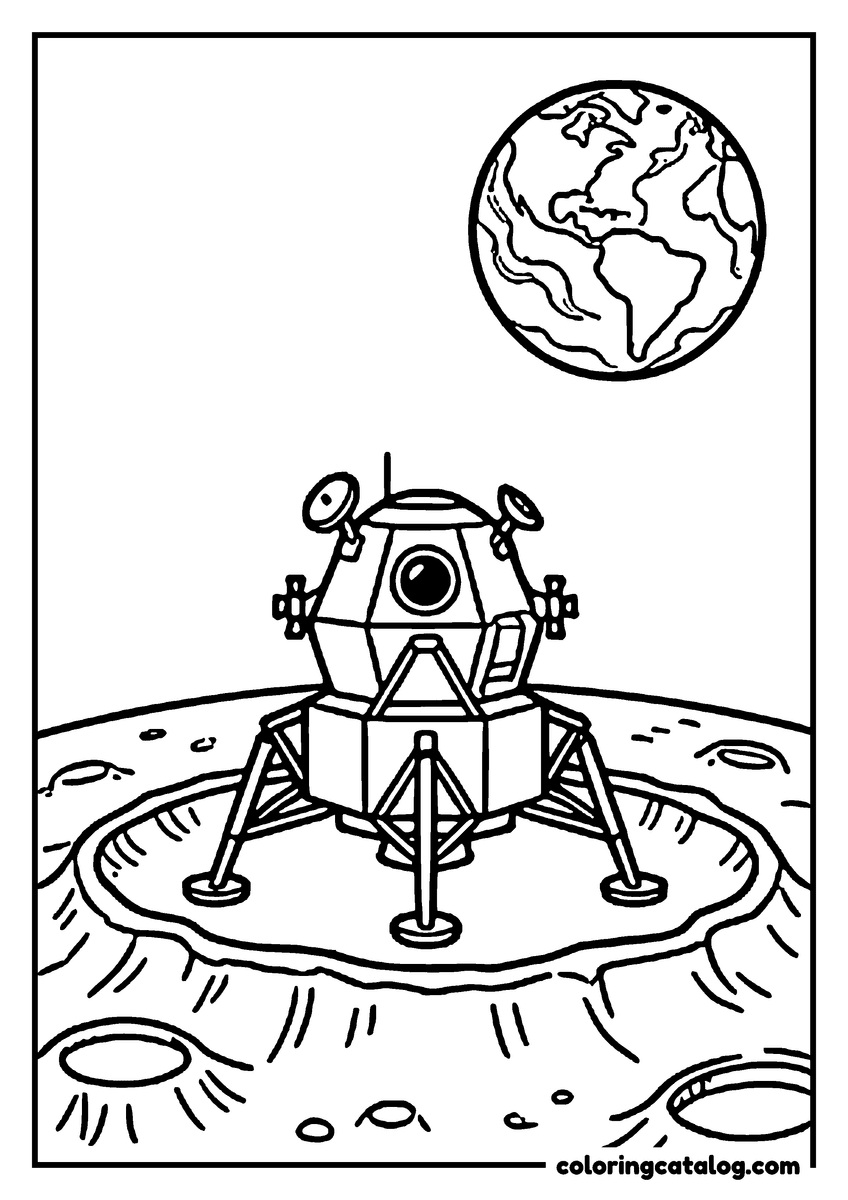
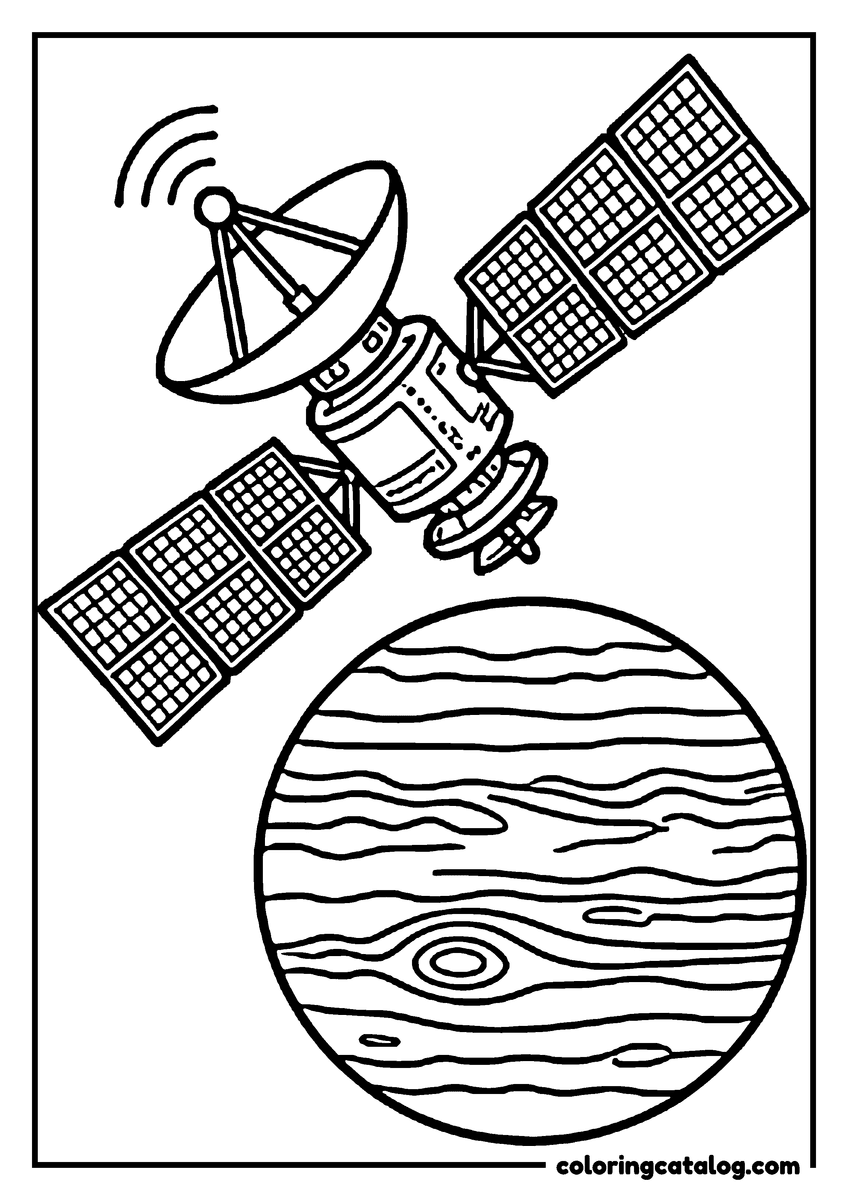
- Astronauts and spacecraft: a rover, a lunar lander, a space station above Earth, a shuttle docking and rockets lifting off.
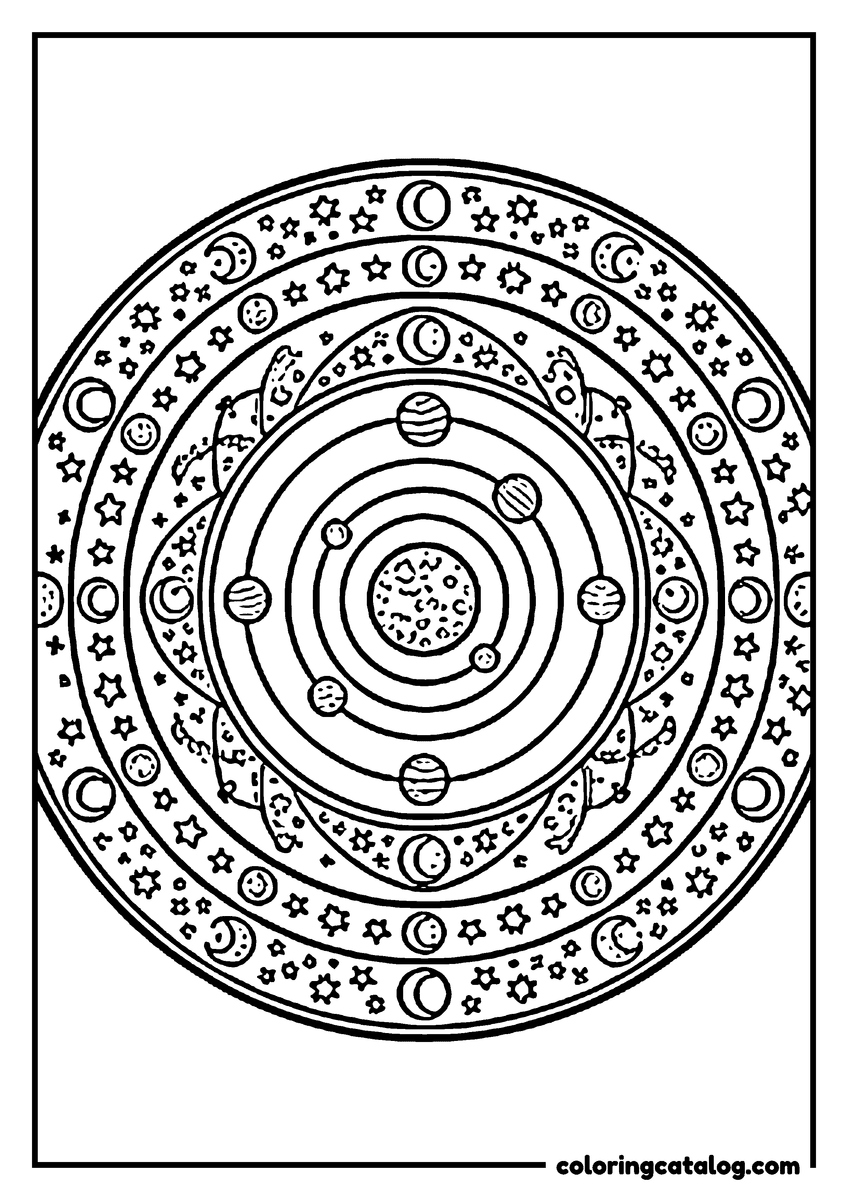
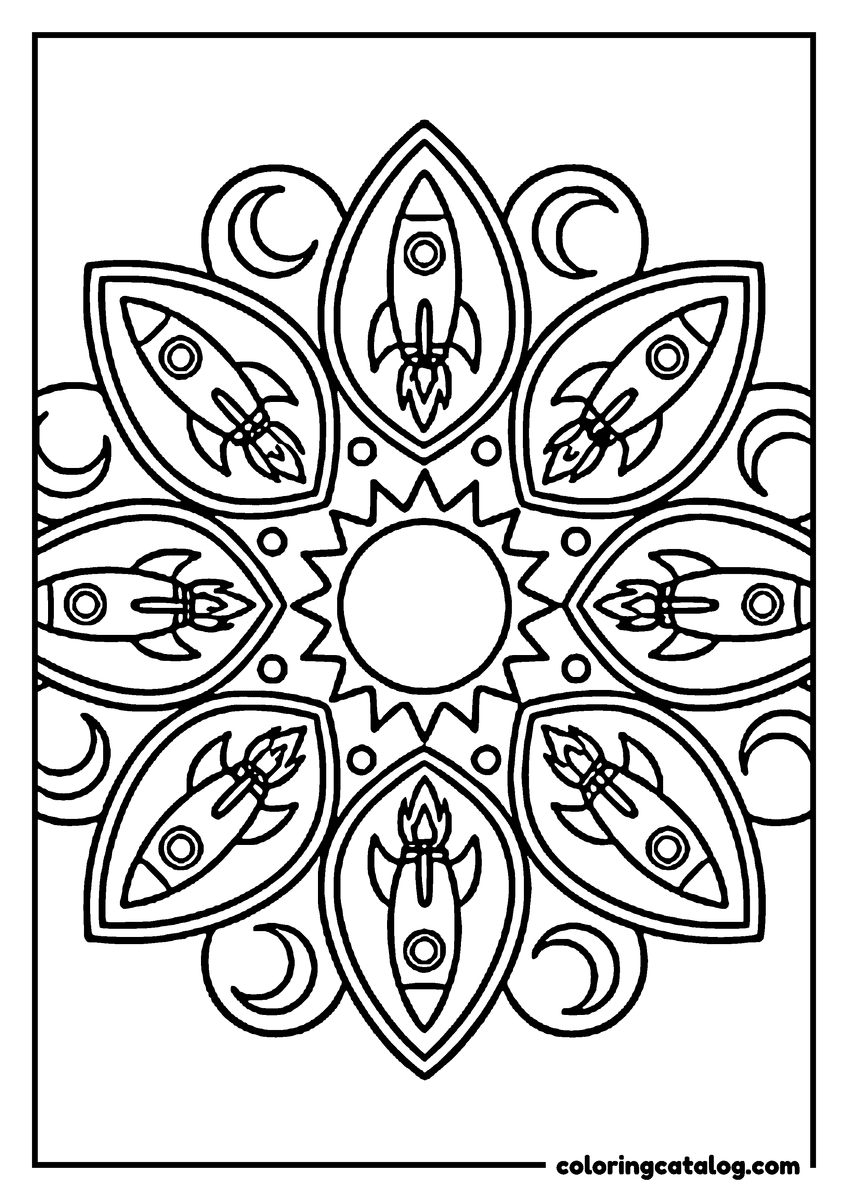
- Mandalas: the planets on their orbits around the sun, and rockets with crescent moons.
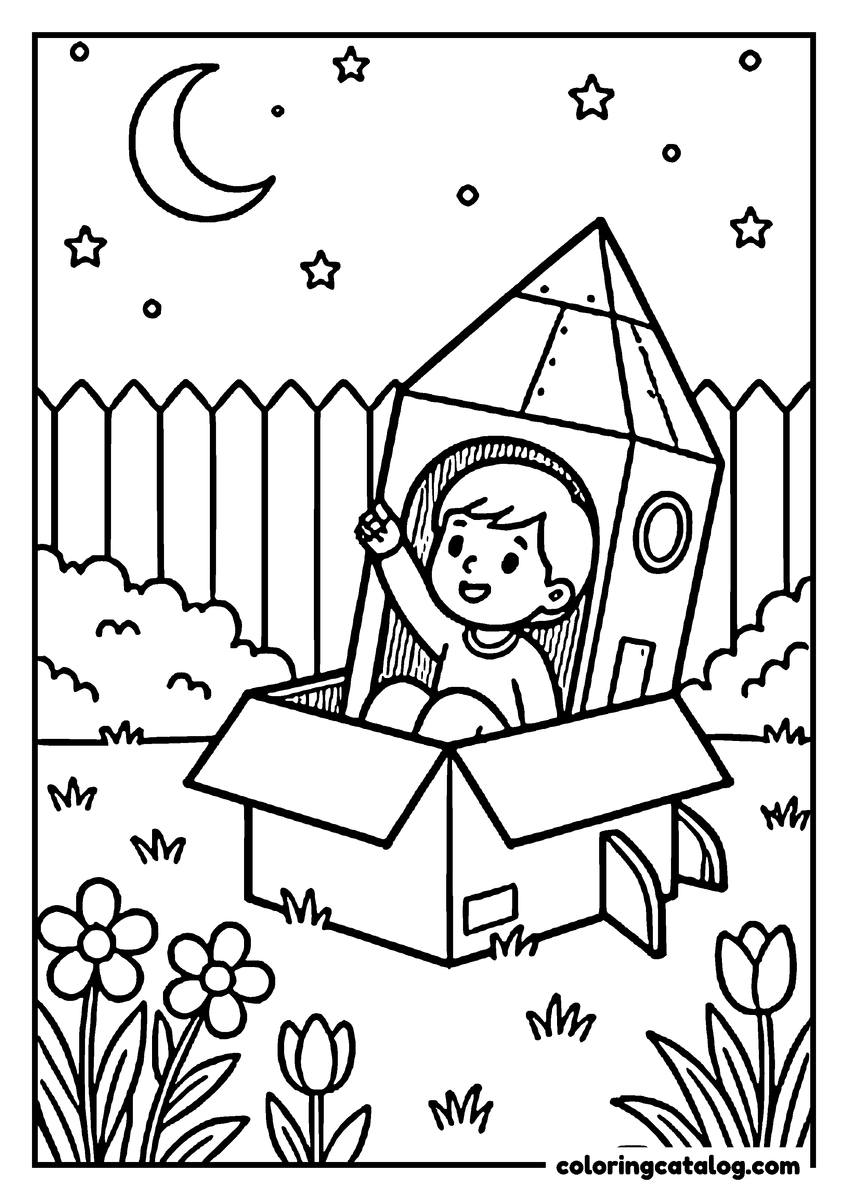
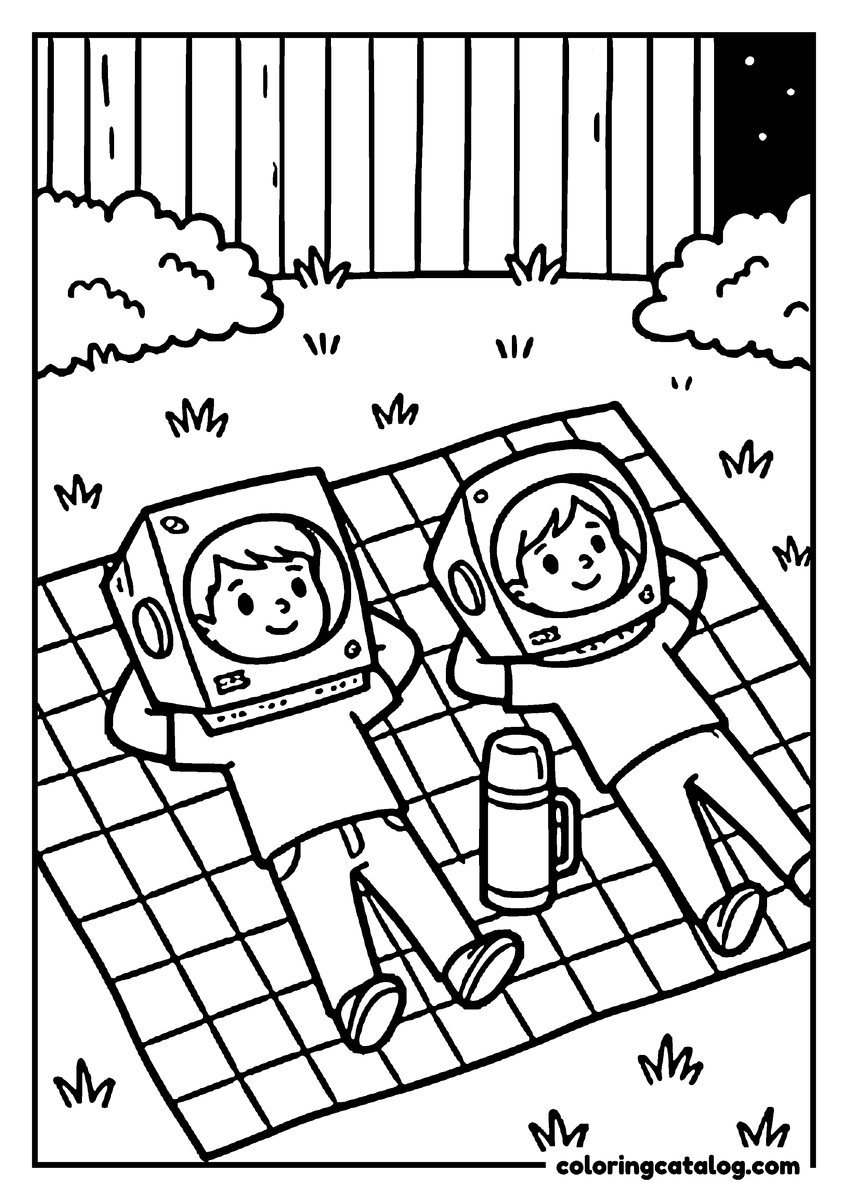
A few sheets bring space back down to the backyard. A child waves at the moon from a cardboard box rocket, two kids in cardboard helmets stargaze from a blanket, and a cat sits beside a telescope pointed at a ringed planet. That cat has plenty of relatives over on the cat coloring pages.
The eight planets of the solar system, in order
Counting out from the sun, the planets are Mercury, Venus, Earth, Mars, Jupiter, Saturn, Uranus and Neptune. The inner four are small and rocky. The outer four are giants: Jupiter and Saturn are made mostly of gas, while Uranus and Neptune hold much more ice and are often called ice giants.
Pluto counted as the ninth planet until 2006, when the International Astronomical Union classed it as a dwarf planet.
Many children learn the order with a sentence, My Very Educated Mother Just Served Us Nachos, where each word starts with the same letter as a planet. Written in pencil along the bottom of the row of planets, it turns the sheet into a small chart.
Real worlds hiding in the drawings
Several sheets borrow from real places:
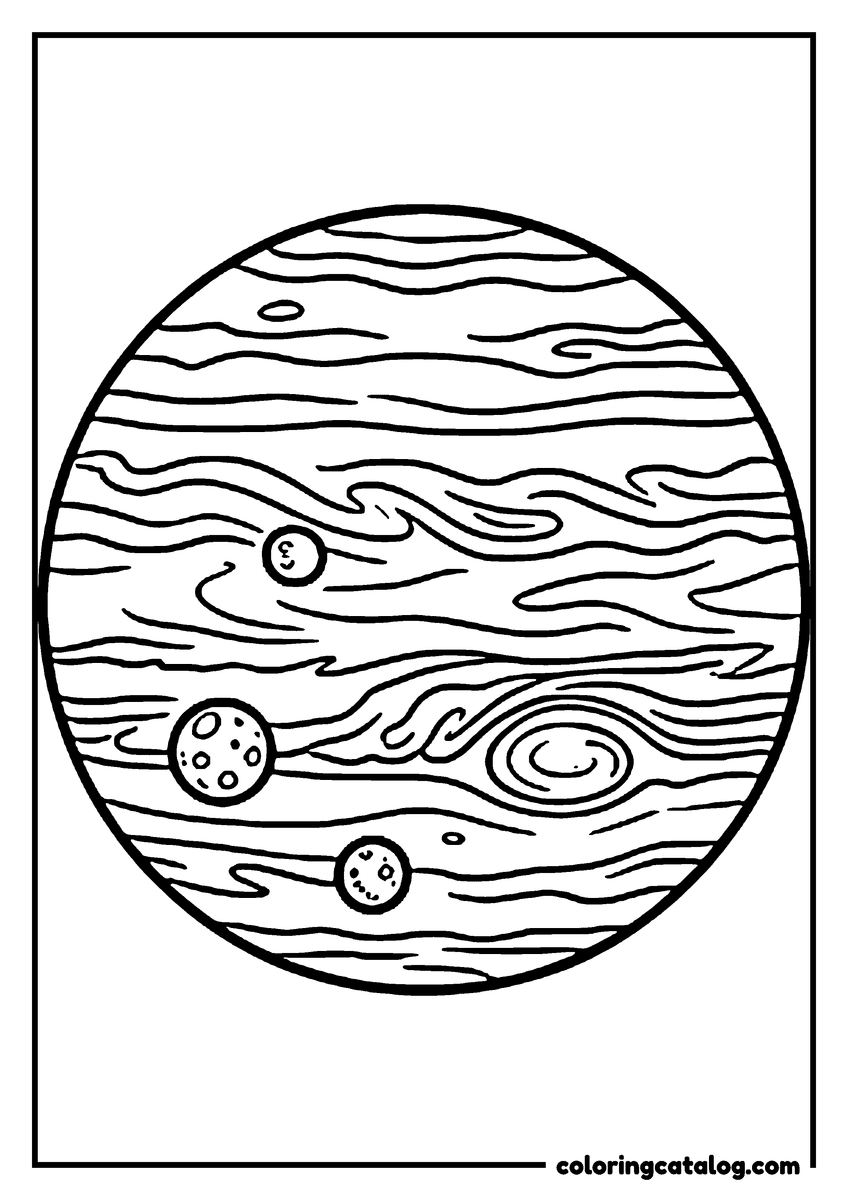
- The gas giant with a great storm recalls Jupiter's Great Red Spot, a storm wider than Earth that astronomers have watched without a break since 1831.
- The rocky planet with a deep canyon and two small, potato-shaped moons fits Mars, with its canyon system Valles Marineris and its moons Phobos and Deimos.
- The cratered planet at the edge of the sun looks like Mercury, the planet closest to it.
- The ringed planets point to Saturn, whose rings are made mostly of chunks of water ice.
Solar system planets coloring pages in their true colors
The drawings leave the colors open, so a planet can be painted true to life or invented from scratch. For a set of solar system planets that matches the photographs in a science book:
- Mercury: gray and brown, covered in craters.
- Venus: pale yellow and cream, the color of its thick clouds.
- Earth: blue oceans, green and brown land, swirls of white cloud.
- Mars: rusty red-orange, from iron oxide in its dust.
- Jupiter: bands of cream, tan and orange, with a reddish oval storm.
- Saturn: pale gold, with rings in a lighter beige.
- Uranus: pale cyan.
- Neptune: a deeper, brighter blue.
A big black sky soaks up marker ink and can wrinkle thin paper. Dark blue or purple pencil pressed hard looks richer, with small specks left white for stars. For the sun, color yellow in the middle and orange to red toward the flames, so the loops at its rim stand out.
Our home planet has a collection of its own in the Earth coloring pages, and the planets coloring pages add more worlds, from Saturn to a Mars rover on a rocky slope.
The sun, the moon phases and a passing comet
The arcs rising from the edge of the sun on its sheet are real. They are prominences, huge loops of glowing gas shaped by the sun's magnetic field, and many of them are far wider than Earth.
The moon phases wheel sets crescents and half moons around a full moon. The moon goes through the whole cycle in about 29.5 days. Half of it is always lit by the sun, and the phases are how much of that lit half we see from Earth. Color the wheel, then step outside each clear evening for a month and tick off the phase in the sky.
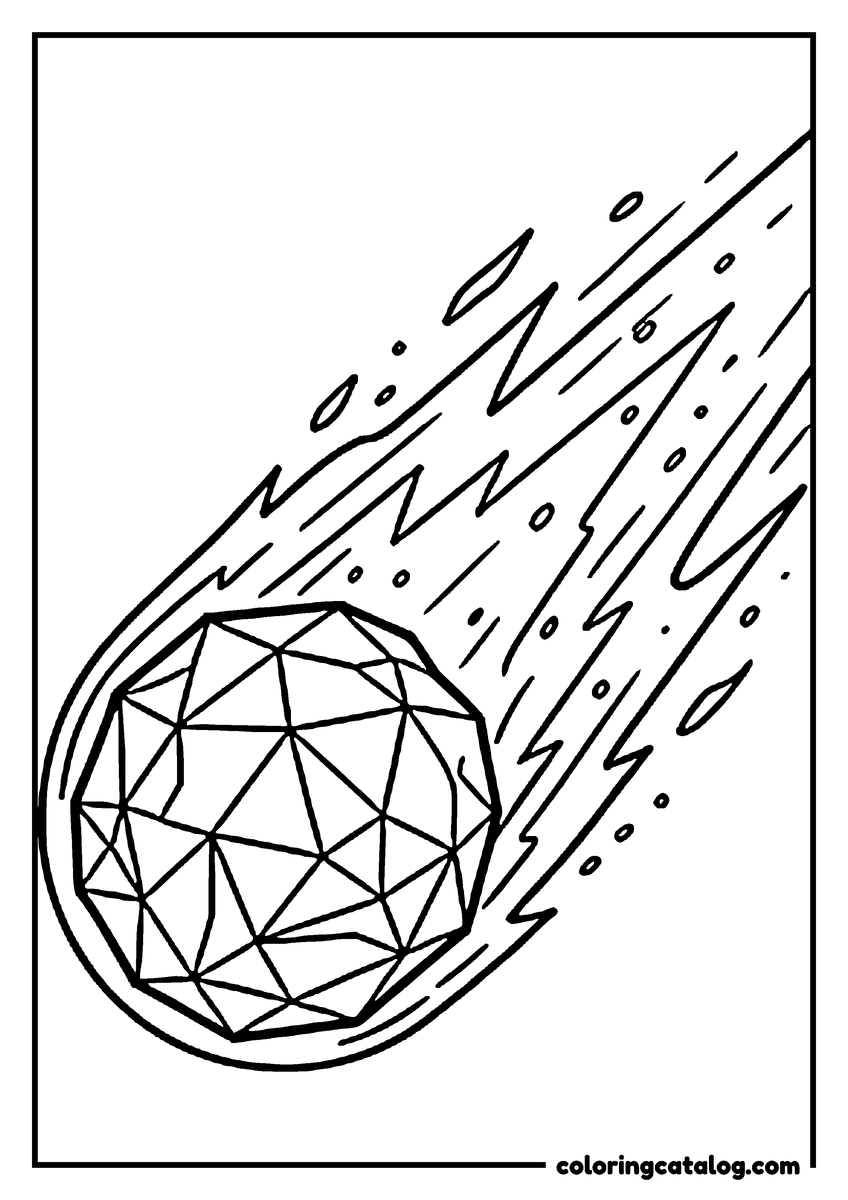
Comets are lumps of ice and dust. When one swings close to the sun, some of its ice turns to gas and streams out in a tail that points away from the sun, whichever way the comet is moving. The icy comet sheet draws that ice in sharp facets, and the other comet streaks past tumbling rocks with a forked tail.
The spiral galaxy lies far beyond all of it. Our sun is one star among billions in a spiral galaxy of its own, the Milky Way, and the dotted star clusters on that sheet are a good warm-up for the star coloring pages.
Astronauts, rockets and stations around the solar system
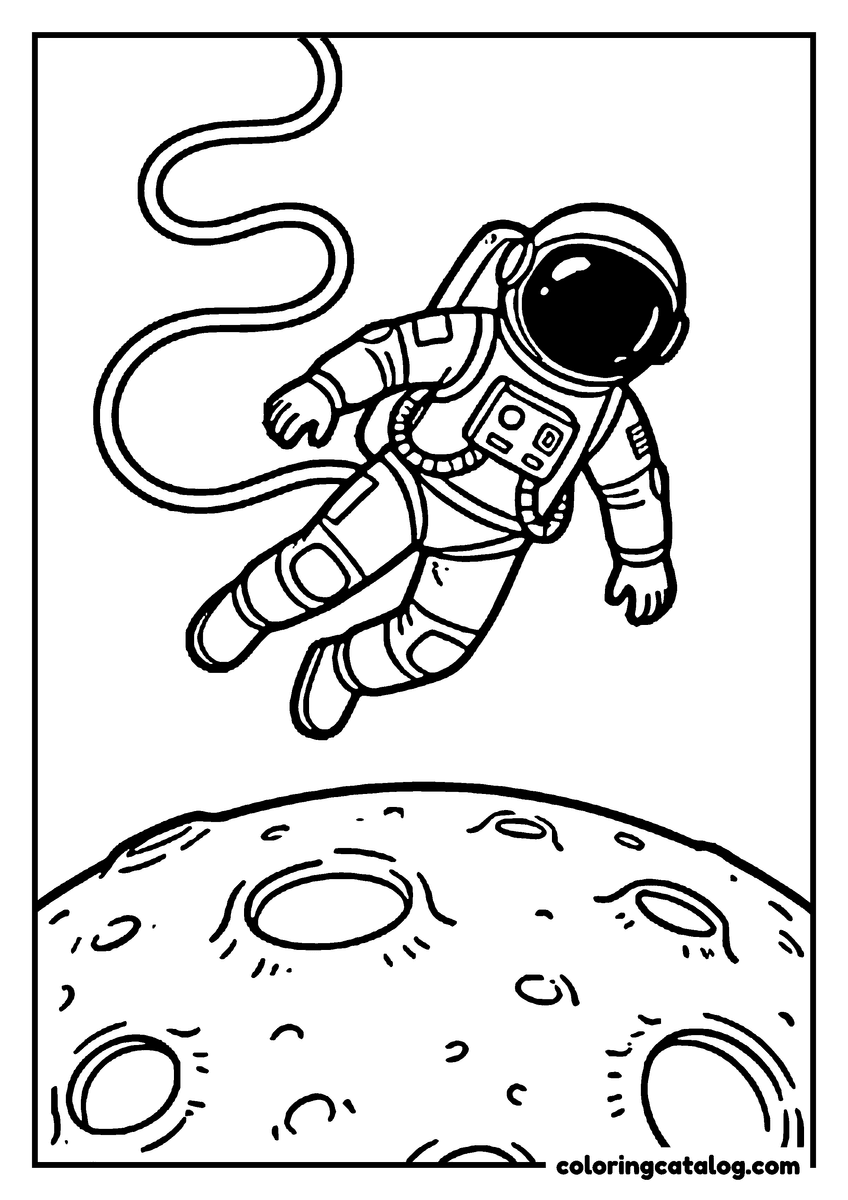
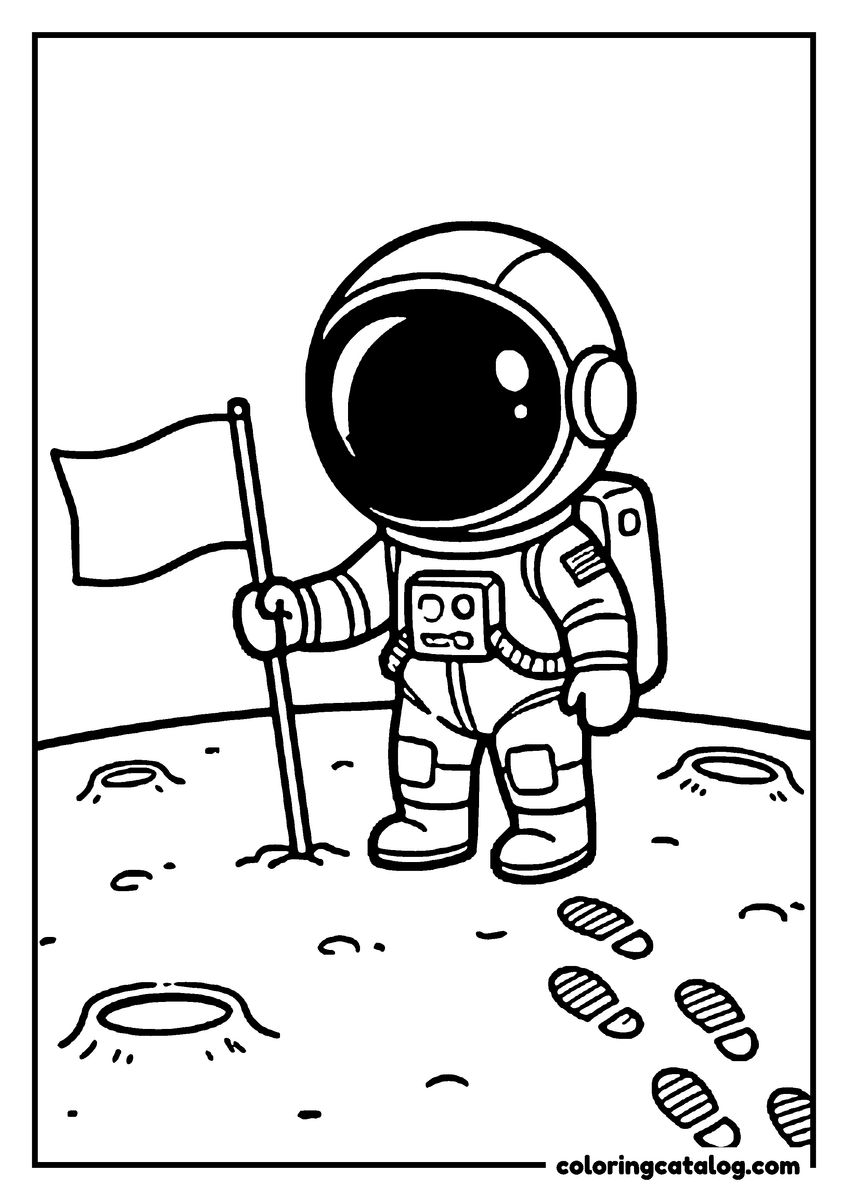
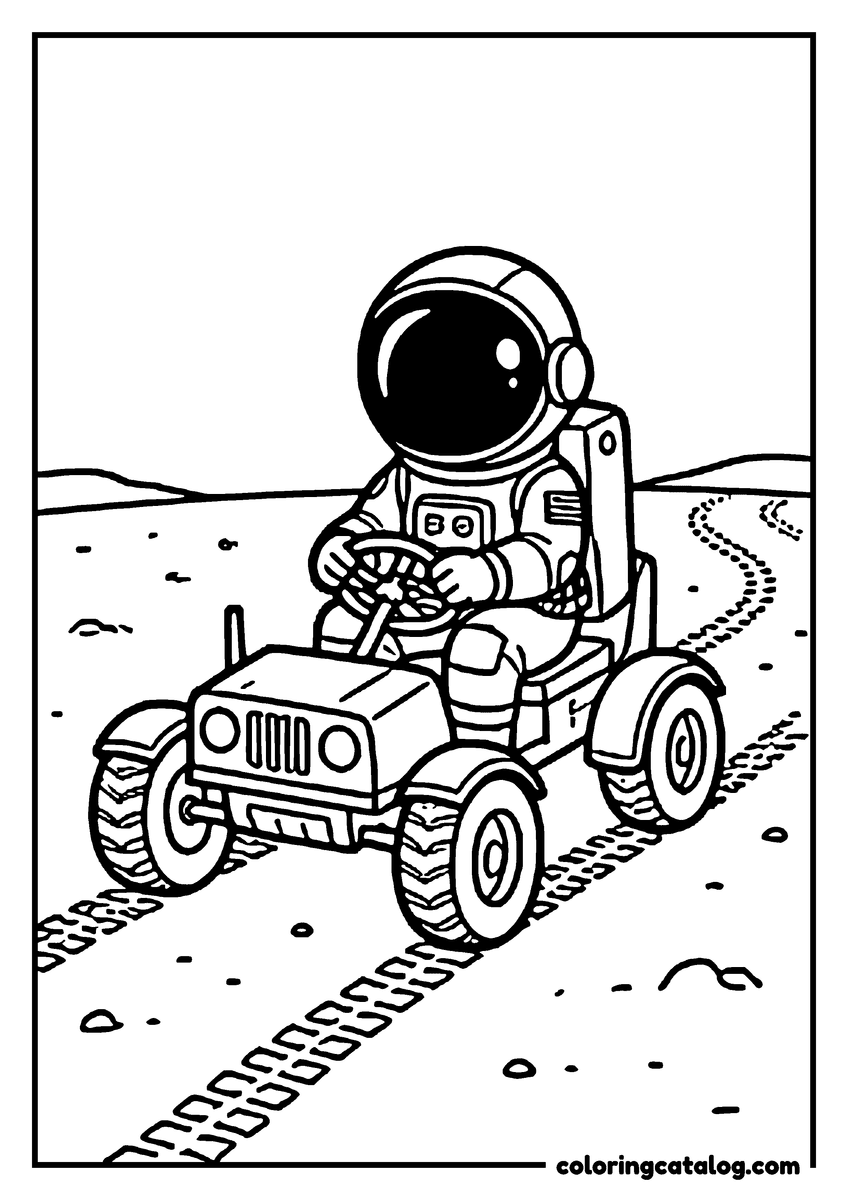
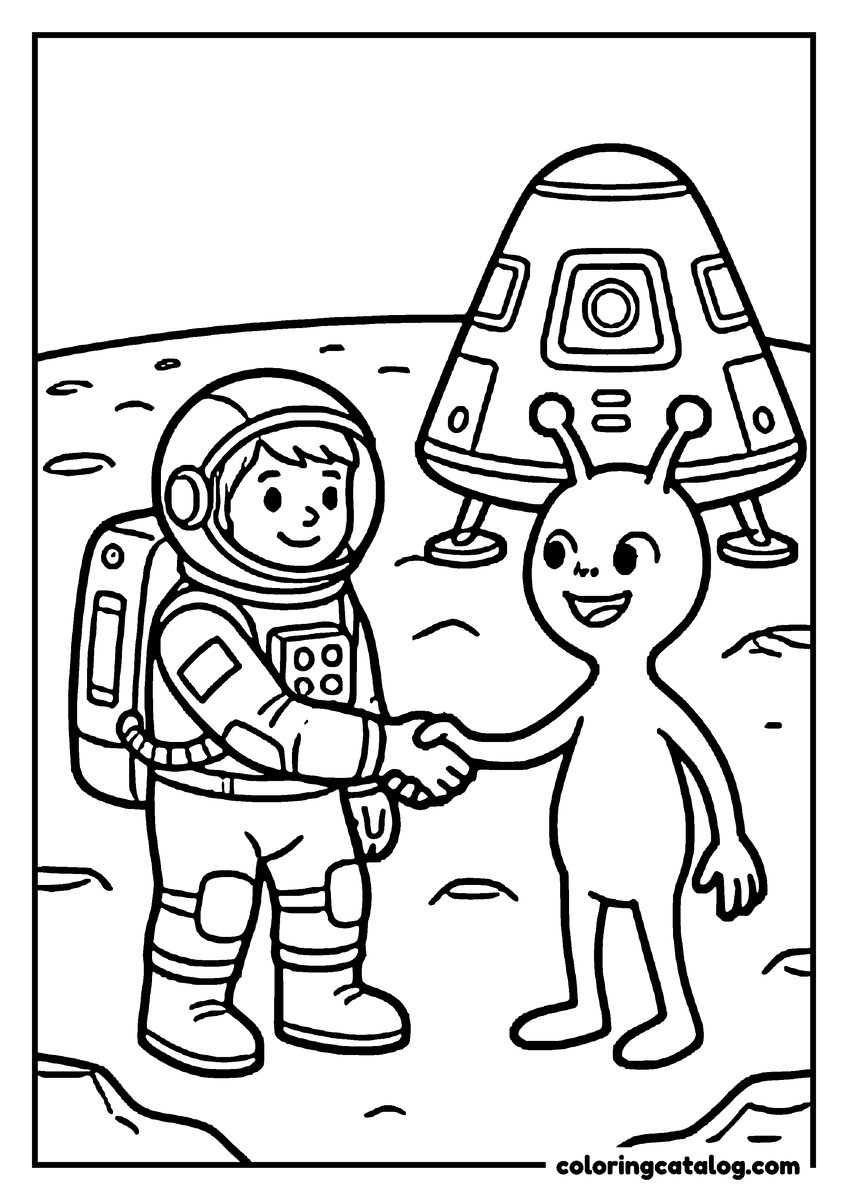
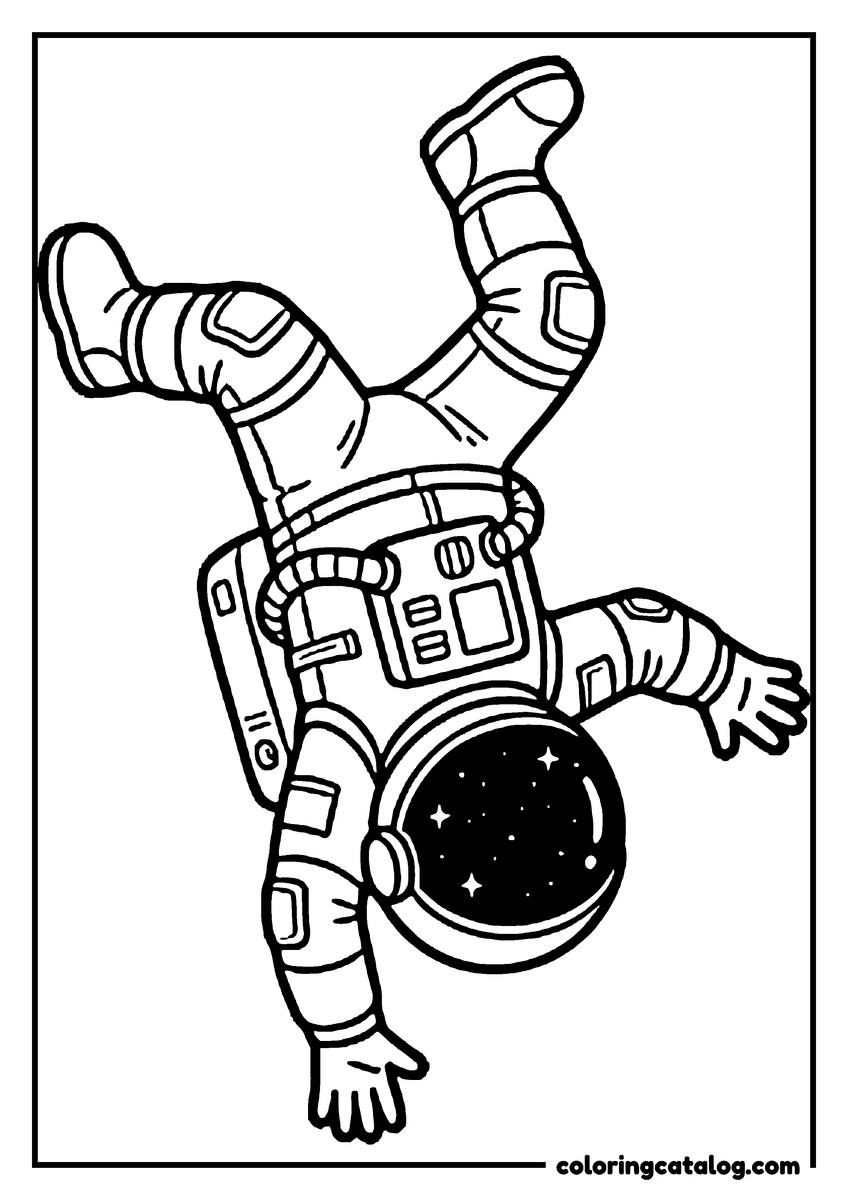
Out on the surface, the astronauts float above a cratered moon on a coiled tether, plant a flag as a round-headed chibi, drive a rover across a dusty plain and shake hands with a friendly alien beside a landed capsule.
Inside the spacecraft, the sheets answer the questions kids ask most:
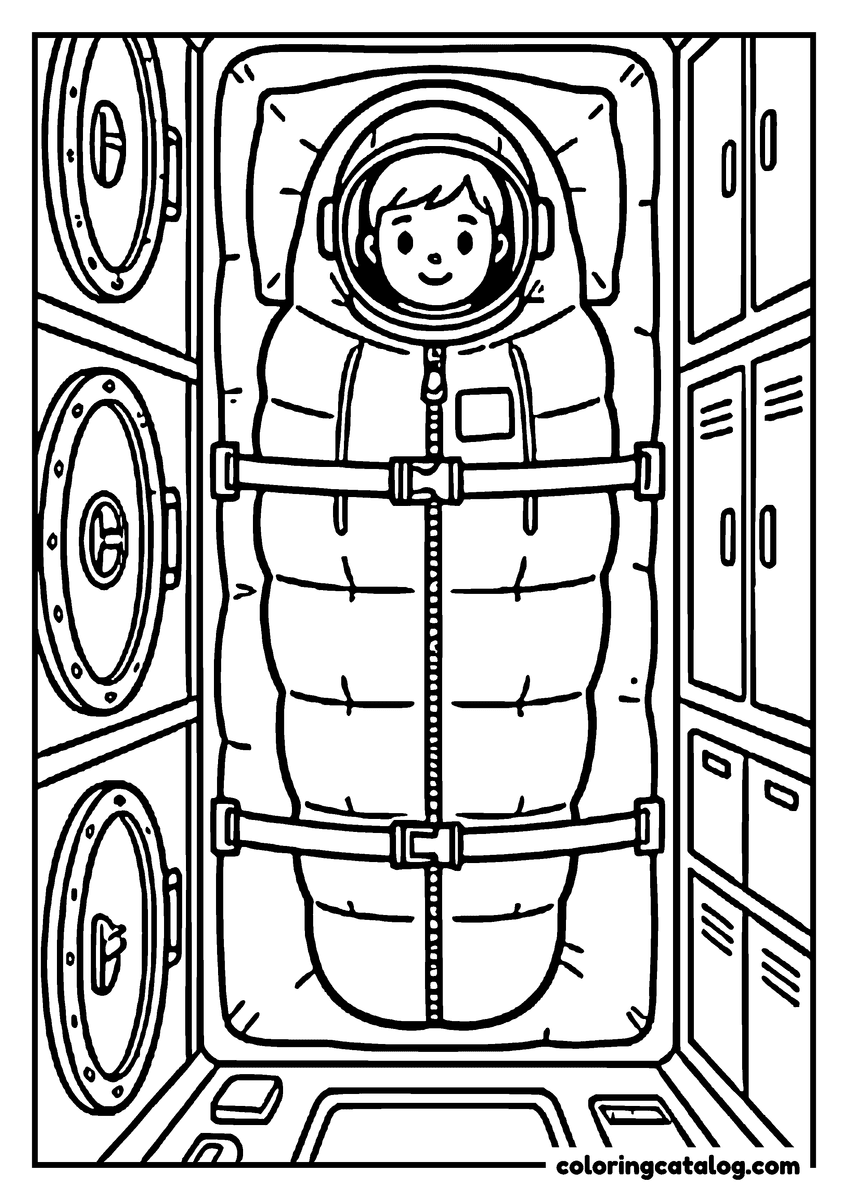
- Sleeping: in a sleeping bag strapped to the wall, so the astronaut does not drift around the cabin.
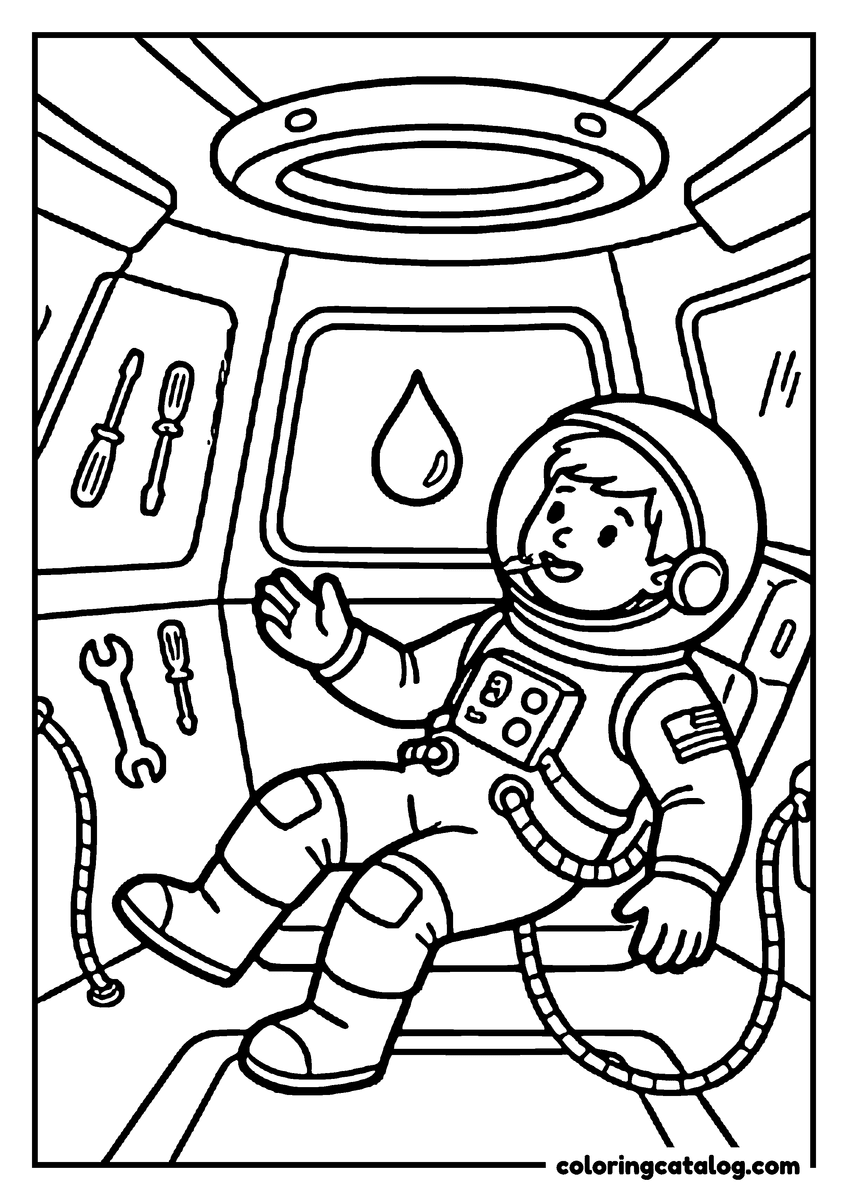
- Drinking: an astronaut reaches for a drop of water floating in the capsule.
- Gardening: plants watered under a glass dome. Crews on the International Space Station have grown lettuce and zinnias, and seedlings and houseplants grow on in the plant coloring pages.
- Playing: a handstand in low gravity, stars reflected in the visor.
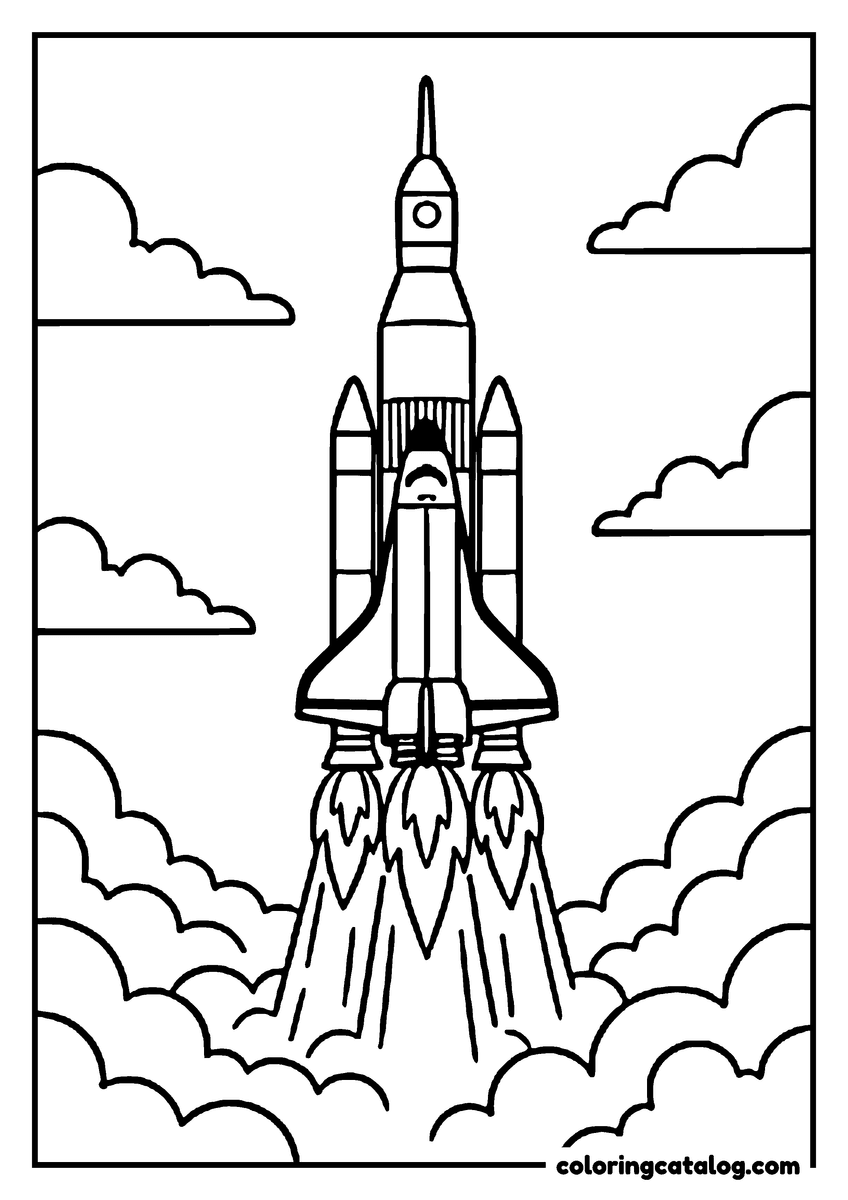
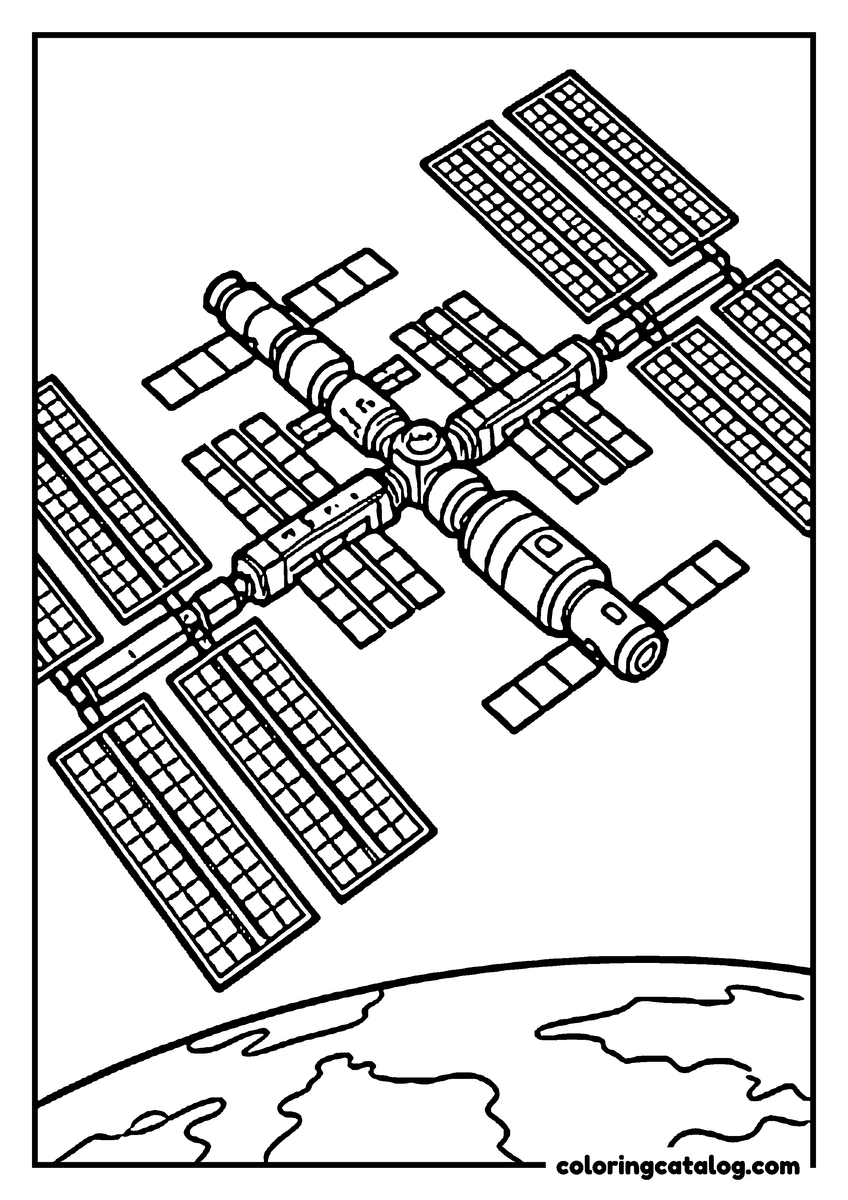
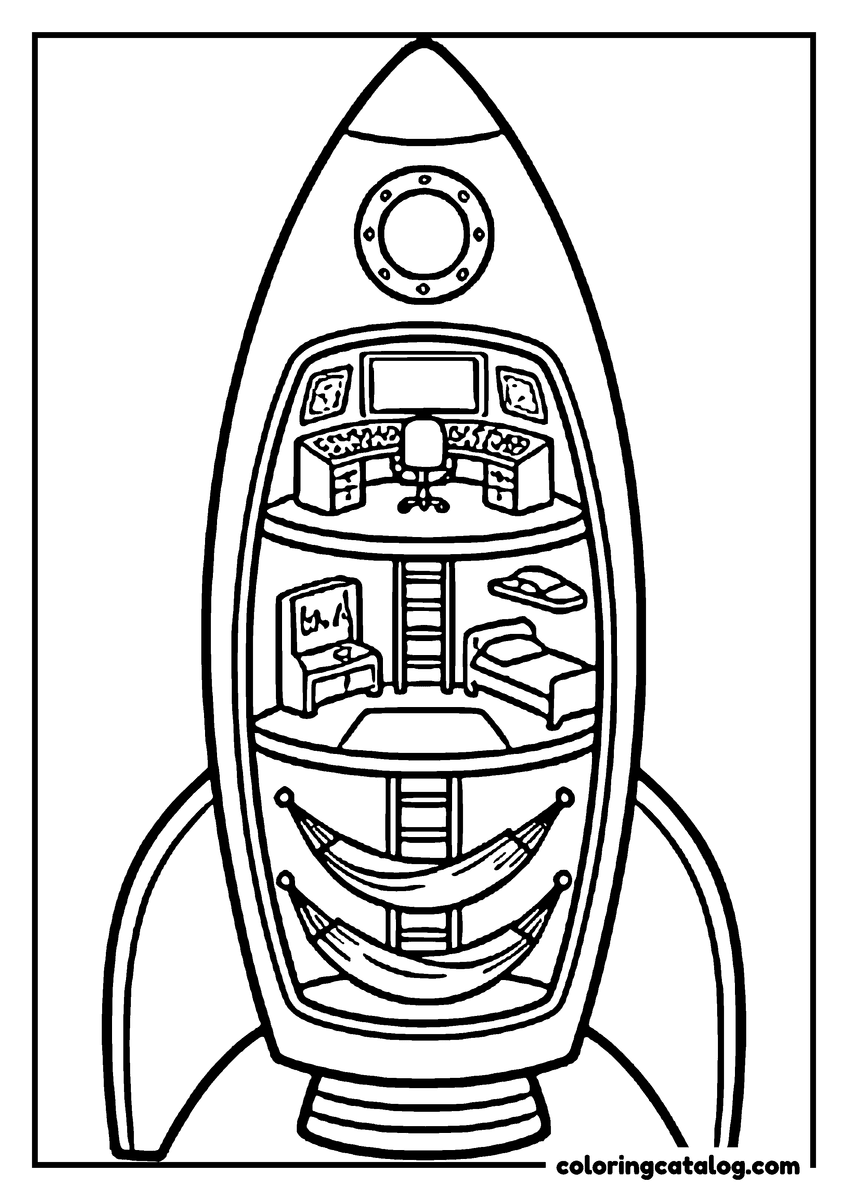
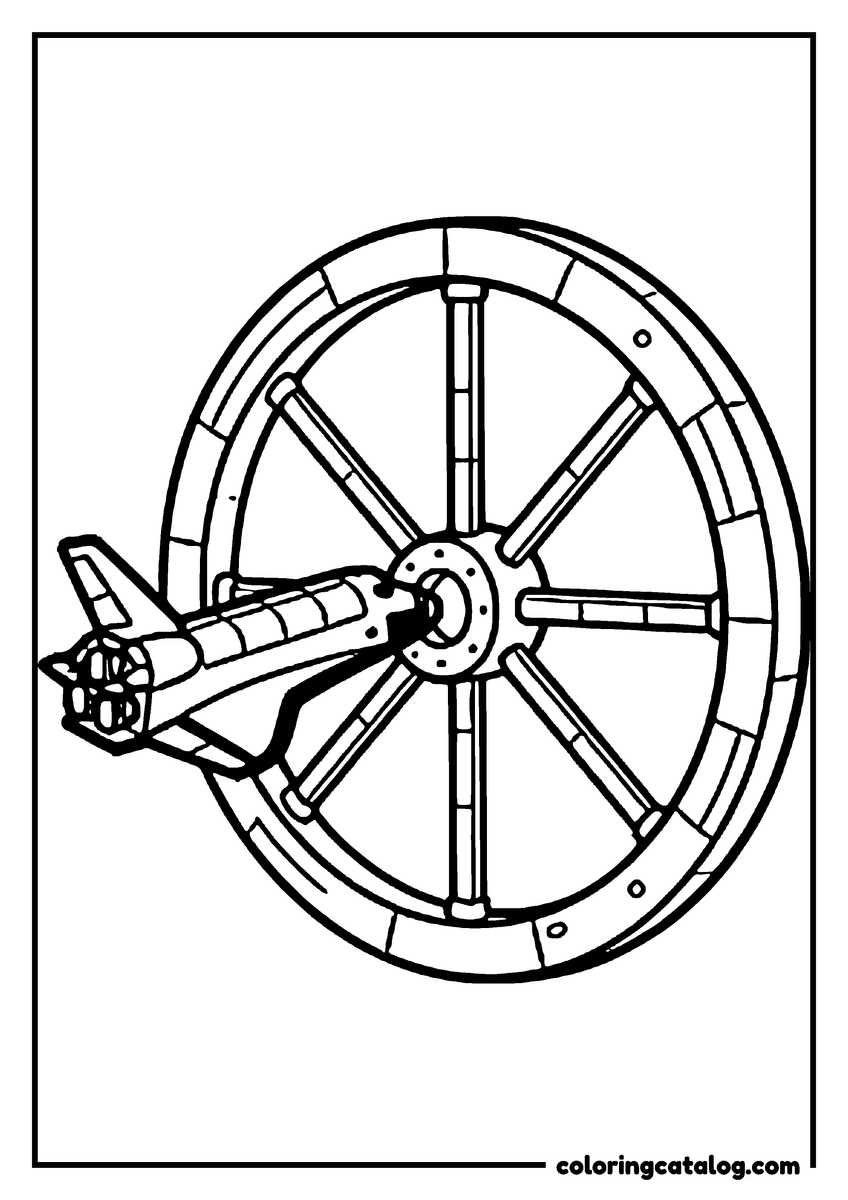
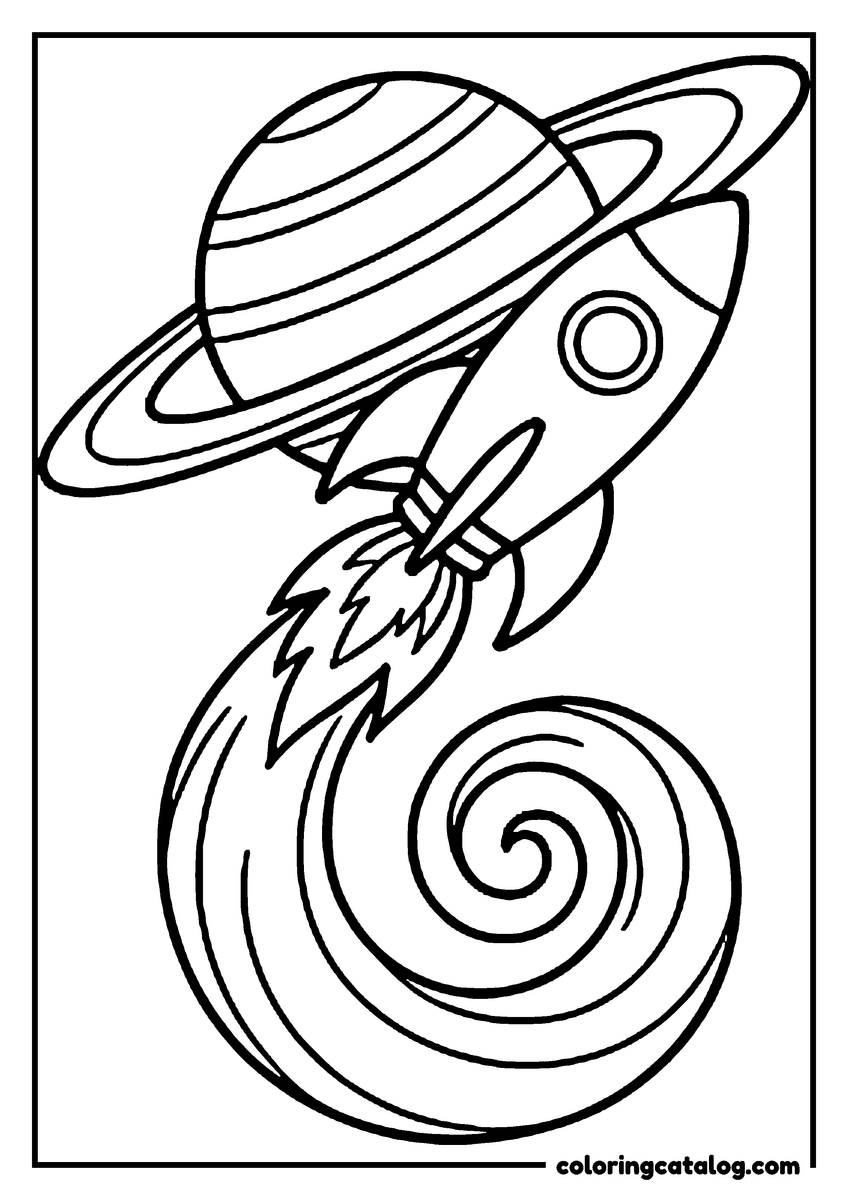
Then the machines. A rocket lifts off through billowing clouds, another blasts past a ringed planet, and a third is drawn cut open to show the portholes, the control deck and the crew's hammocks. A space station spreads its solar panels above Earth, and a shuttle docks with a wheel-shaped station. The four-legged lunar lander on a crater rim echoes the Apollo landers, which put twelve astronauts on the moon between 1969 and 1972.
The small probe dodging asteroids has no crew at all. It is a robot spacecraft, a link kids enjoy making with the robot coloring pages. For moon bases, mission control and constellations, continue with the space coloring pages.
Preschool solar system pages and fuller scenes for older kids
For preschool solar system lessons, one big round shape at a time works best: the smiling chibi ringed planet with its little moon friend, the sun, the moon phase wheel. Press Quick to color and the planets and comets with the fewest small areas lead the grid:
- Spiral galaxy of star clusters
- Wheel of moon phases
- The sun and its solar loops
The preschool coloring pages keep going with other big, simple subjects for the same age.
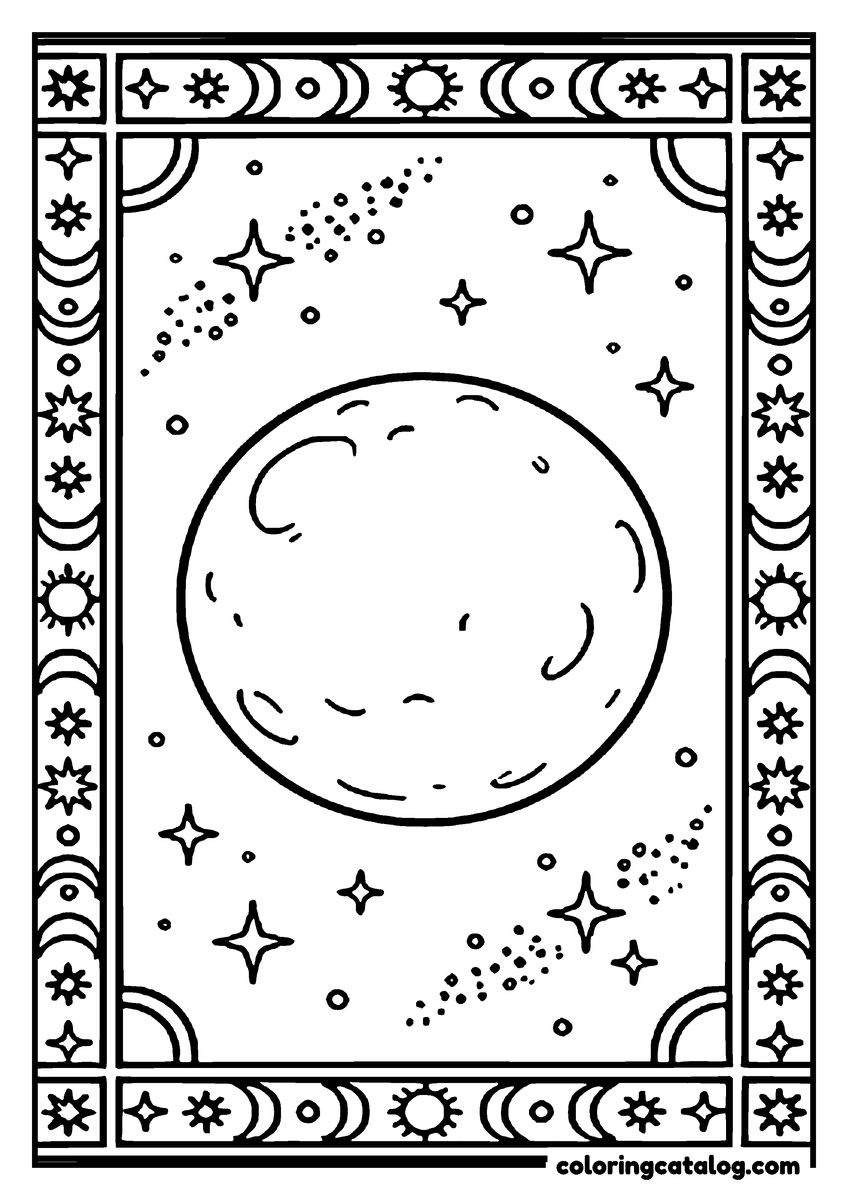
Older kids and adults tend to reach for the space station's panels, the rover's tracks, the alien handshake and the planet framed in a border of moons and suns. Switching the grid to Lots of detail brings those crowded scenes to the top:
- Two children stargazing in cardboard helmets
- Planet in a frame of moons and suns
- Astronaut driving a rover
The two mandalas sit in between. They repeat the same shapes around the sun, so they go quickly once a child settles on a color pattern. For more of that slow, repeated coloring, try the mandala coloring pages or the adult coloring pages.
A solar system mobile for a school project
The planets make a classic solar system model once they are colored and cut out.
- Gather the row of planets, the ringed planet, the gas giant and the sun with Add to pack.
- Color each planet in its real shades, then cut it out.
- Glue each cutout onto thin card so it hangs flat and stiff.
- Tie threads of different lengths and hang everything from a coat hanger, the sun at one end and the planets in order.
In a classroom, the same cutouts can run along a wall. Real distances will never fit: if the sun were the size of a front door, Earth would be about the size of a penny some 700 feet away, and Neptune a tennis ball about four miles down the road. Pair the project with the school coloring pages for a science fair week.
The stargazing sheet also suits a night under the sky. The camping coloring pages bring the tents and the campfire.
Printing a solar system set on A4 or Letter
Every planet sheet comes as a free 300 dpi PDF in A4, which prints edge to edge at 100 percent on A4 paper. Letter printers need fit to page, so Saturn's outer rings are not trimmed at the margin. For a mobile, load every planet you want into a single file with Add to pack and run it on card stock. Our printing help points to each setting, and the original drawings may be used at home or in class at no cost.
Solar System Coloring Pages: questions and answers
Can kids label the planets on these pages?
Yes. The row of planets and the solar system mandala leave white space around each world. Kids can write the names in pencil, from Mercury nearest the sun out to Neptune, then color each planet in its real shades.
Is Pluto still a planet?
No. Since 2006 astronomers have classed Pluto as a dwarf planet. It is smaller than our own moon and shares its region of space, the Kuiper Belt, with many other icy bodies.
Is there a moon phases coloring page?
Yes. A wheel of crescents and half moons surrounds a full moon. Color it, then compare it with the real moon over the next month, since a full cycle takes about 29.5 days.
Why does a comet have a tail?
Sunlight warms the comet's ice, which turns to gas and carries dust off with it. Sunlight and the solar wind push that glowing trail away from the sun, so the tail points outward whichever way the comet travels.
What color is the sun really?
Seen from space, its light is close to white. Our atmosphere scatters some of the blue, which makes it look yellow from the ground. On paper, a yellow middle with orange and red flames reads as the sun to everyone.
Same drawer
More nature coloring pages
Sandcastles, sprinklers and campfires by the lake, summer vacation pages with plenty of action for big kids.
Adult colorists will enjoy real flowers drawn up close, peonies in full bloom and sunflowers in a tin bucket.
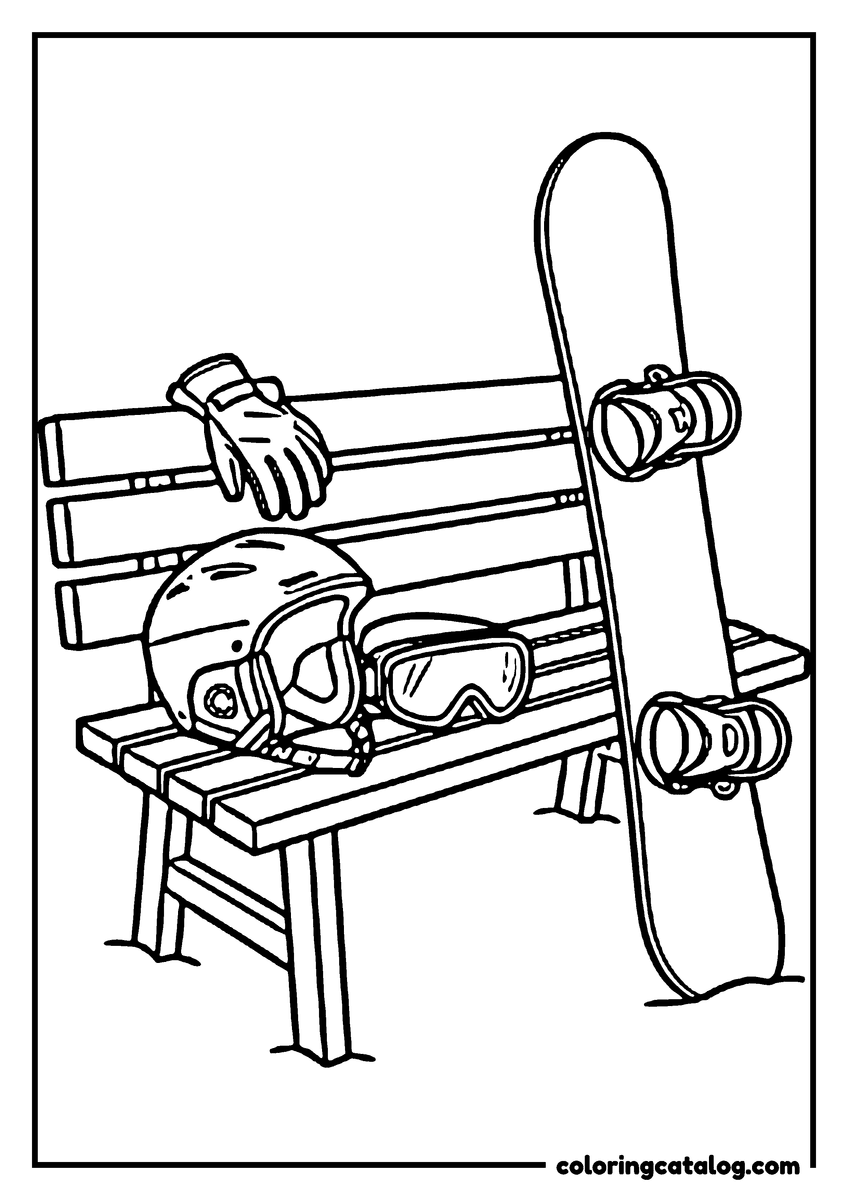
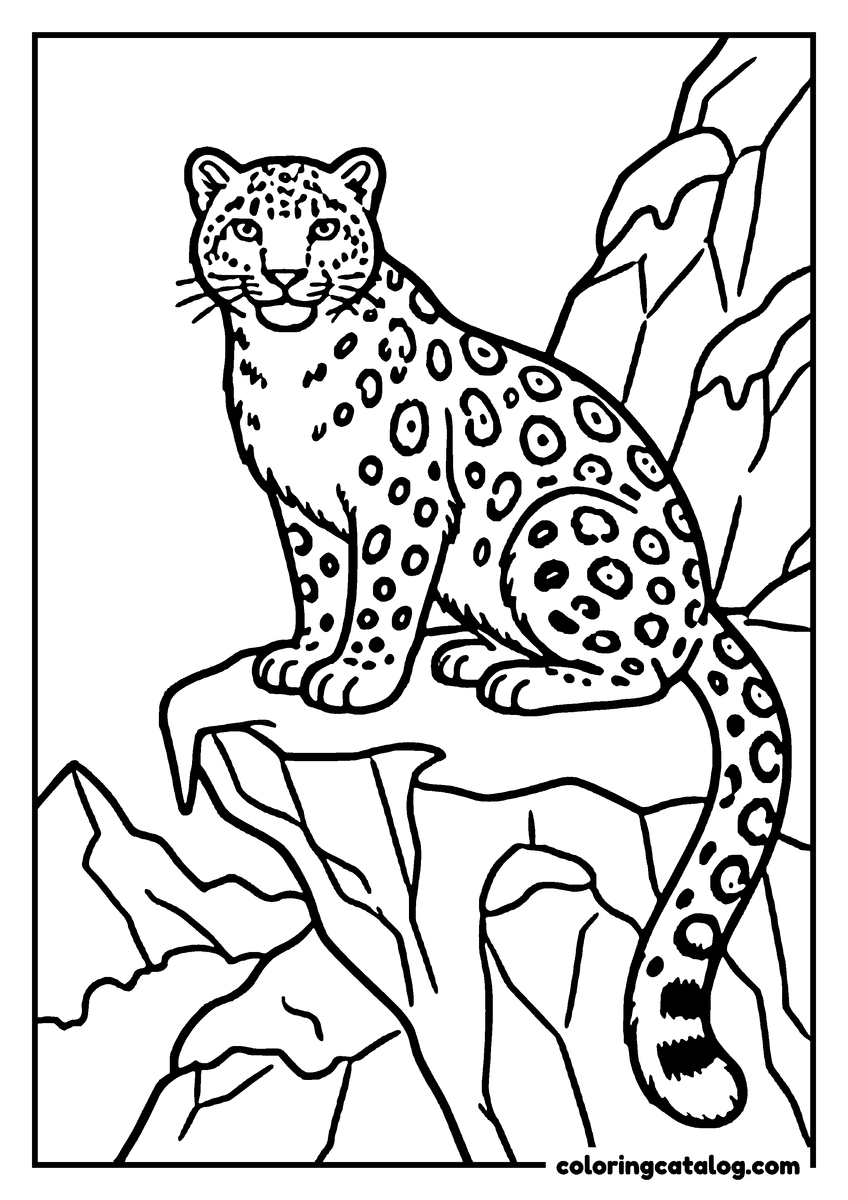
Cold days indoors pass quickly with figure skaters spinning on the rink and foxes diving into the snow.
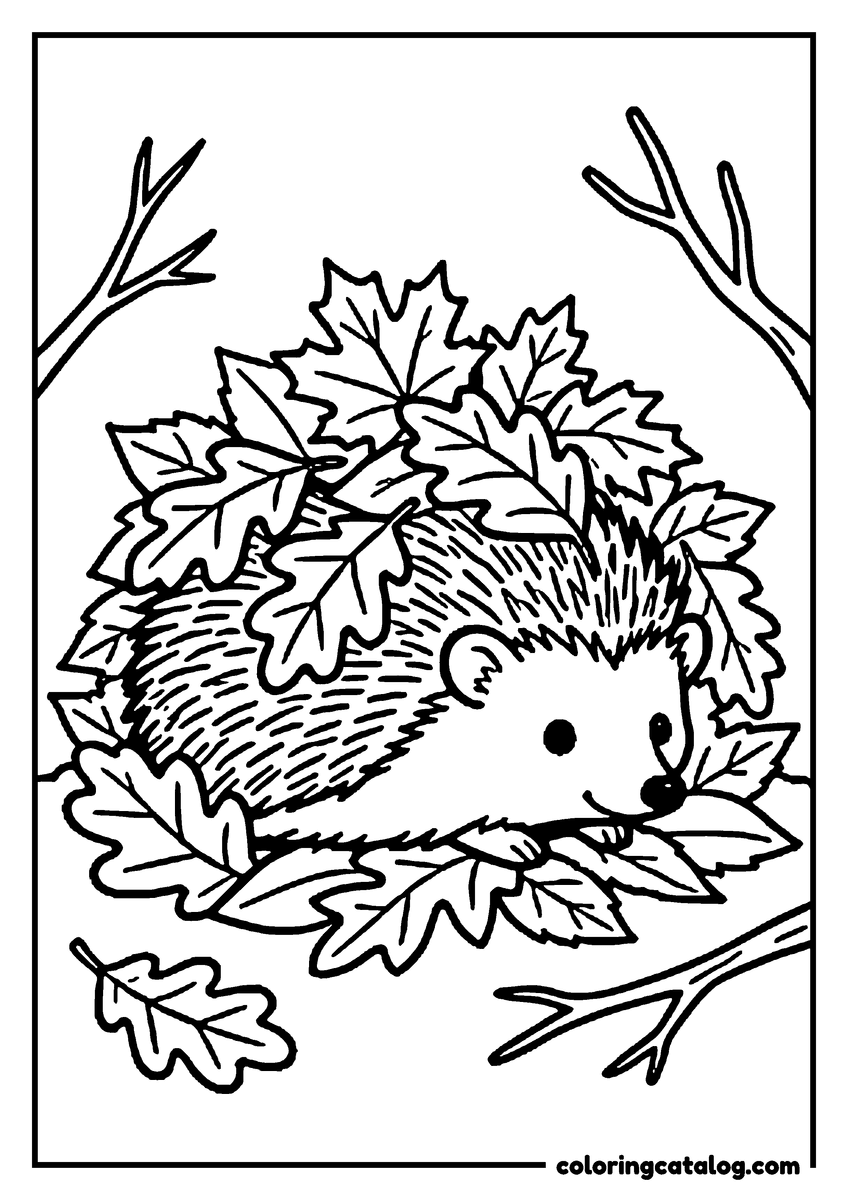
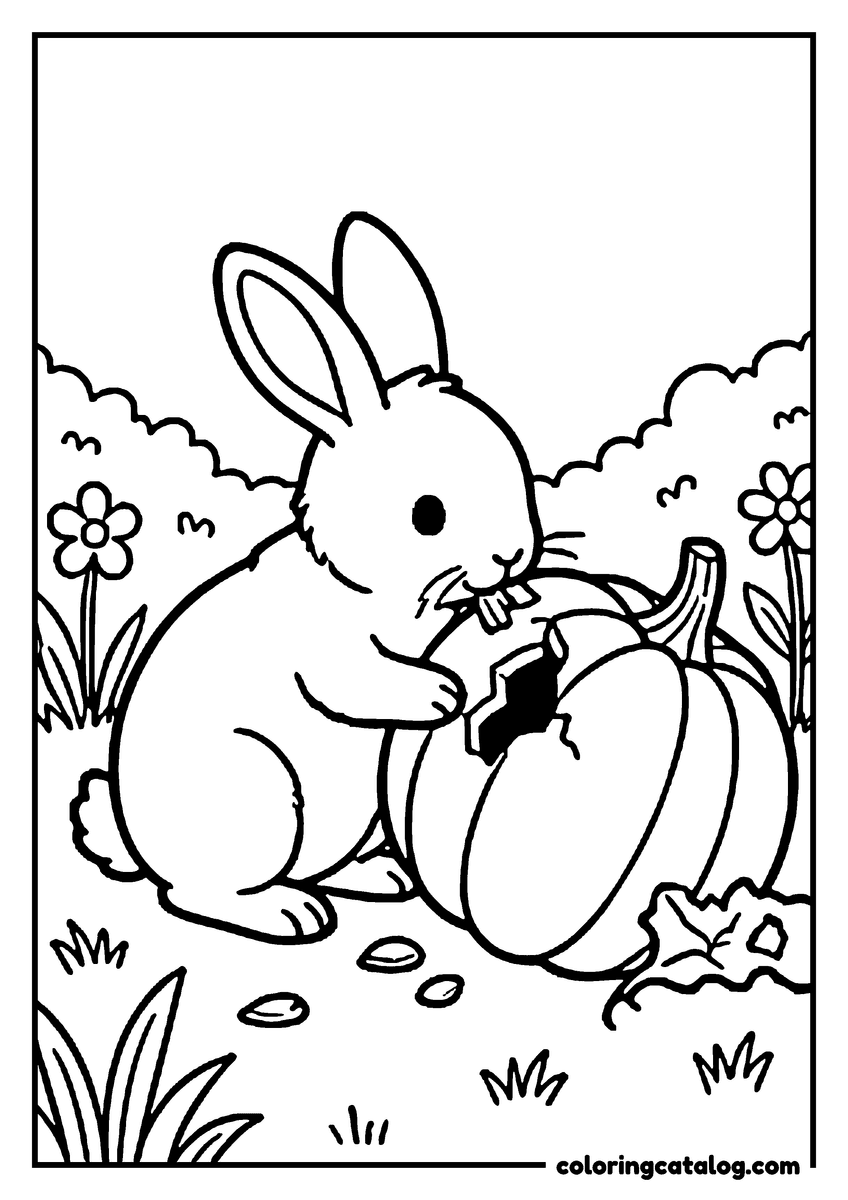
Hedgehogs in the leaves and cocoa on the porch, autumn pages to color from September to Thanksgiving.