Supplies
The best markers for coloring
One question decides everything else: alcohol or water-based. This page answers it for coloring books and printed pages, then names the sets worth buying on each side.
Most marker guides are written for illustrators working on marker paper, which is made for the job. A coloring page is a different situation: either a bound book on ordinary stock, or a sheet that came out of a home printer. The advice below is for those two, and it changes a lot because of it.
Alcohol or water-based: decide this first
Every marker sold for coloring is one or the other, and the choice decides how the page looks, what paper it needs, and what happens to the table underneath.
Alcohol markers carry dye in a solvent that evaporates within seconds. The color dries flat with no visible strokes, a second pass deepens it without leaving a line, and two colors worked into each other blend on the page. That is why a page colored with them looks printed rather than filled in. The cost is that the solvent keeps moving after it leaves the tip: a little sideways past the outline, and straight down through thin paper. They also smell, which matters at a kitchen table.
Water-based markers carry color in water, which the paper fibers soak up and hold. On normal printer paper nothing reaches the sheet below, washable versions come out of skin and most clothes, and there is no solvent smell. The trade is streaking: go back over an area that has started to dry and you get a visible edge where the two passes meet, and a heavily colored sheet ripples slightly as it dries.
A simple way to choose: for kids, a classroom, or double-sided books, buy water-based. For an adult coloring on single-sided books or on pages printed on heavier paper, alcohol markers give the better result.
Markers that don’t bleed through paper: what actually decides it
Ignore no bleed on the box. The phrase usually describes how far ink spreads sideways from the tip, not whether it reaches the back of the sheet. What decides that is the ink type and the paper weight, and three numbers cover it.
- 80 gsm (20 lb), the paper already in your printer: fine for water-based markers, useless under alcohol markers.
- 120 gsm (32 lb): where alcohol markers mostly stop. This is the number to remember.
- 160 gsm and up: card stock. Nothing goes through, and the sheet stays flat enough to frame or hang on a fridge.
Whatever the paper, put a scrap sheet under the page. It costs nothing and catches the dot of ink that a tip held in one spot pushes through. In a book printed on both sides, a piece of card behind the page you are working on protects the drawing on the back.
If you print at home, the paper costs less than the pens and solves the problem for good. The printing guide has the same paper advice for every medium, including crayons and watercolor.
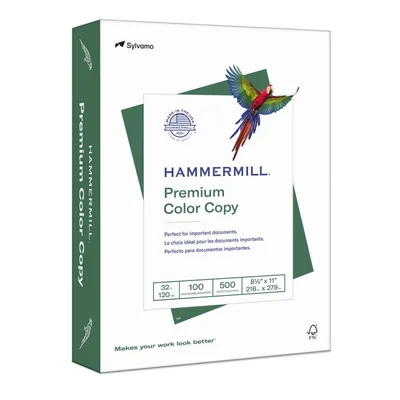
Hammermill Premium Color, 32 lbPaper
32 lb paper is 120 gsm, heavy enough to stop most marker ink reaching the sheet underneath. Ordinary copy paper is 20 lb, or 80 gsm.
Alcohol markers worth buying
Studio brands are refillable with replaceable nibs, which matters if you draw for a living and not much if you color on a Sunday. Mid-range sets have taken most of that market for coloring, and Ohuhu is the name that comes up most in coloring groups. These are the best markers for adult coloring books printed on one side and for pages printed on 120 gsm.
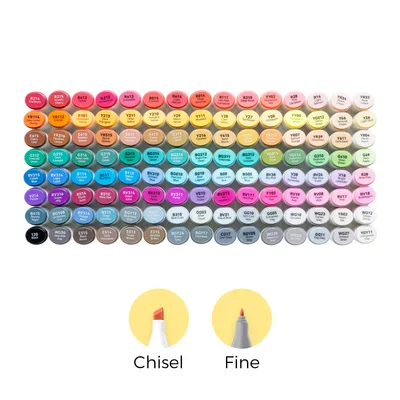
Ohuhu alcohol markers, 120 colorsMarkers
The set that comes up most often in coloring groups. Alcohol ink dries flat with no streaks and blends where two colors meet. It goes through paper thinner than 120 gsm, so pair it with heavier paper or a single-sided book.
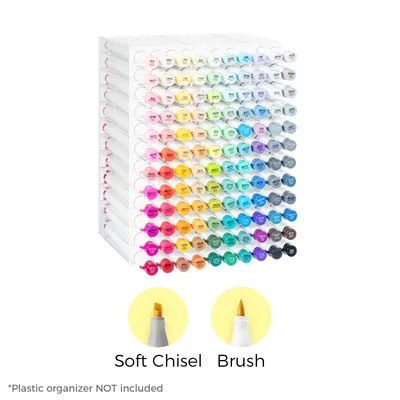
Ohuhu Honolulu, brush and soft chiselMarkers
Alcohol markers with a brush tip at one end and a soft chisel at the other. Nicer on petals, fur and anything curved; a fine-tip set is easier in small enclosed shapes.
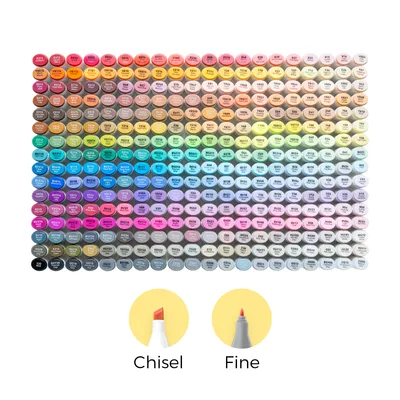
Ohuhu Oahu, 320 colorsMarkers
The big alcohol marker set people search for by name. Three hundred and twenty is far more than a coloring page needs, so buy it for the range itself, which is a fair reason as long as you know it.
The first two differ at one end. A fine tip is the safer choice for coloring pages, because most enclosed shapes are small. A brush tip is nicer on petals, fur and anything curved, and it is the one to pick if hand lettering is also on the list.
The third is the same kind of ink in a set of three hundred and twenty, the one people look up by name. No coloring page needs that many colors: past sixty you are buying close neighbors of shades you already have. Buy it because the range is the pleasure, or buy the 120 and spend the difference on paper.
Water-based markers worth buying
This is the practical choice for anyone coloring printed pages on ordinary paper, for double-sided books, and for a house with a table that matters.
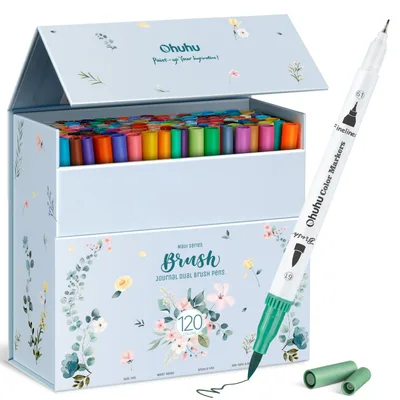
Ohuhu Maui, 120 water-basedMarkers
Water-based, so the ink stays on ordinary printer paper instead of reaching the table. A brush at one end fills areas, a fineliner at the other handles small shapes.
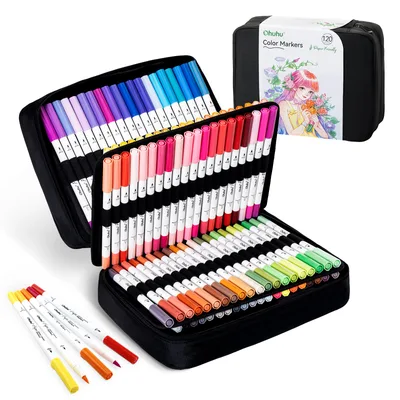
Ohuhu Pupe, 120 water-basedMarkers
Water-based markers sold on not lifting when a second layer crosses a dry first one. That lifting is the usual complaint about water-based sets, so this is the one to look at if you color in layers.
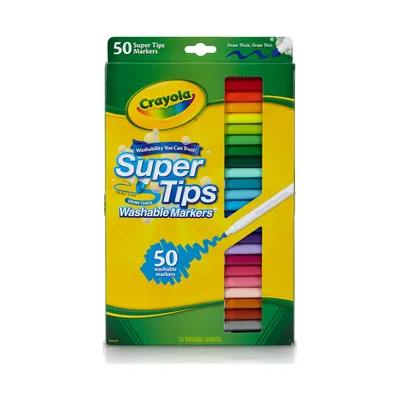
Crayola Super Tips, washableMarkers
Water-based and washable, so the ink comes off hands and most clothes, which on a school morning is the specification that counts. They stay on ordinary printer paper.
The common complaint about water-based ink is lifting: a second pass over a dry first one can pull color up and leave a pale patch. The Pupe set is sold on resisting that, which matters if you color in layers. If you color each area in one go, either set will do.
Markers for kids and for a classroom
For young kids the list is short: washable and water-based. Washable matters more than the number of colors, because the marker will end up on a sleeve, a cheek and the wall before the page is finished. Crayola Super Tips fit that, and a large set gives several kids enough to share without a fight over the one green.
For a class set, a few things save the most trouble:
- Sort markers into a cup per table rather than a box per child. Caps get lost from boxes, and a marker left uncapped dries out overnight.
- Print on ordinary copy paper. Washable markers do not need heavier stock, and a class goes through a lot of sheets.
- Pick pages with big shapes. A thick marker tip in a small shape makes a mess. On any collection, the Quick to color button filters to the sheets with large areas, such as the animal or dinosaur pages.
Brush, chisel or fine tip
Nearly every set is now made of dual tip markers, and the pairing tells you what the set was designed for. A fine tip and a chisel fills areas quickly and edges them cleanly, which is what most coloring is. A fine tip and a brush is made for lettering and curved shapes, and it rewards a lighter hand.
Match the tip to the page. On sheets filtered to Lots of detail in a collection, such as the mandalas, most shapes are only a few millimeters across, and a fine tip does nearly all the work. On bold pages the chisel or brush end finishes an area in a few strokes and leaves fewer streaks.
How to blend markers on a coloring page
Blending works with alcohol markers and barely at all with water-based ones, so this is an alcohol-marker technique.
Work light to dark, while the ink is still wet. Cover the whole shape with the lighter color, then add the darker one only along one edge and pull the lighter marker back over the join. Two shades from the same family (a light and a mid green, say) blend far more easily than two unrelated colors.
Color in small circles, not long strokes. Long strokes dry at different times and leave stripes. Small overlapping circles keep the area wet and even. On printer paper this matters more, because thin paper takes ink quickly.
Acrylic markers for bold and easy pages
Bold-and-easy books changed what people reach for. Large flat areas and a thick outline are exactly what an acrylic marker is good at: the paint is opaque and goes down as one solid color with no felt-tip streaks, and a brush tip that opens from 1 mm to 6 mm fills a shape and edges it with the same pen.
The catch is the paper again. Acrylic paint is wet and needs weight under it: a single-sided book page or a 120 gsm sheet holds it, ordinary 80 gsm copy paper cockles and can soak through. Give it a minute to dry before resting a hand on it. Our cozy coloring pages, printed on heavier paper, take these pens as well as a book does.
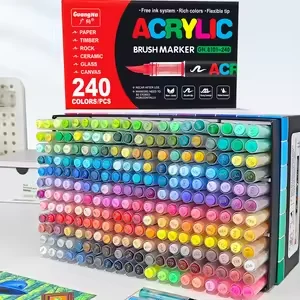
Guangna acrylic paint markers, 240 colorsMarkers
Opaque acrylic ink through a brush tip that goes from 1 mm to 6 mm, for the flat solid color that bold-and-easy pages look best in and a felt tip cannot match. They need weight under them: a single-sided book page or 120 gsm paper, not ordinary copy paper.
Opaque brush-tip acrylic for flat, solid color on bold pages.
Posca and paint markers: when they work
Posca is the name most people mean by paint marker, and plenty of people arrive at coloring pages wanting to use them. They are very good pens, but they behave differently from coloring markers.
The paint is opaque. Marker ink is translucent, so the black outline still shows if you go slightly over it. Paint covers the outline wherever it touches, and the drawing starts to disappear. Most sets also center on bullet and chisel nibs around 2 mm wide, which is wider than a lot of the shapes on a detailed page.
Paint also takes a moment to dry, and a hand resting on a finished area smears it. If you already own them, use them on the boldest sheets and color slightly inside the lines. If you are buying for coloring and want that flat, opaque look, a brush-tip acrylic set does the same job and still reaches small shapes.
What is worth the money at each budget
Tight budget: a washable water-based set and ordinary printer paper. It covers kids, classrooms and most bold pages, and nothing gets ruined.
Middle: a mid-range alcohol set of around 120 with a fine tip, plus a ream of 120 gsm paper. This is where the finished look comes from, and the paper is part of the purchase, not an extra.
Not worth it for coloring: sets above a hundred and twenty colors unless the range is the pleasure, separate colorless blenders (many sets already include one, and on thin paper it pushes ink around more than it blends), and markers sold as writing on every surface, which are paint pens and have the outline problem described above.
Then print something to try them on
Every sheet in the catalog is free, drawn with a solid black outline, and downloads as a 300 dpi PDF without an account. Test a new set on a bold page before a detailed one. If markers turn out not to suit you, the colored pencils guide covers the other half, and the supplies page covers paper and printers.
Links to Amazon on this page are affiliate links. As an Amazon Associate I earn from qualifying purchases: the price is the same for you either way, and nothing here is recommended because of it. How this site is paid for.
Keep browsing
Marker questions
What are the best markers for adult coloring books?
A mid-range alcohol set with a fine tip, if the book is printed on one side. Alcohol ink dries flat with no streaks and blends where two colors meet, which is the finished look most adults are after. If the book is printed on both sides, use water-based markers instead, or slip a sheet of card behind the page, because alcohol ink will reach the drawing on the back.
Which markers don't bleed through paper?
Water-based ones, on normal paper. Look for water-based or washable on the box. Alcohol markers go through ordinary 80 gsm printer paper whatever the packaging says, because the solvent is what carries the ink down. For alcohol markers on printed pages, print on 120 gsm (32 lb) paper and keep a scrap sheet underneath.
Are alcohol markers good for beginners?
Yes, as long as the paper is sorted first. They are more forgiving than their reputation: going over an area again evens it out instead of leaving a line. What catches beginners is bleed-through and the smell, so color on 120 gsm paper in a room with some air. For a child under ten, washable markers are the better buy.
What is the difference between a brush tip and a chisel tip?
A brush tip bends under pressure, so the same pen draws a hairline and a wide stroke. It suits curved shapes: petals, fur, hair. A chisel tip keeps its width, which fills large areas evenly and gives a clean straight edge along a border. Most dual tip markers put a fine or bullet tip on the other end for small shapes.
How many colors do I actually need?
Between 24 and 60. Below 24 you run short of skin, foliage and shadow tones, and markers cannot mix a missing color the way paint can. Above 60 the extra colors are close neighbors of ones you already own. The 120 and larger sets are bought for the pleasure of the range, which is a fine reason, but a page does not need them.
Do markers work on printed coloring pages?
Yes, with the right paper. The sheets on this site are 300 dpi PDFs with a solid black outline, so ink does not creep along a gray, broken line. What changes is the paper: 80 gsm copy paper for water-based markers, 120 gsm or heavier for alcohol and acrylic. The printing guide covers the settings.