For grown-ups · 29 free printables
Anatomy Coloring Pages
The human body, part by part: a heart and its vessels, lungs and airways, the bones of the hand and foot, the brain, a tooth cut in half.
29 free printable anatomy coloring pages
Tap a drawing to see it full size and flip through the set. Press + to collect several and print them as one PDF.
- See it on Amazon
The same cozy rooms as Cozy Friends, with a jack-o-lantern in them: creepy characters drawn round and friendly. Eighty-eight pages printed one side only, so a marker that goes through does not ruin the next drawing.
Creepy characters drawn round and friendly, printed one side only.
- See it on Amazon
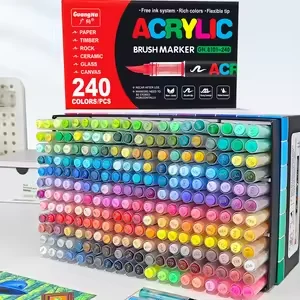
Guangna acrylic paint markers, 240 colorsMarkers
Opaque acrylic ink through a brush tip that goes from 1 mm to 6 mm, for the flat solid color that bold-and-easy pages look best in and a felt tip cannot match. They need weight under them: a single-sided book page or 120 gsm paper, not ordinary copy paper.
Opaque brush-tip acrylic for flat, solid color on bold pages.

- See it on Amazon
The book that made the cozy style what it is. Bold, simple outlines with cute animal characters, which is the opposite of the dense hunt books and finishes in an evening.
Bold, simple outlines and cute animals, done in an evening.
- See it on Amazon
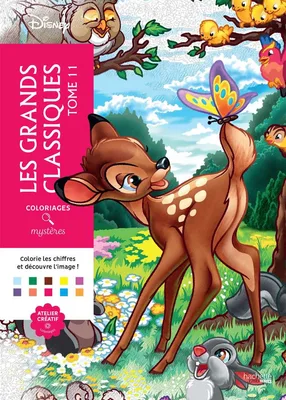
Coloriages Mystères: Grands Classiques 11Book
The eleventh volume of the French series, illustrated by Jeremy Mariez. A hundred numbered pages across Encanto, Tangled and Cars, in the large format the series keeps. French cover, English-free contents.
Numbered mystery pages across Encanto, Tangled and Cars.

- See it on Amazon
The same cozy rooms as Cozy Friends, with a jack-o-lantern in them: creepy characters drawn round and friendly. Eighty-eight pages printed one side only, so a marker that goes through does not ruin the next drawing.
Creepy characters drawn round and friendly, printed one side only.

Keep going
More free coloring pages to print next
Same 300 dpi PDFs, still free. Sheets you added to your pack stay there when you switch collections.
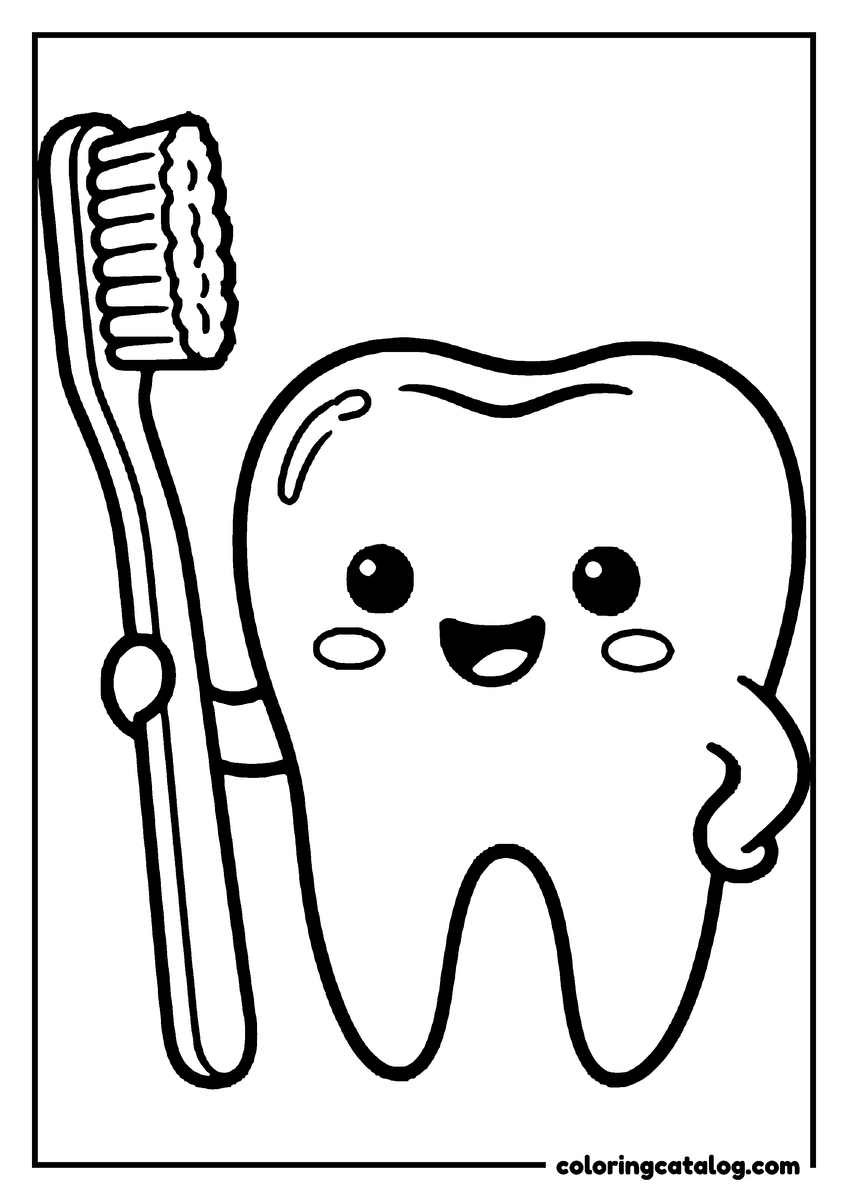
Smiling teeth, the tooth fairy and a toothbrush or two: pages for a wobbly tooth, a dentist visit or a lesson on brushing.
Patterned hearts, a heart maze, a heart jigsaw, and hearts hidden in ponds and hedges.
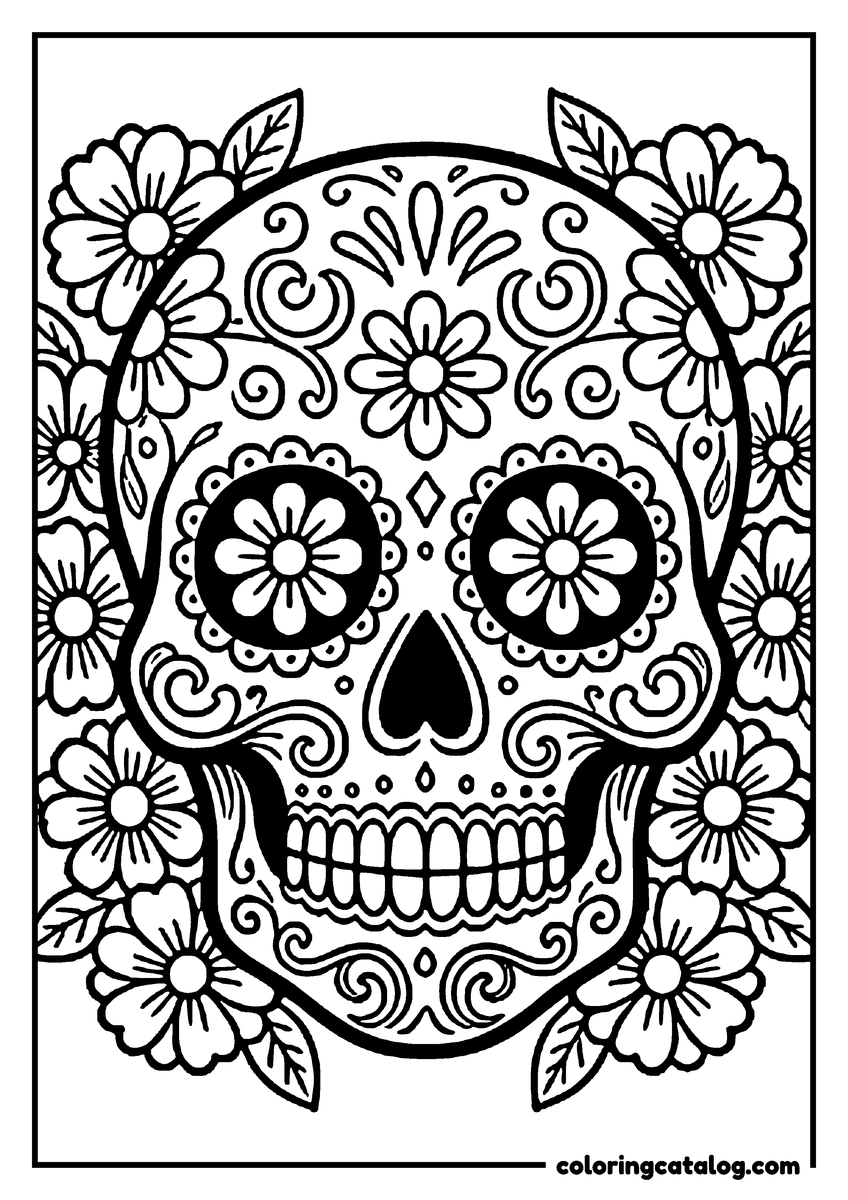
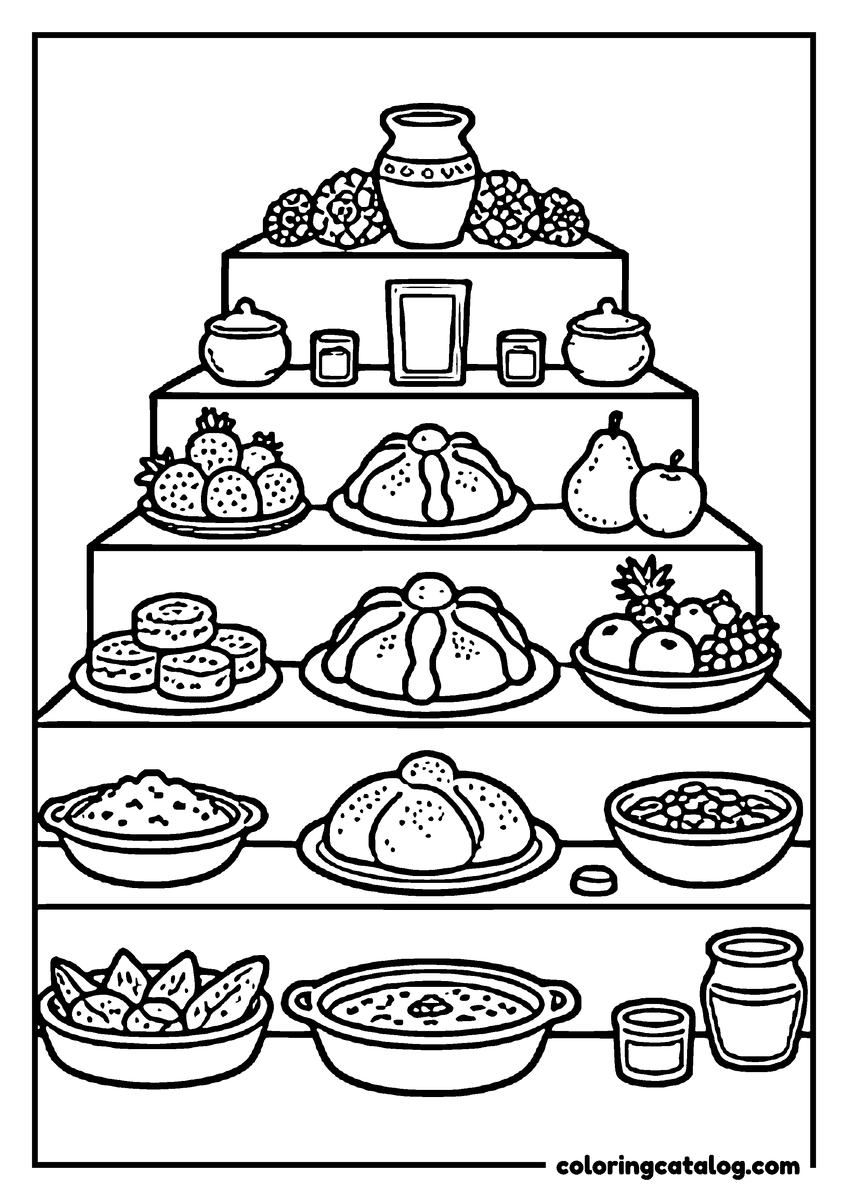

Sugar skulls, ofrendas and marigolds, and cheerful calacas going about their lives: dancing, baking, fishing and flying kites.
Rosettes, knotwork and a peacock, drawn for a slow hour with a fine pen.
Coloring is one of the oldest ways to learn anatomy. Medical and nursing students have used anatomy coloring books for decades, because filling in a structure with a color forces the eye to follow its edges, and a region you have colored is a region you remember. These anatomy coloring pages work for that kind of study, for a biology lesson at home, and simply for anyone who finds the shapes of the body beautiful.
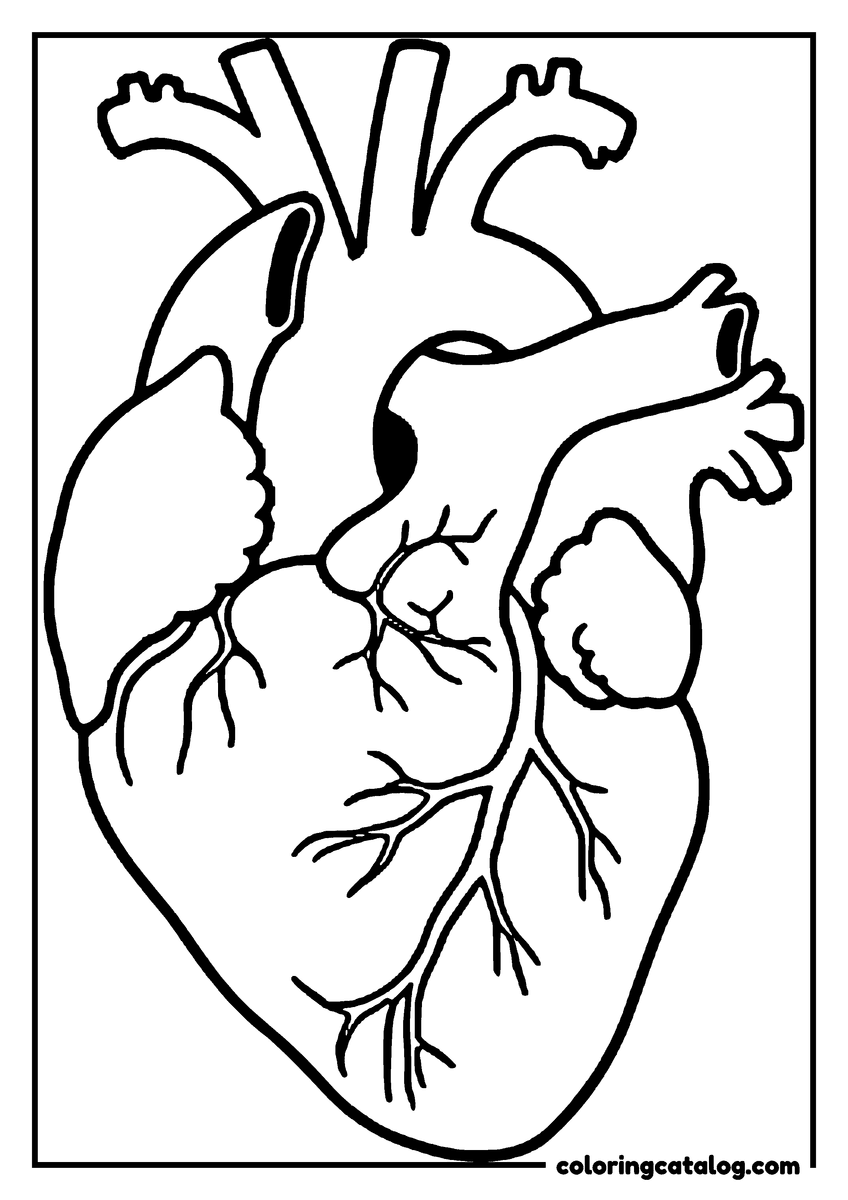
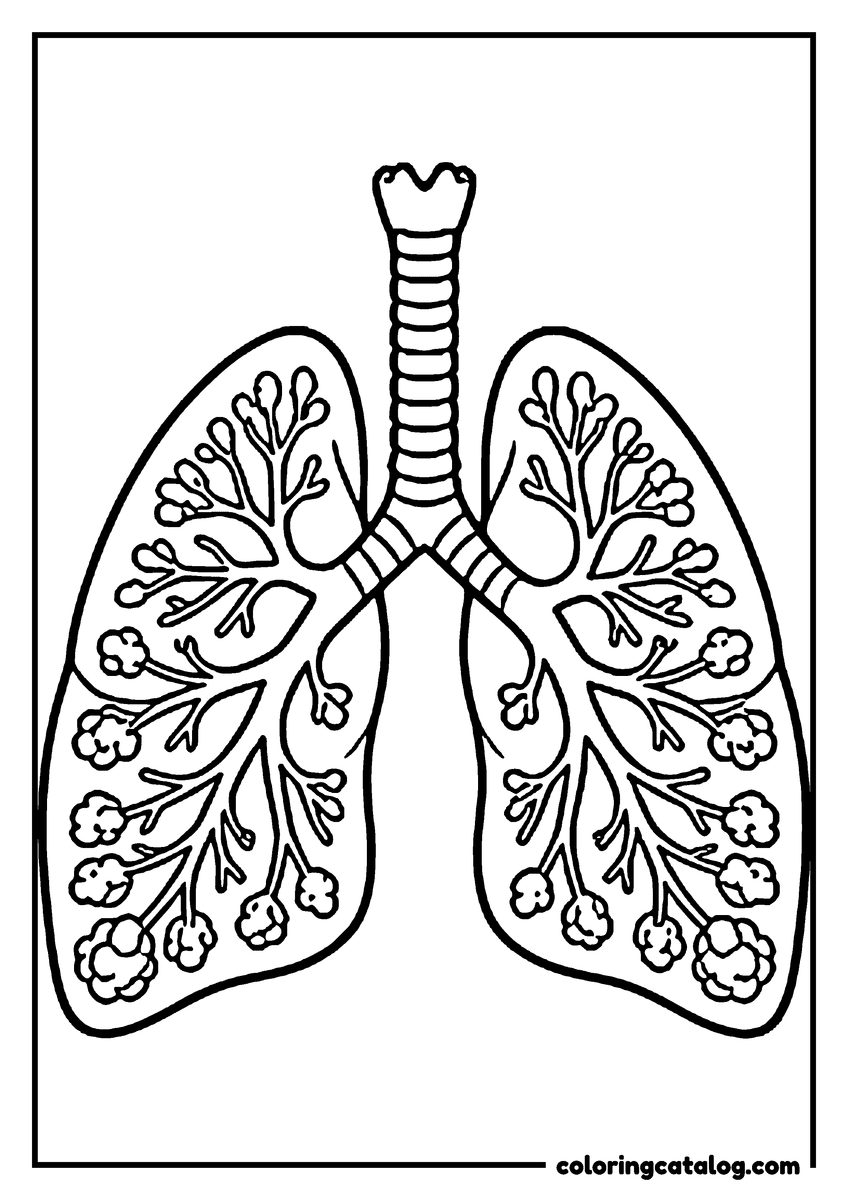
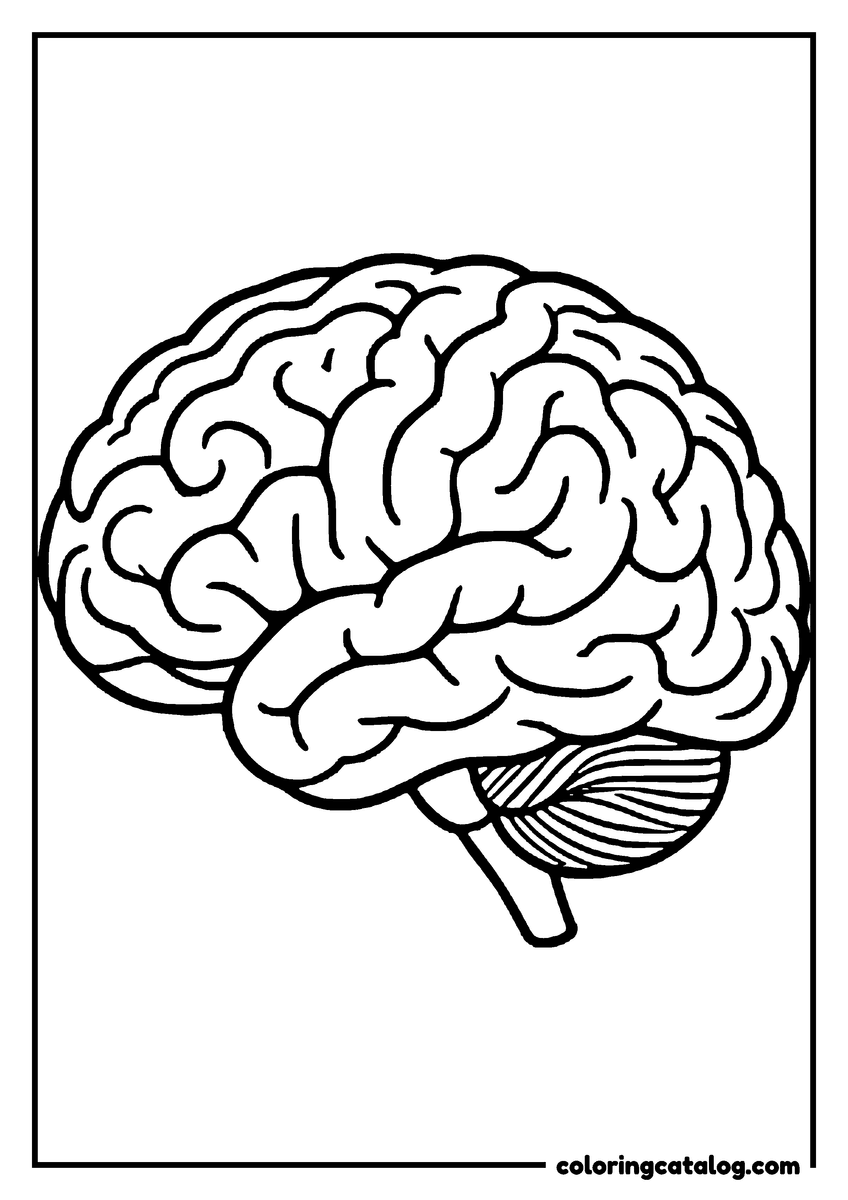
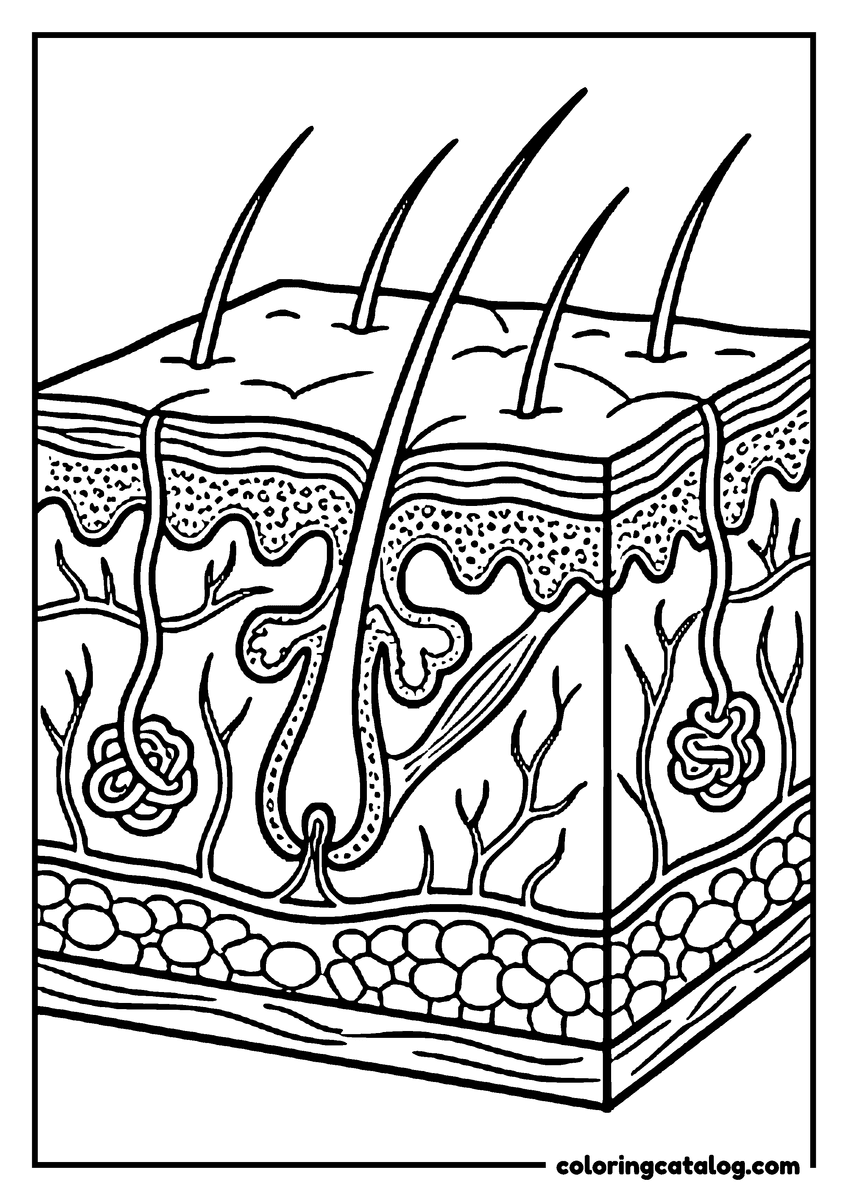
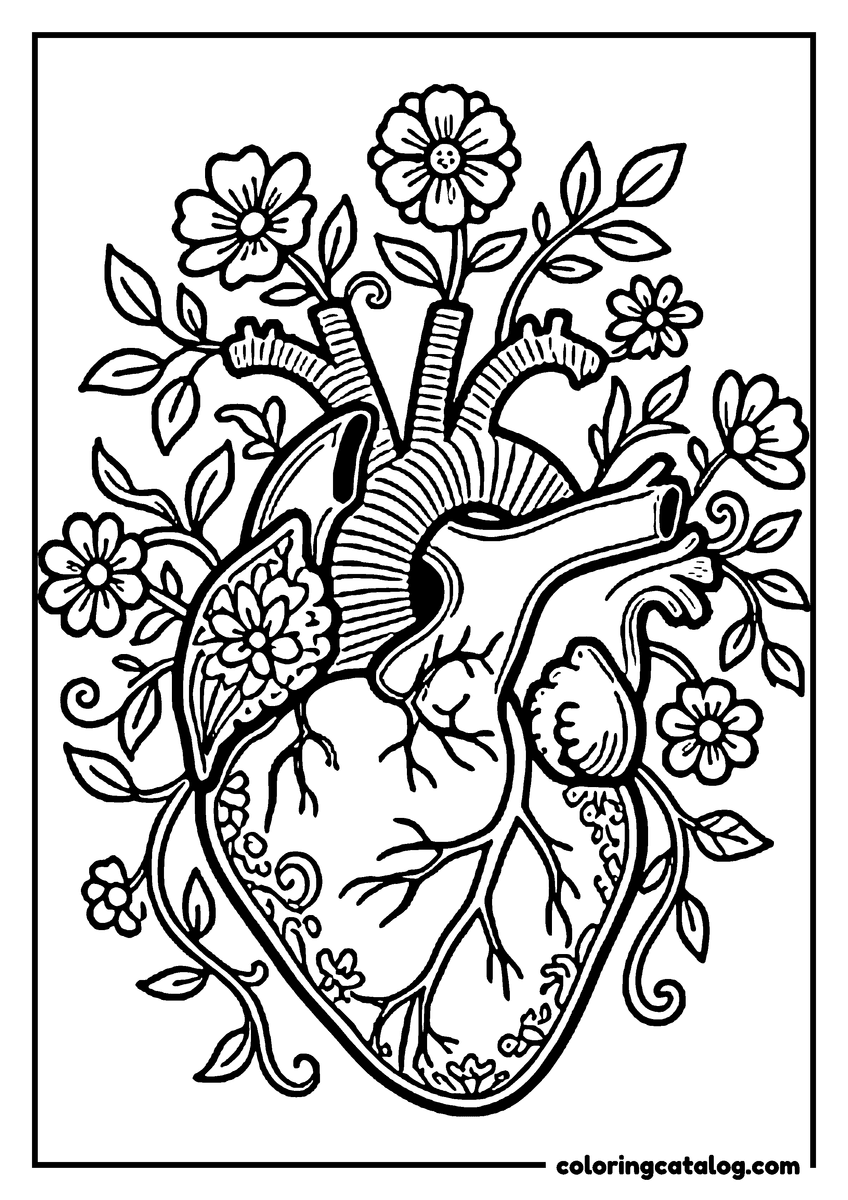
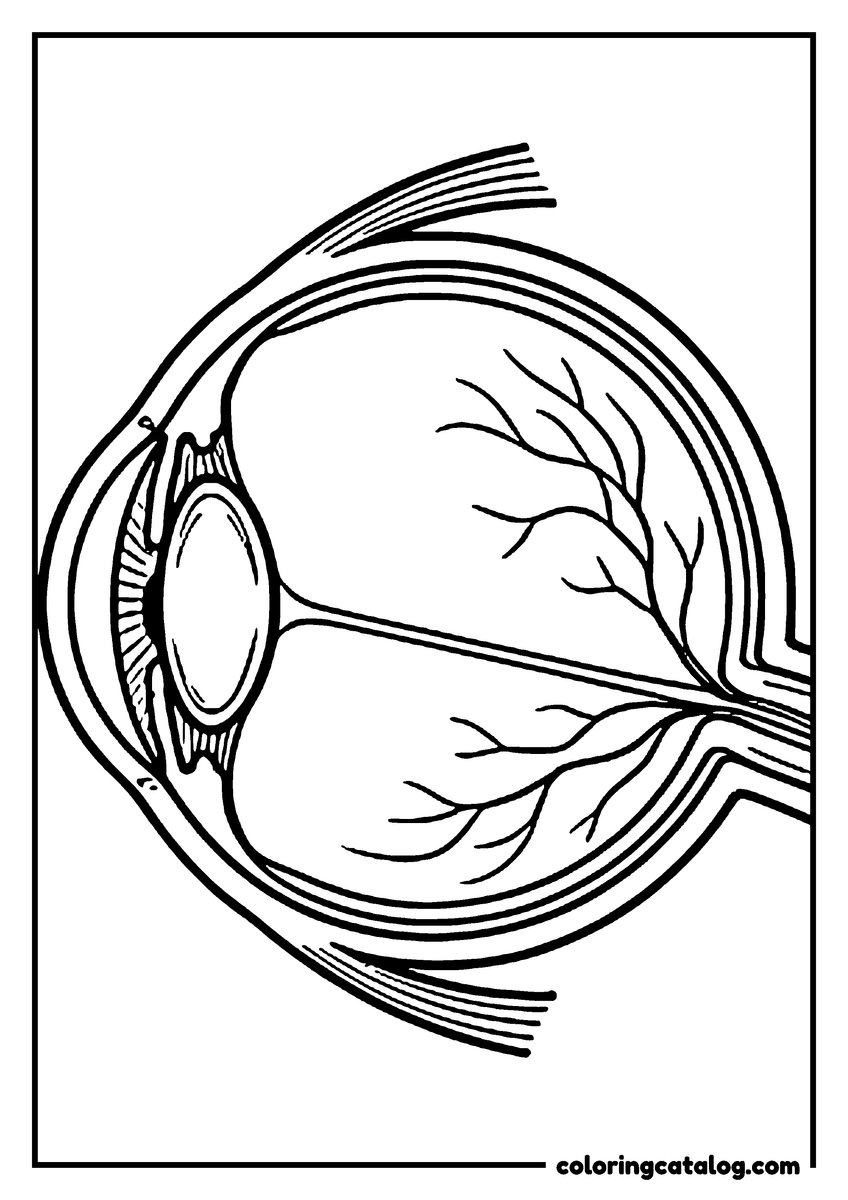
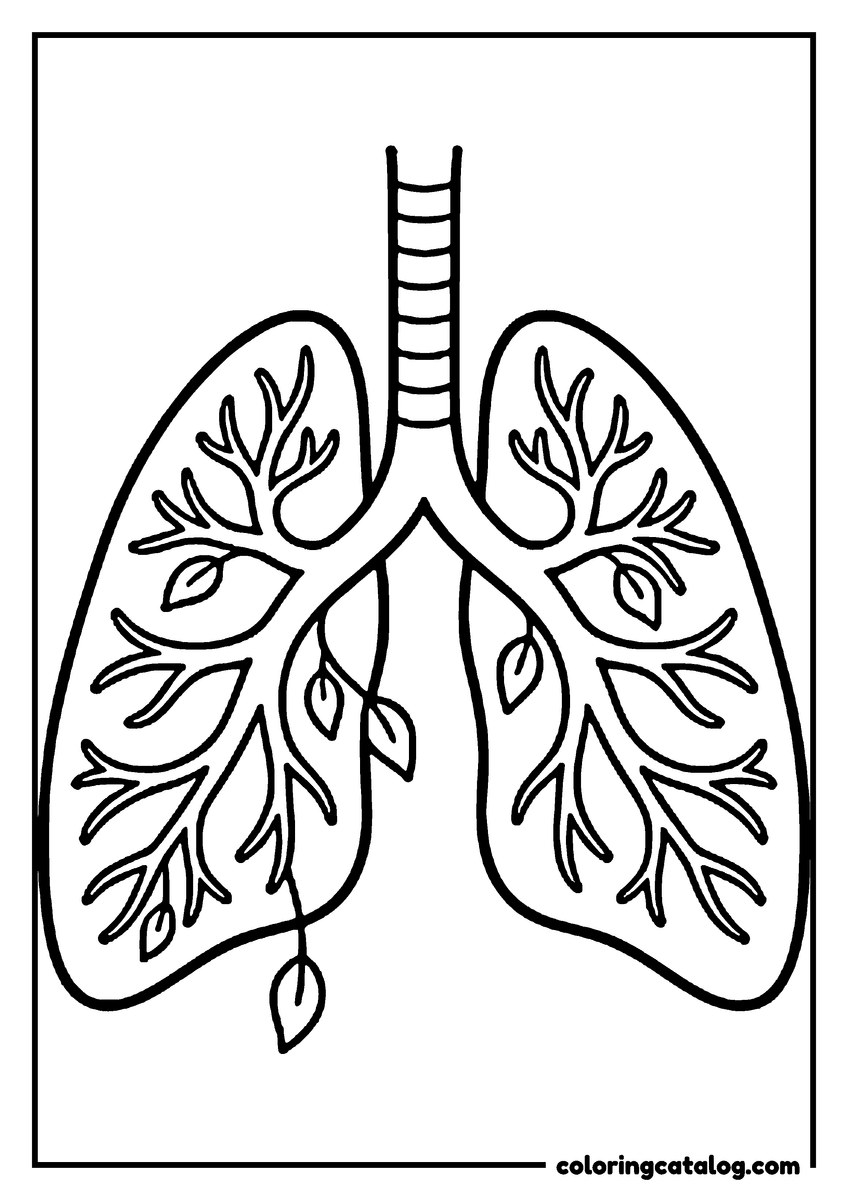
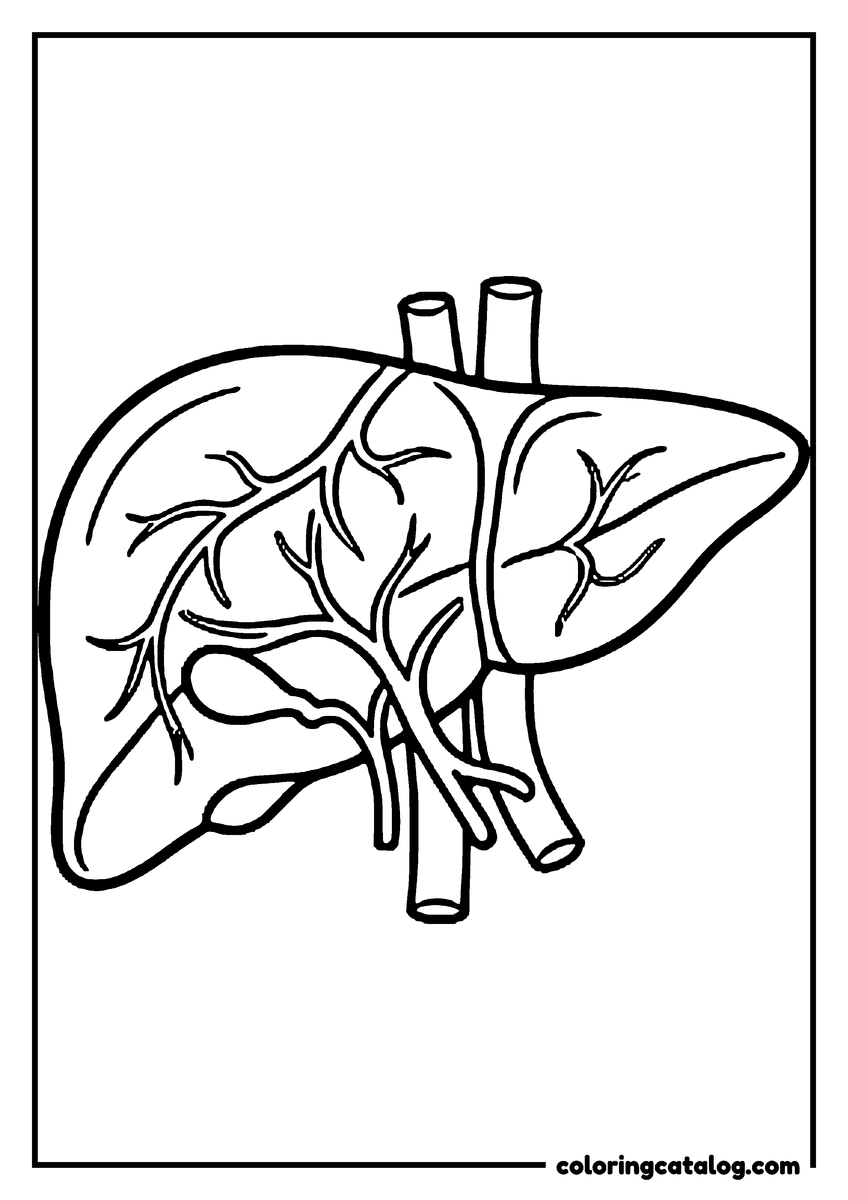
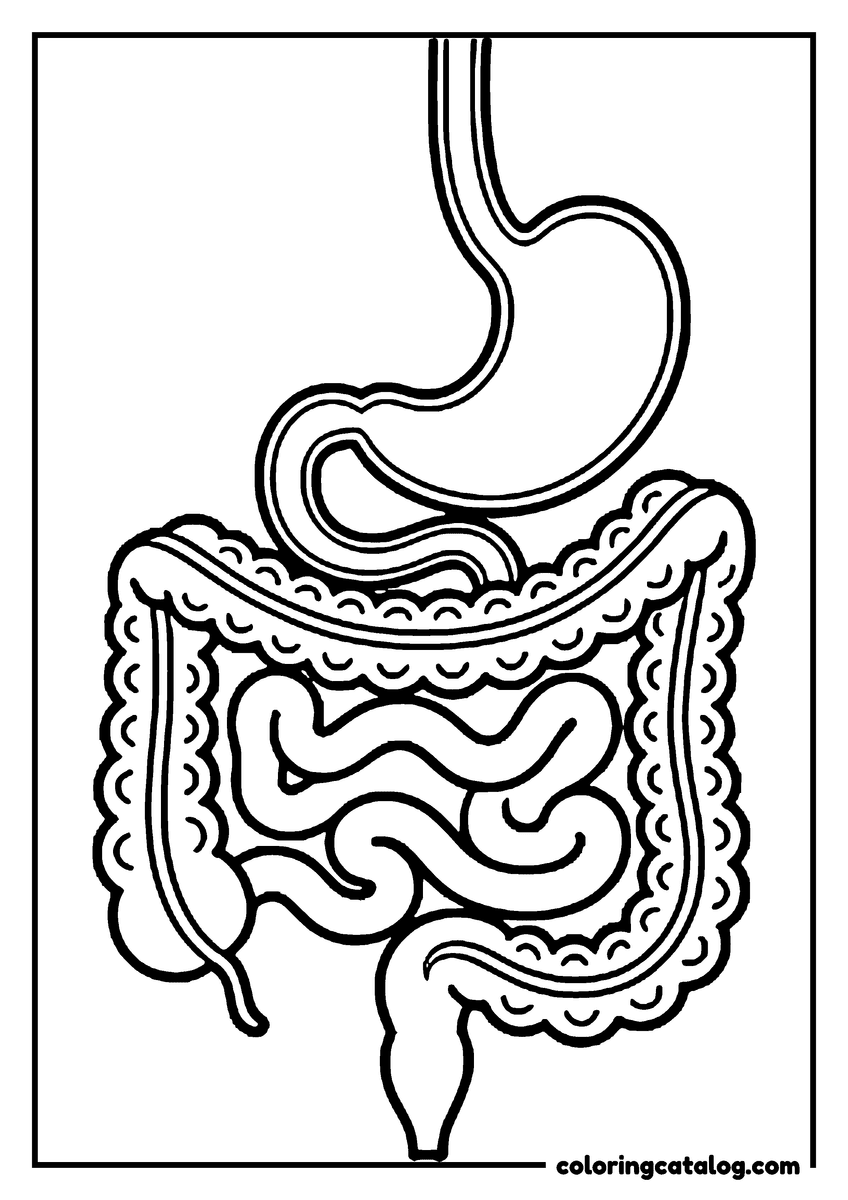
The organs come first. An anatomical heart shows the aorta, the great vessels and the coronary arteries running over its surface; the lungs hang from the trachea with their branching bronchi; the brain is seen from the side with the cerebellum tucked underneath; and the liver spreads across its page with its blood vessels. The digestive system runs from the stomach through the coils of the small intestine to the frame of the large intestine. A cross-section of the eye shows the lens and the optic nerve, and a cut through the skin shows its layers, a hair follicle, glands and the fat underneath.
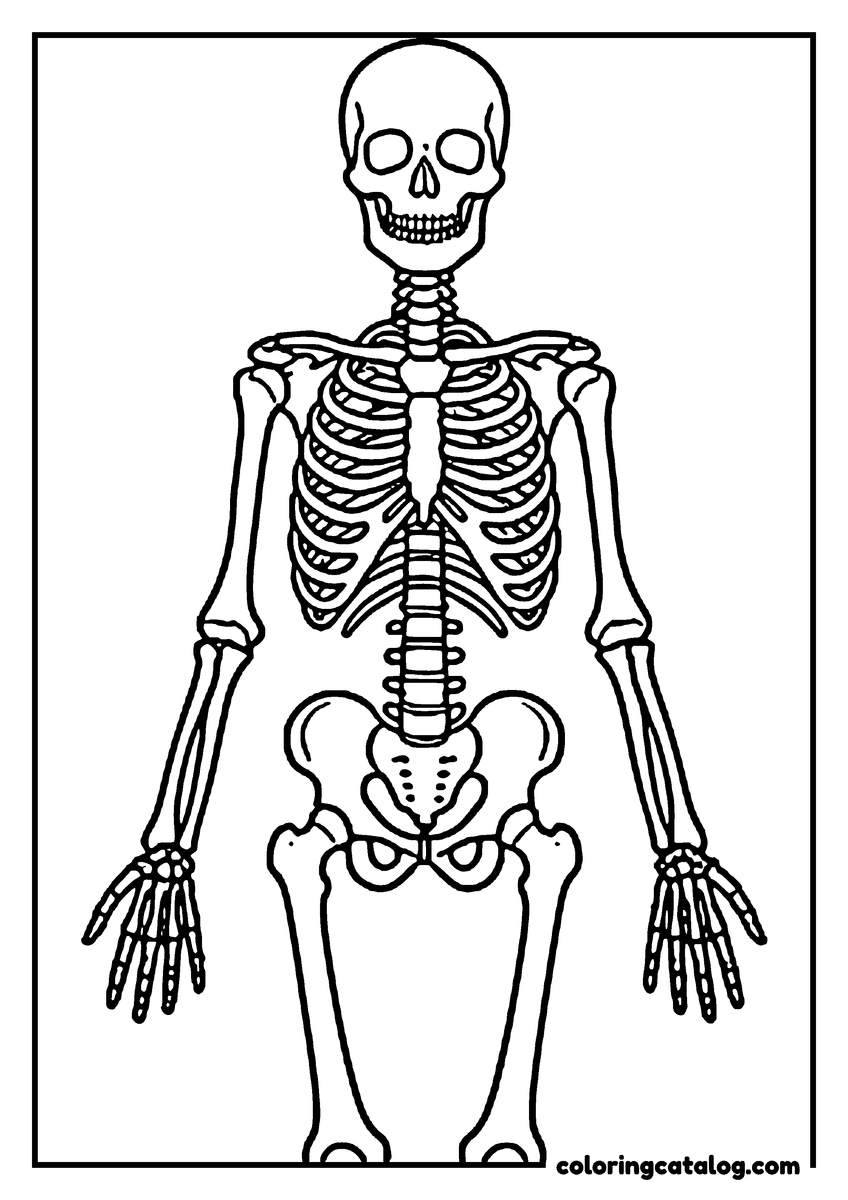
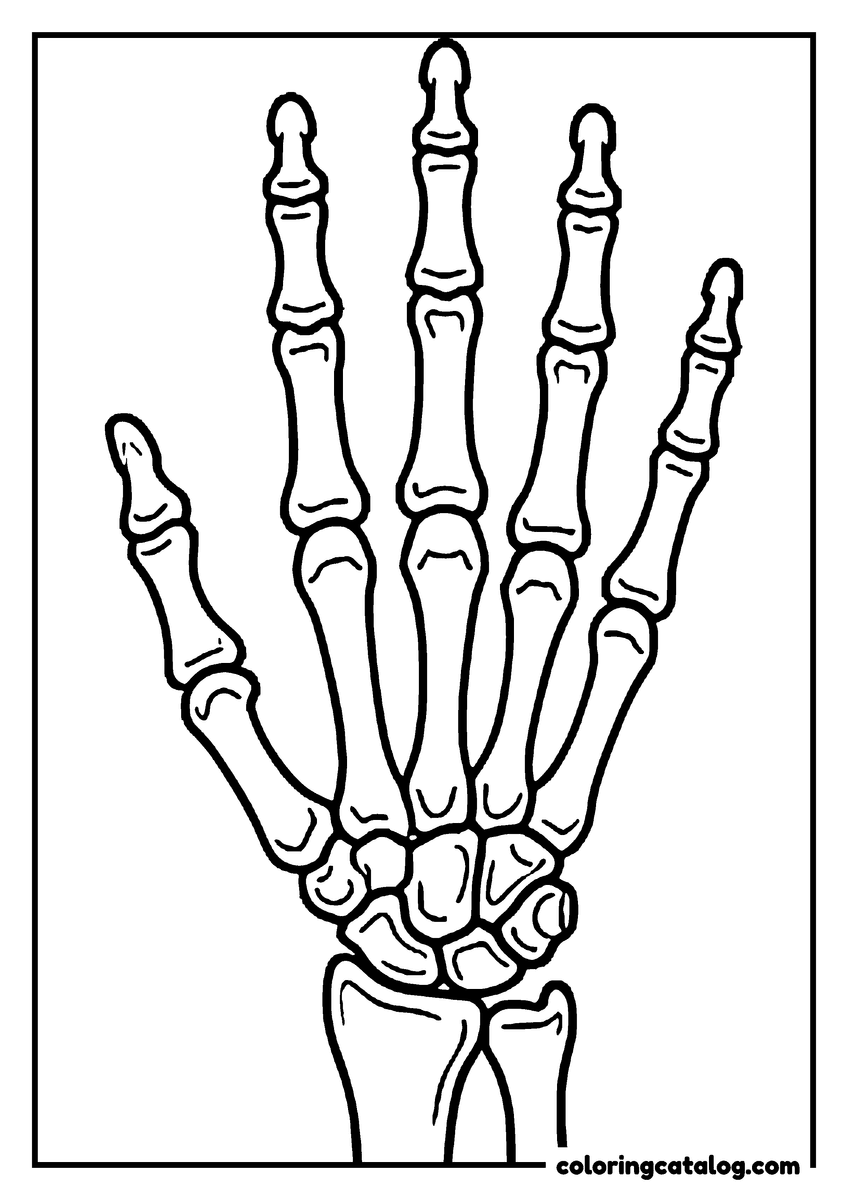
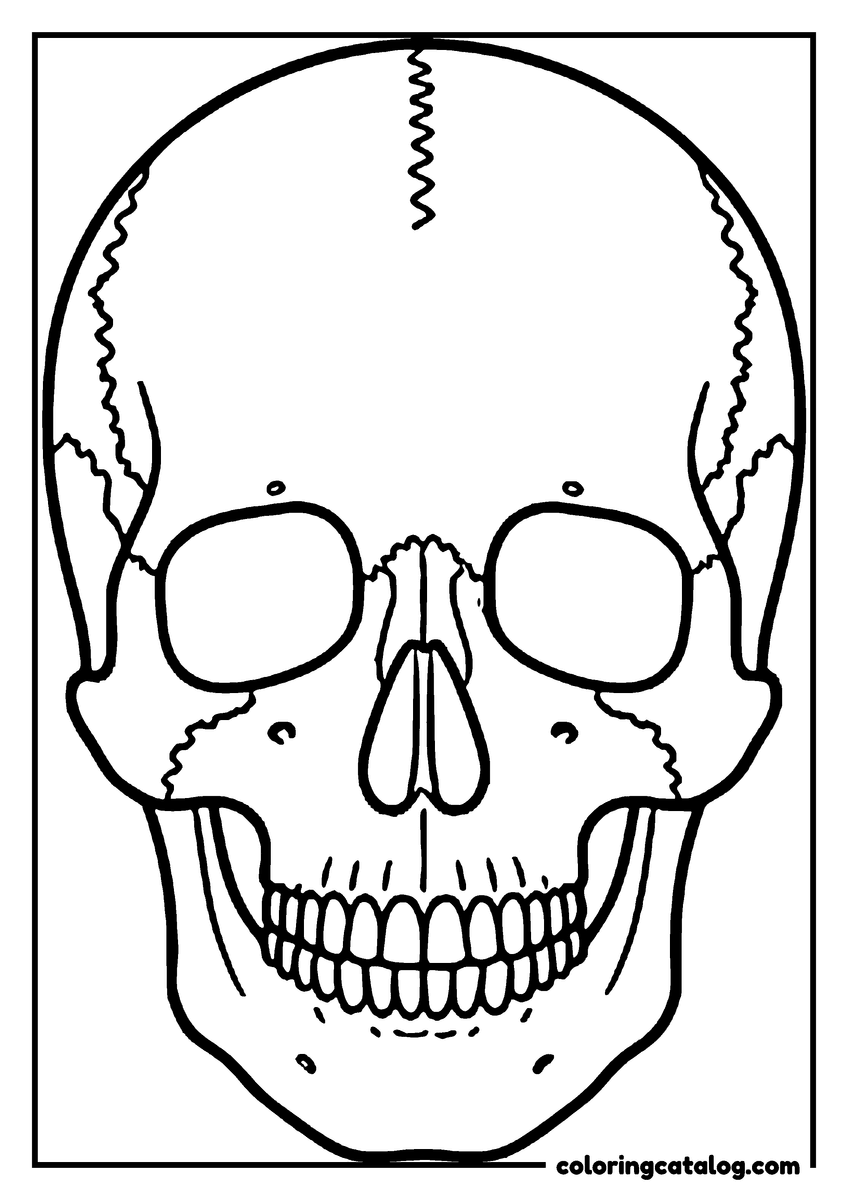
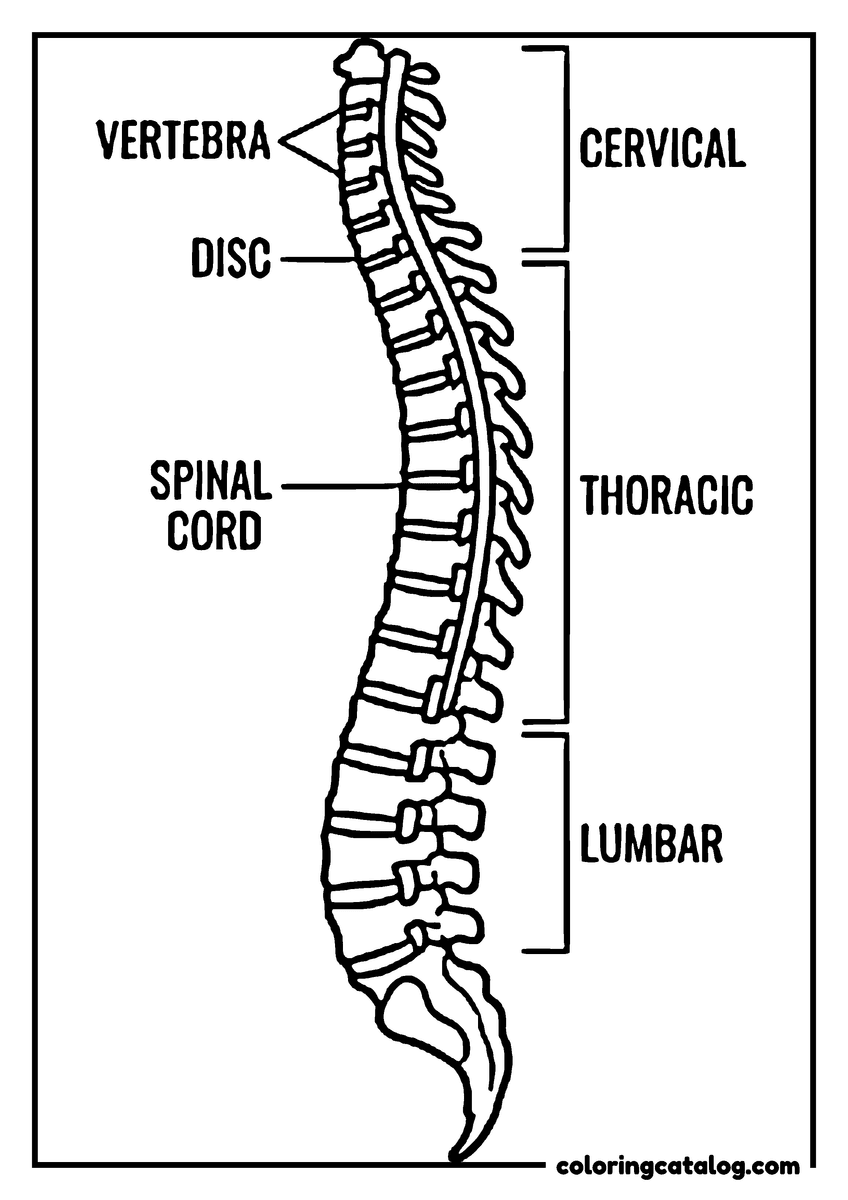
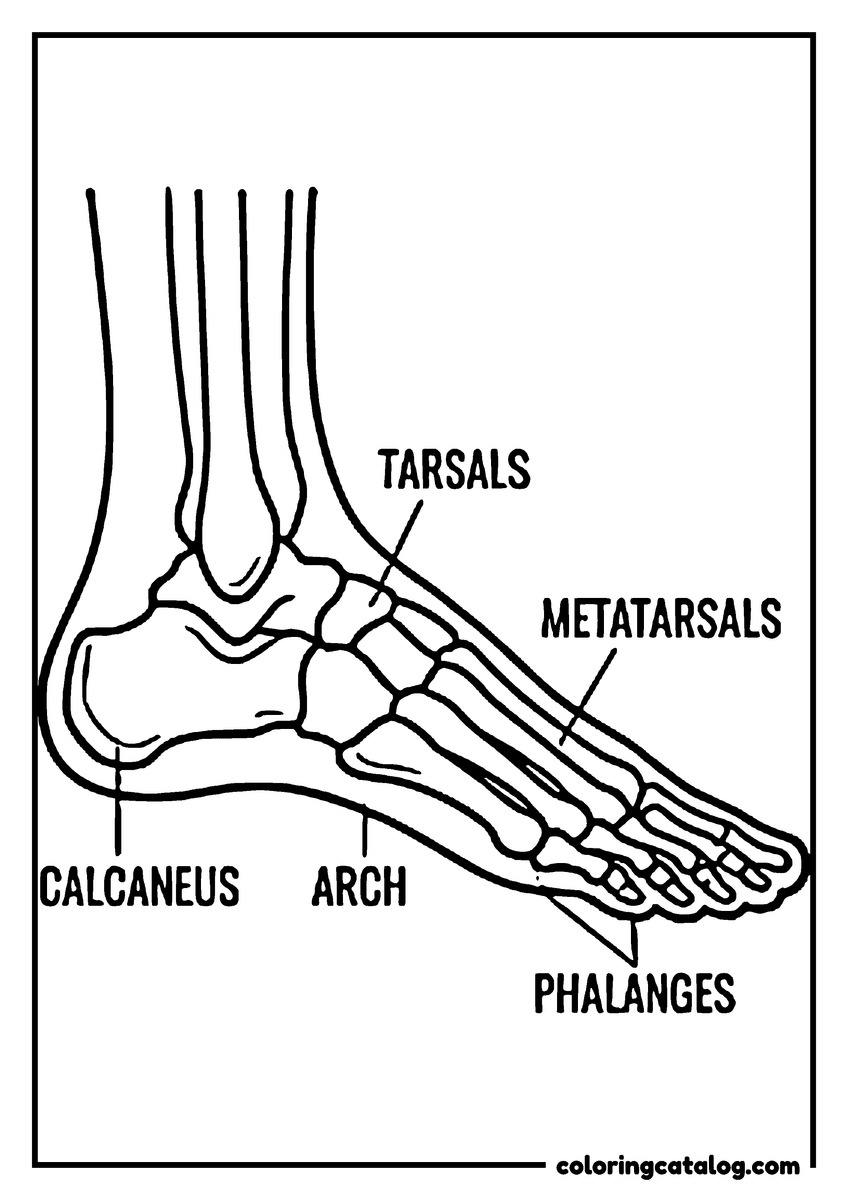
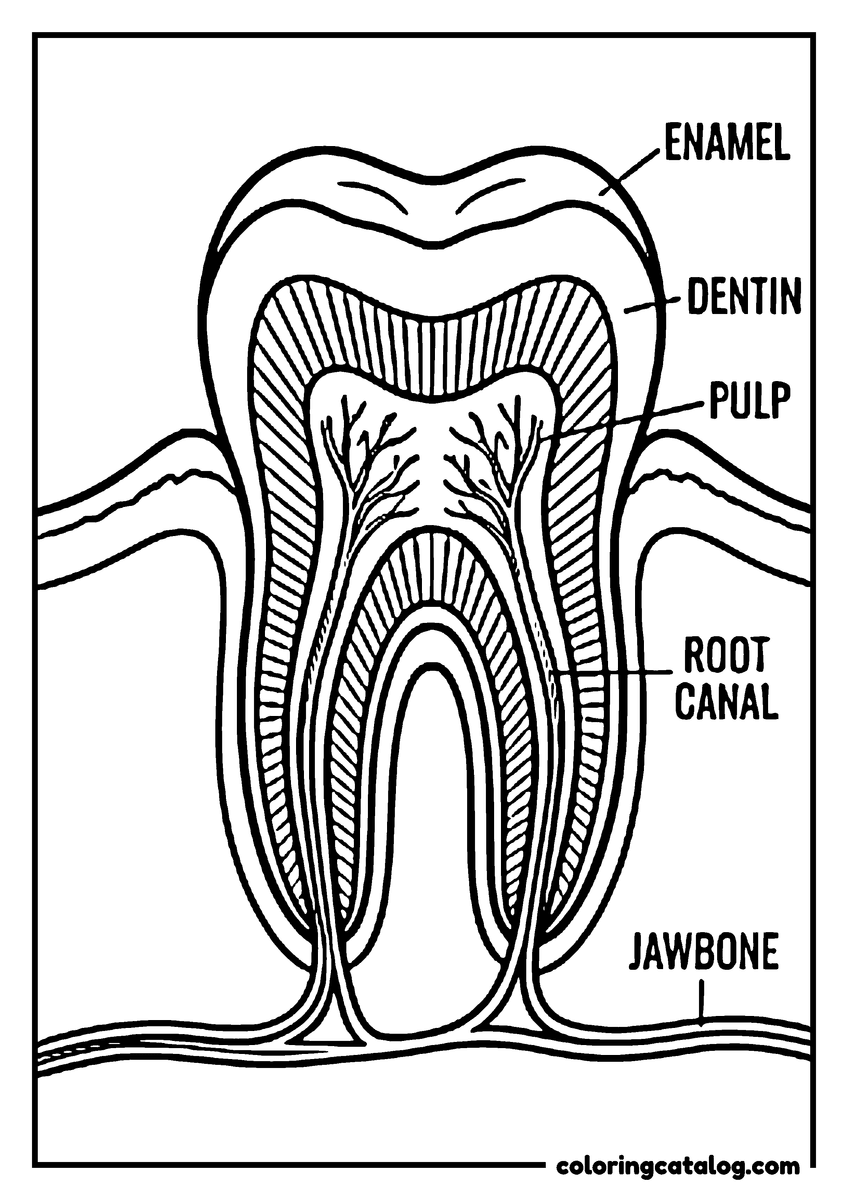
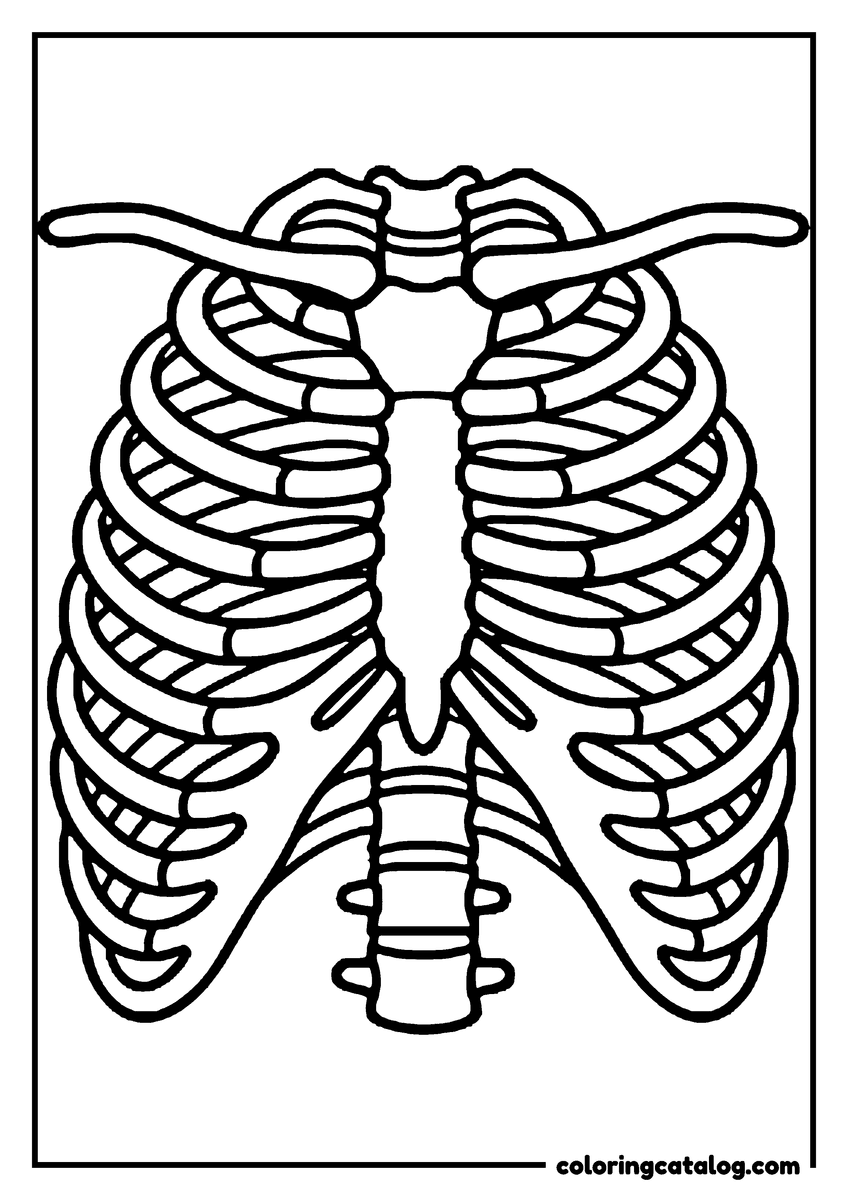
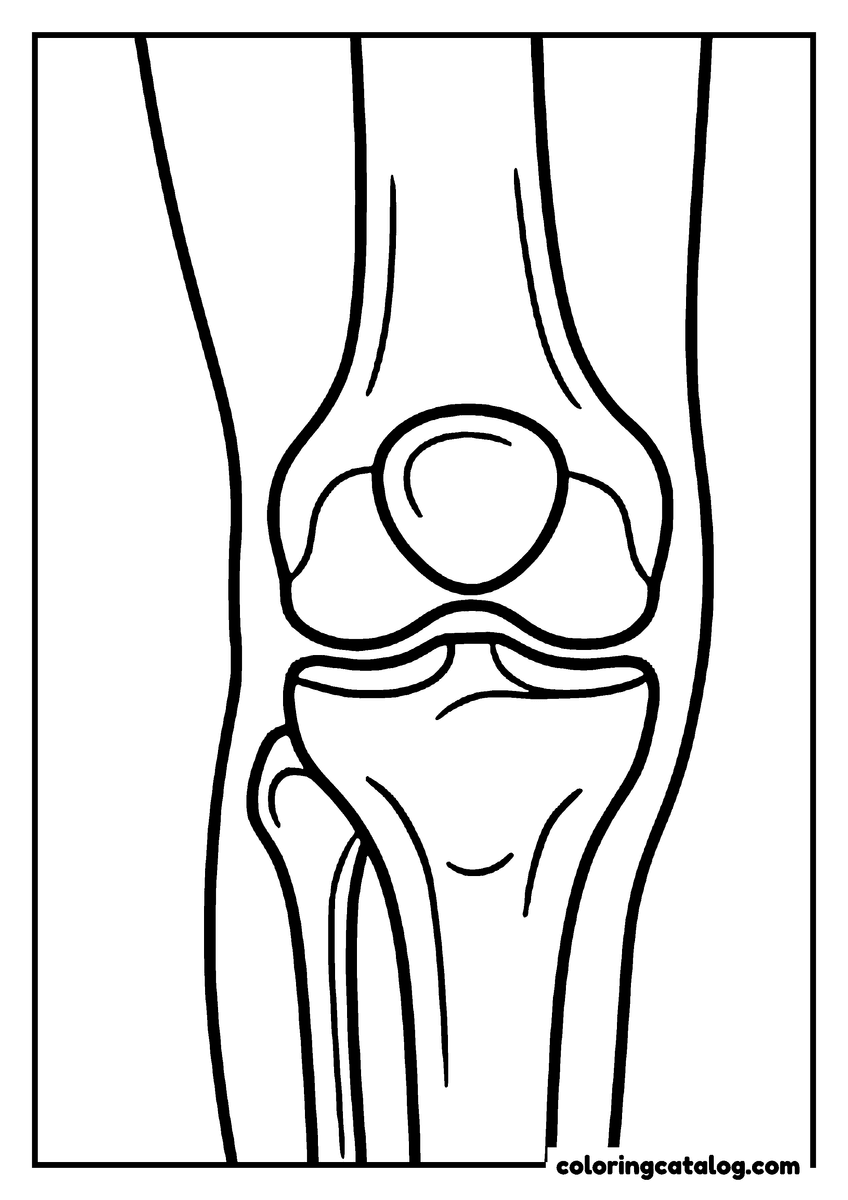
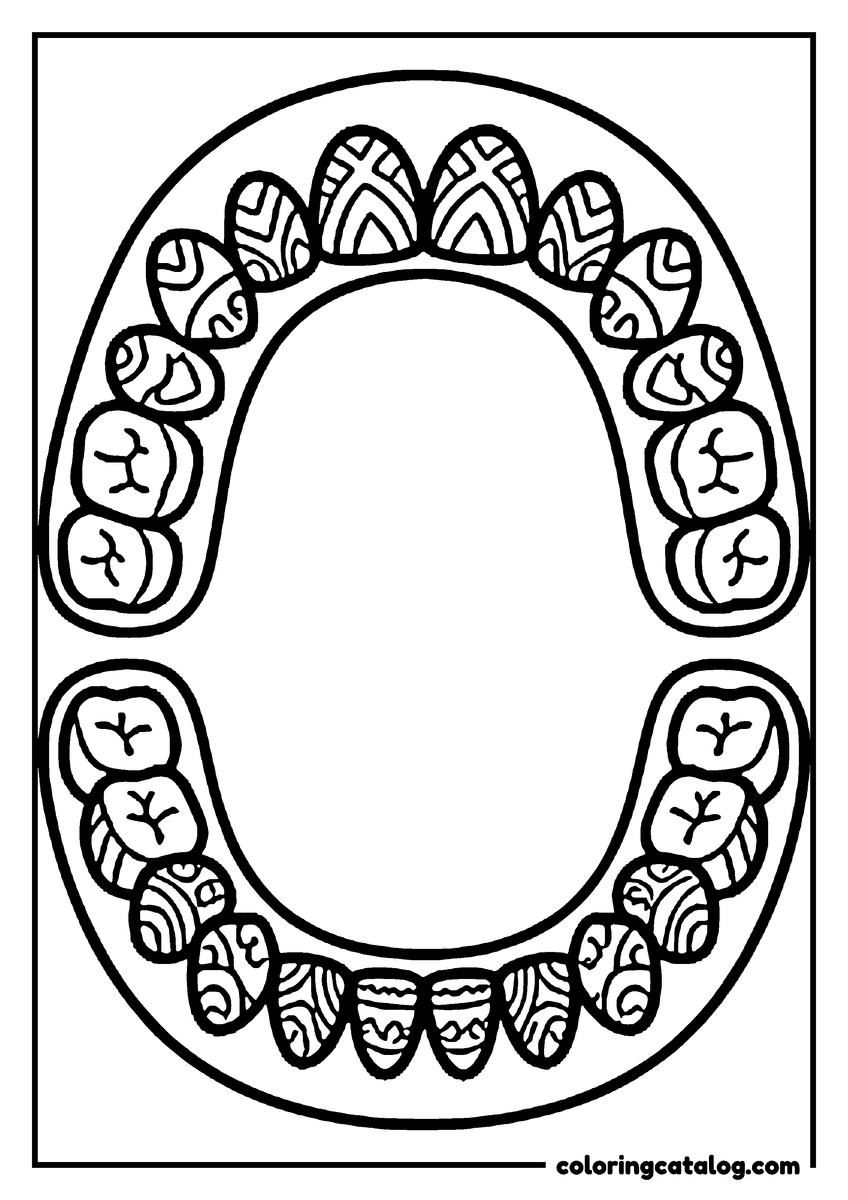
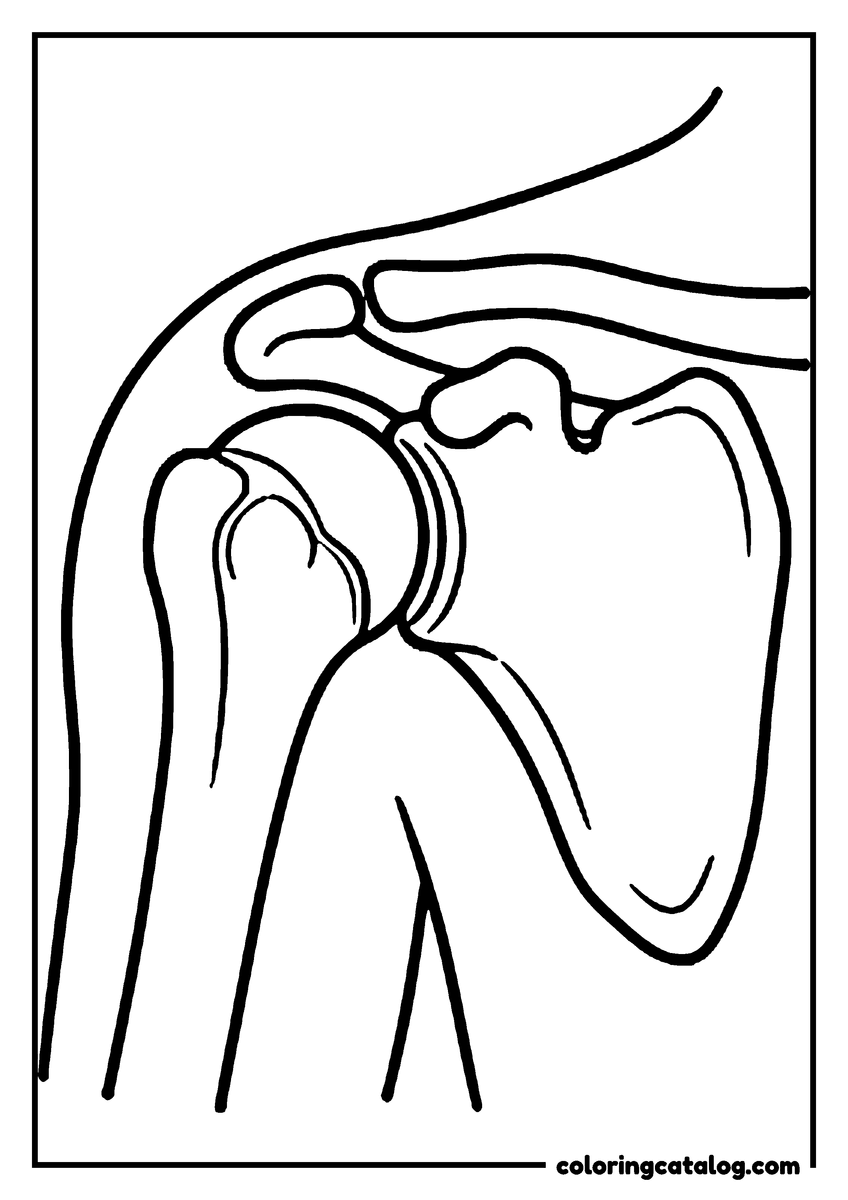
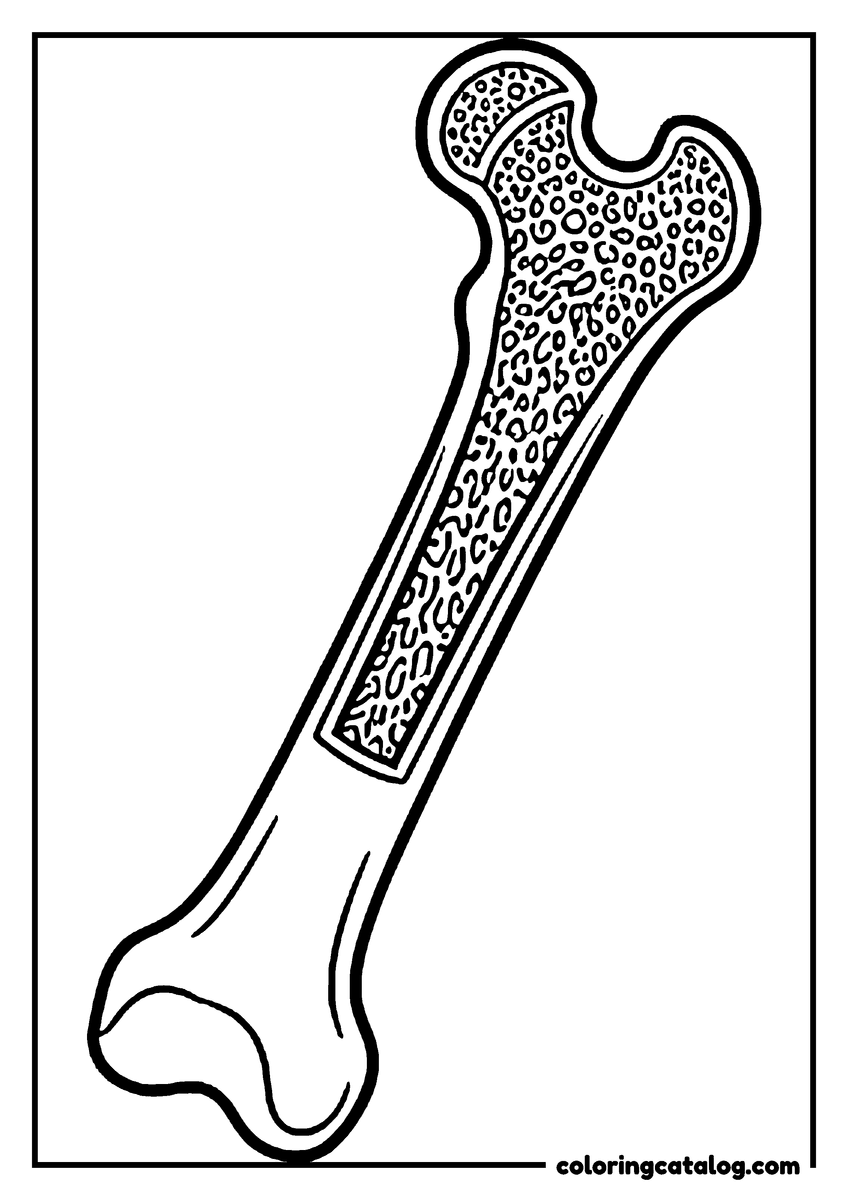
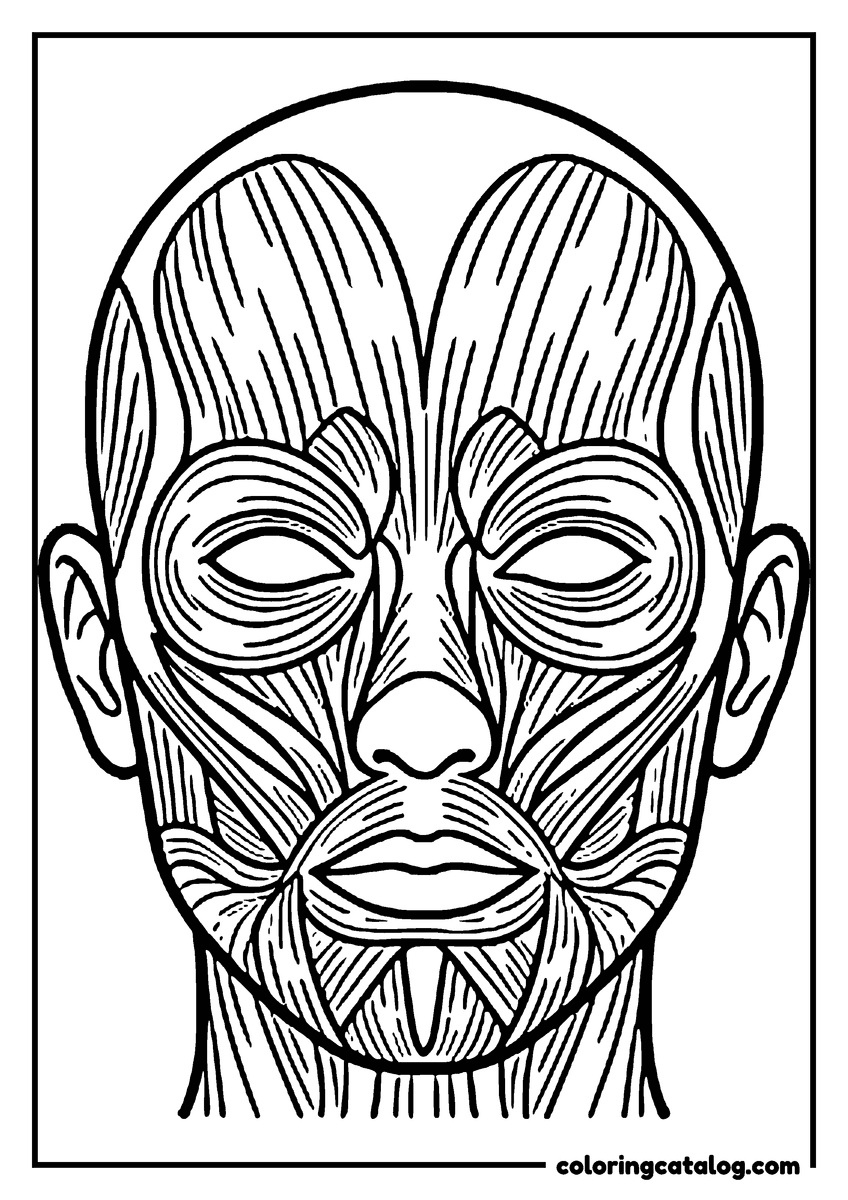
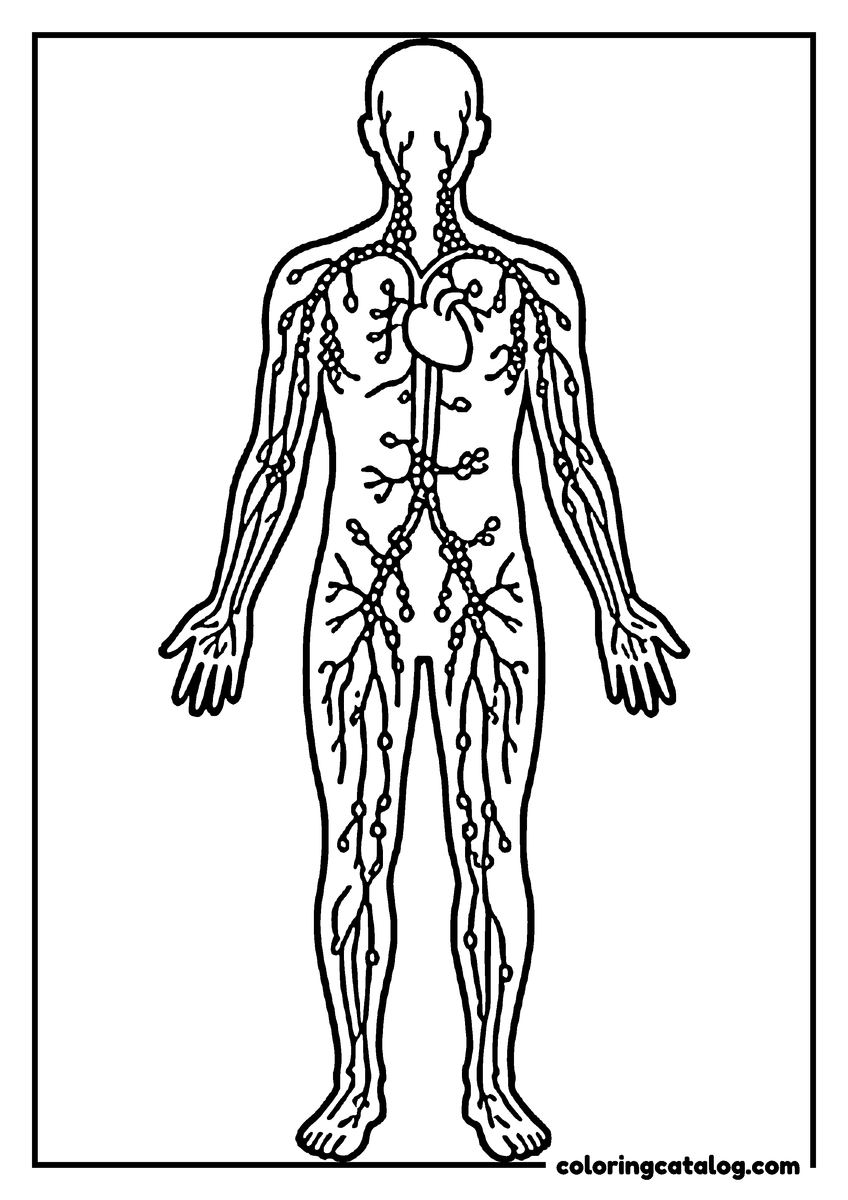
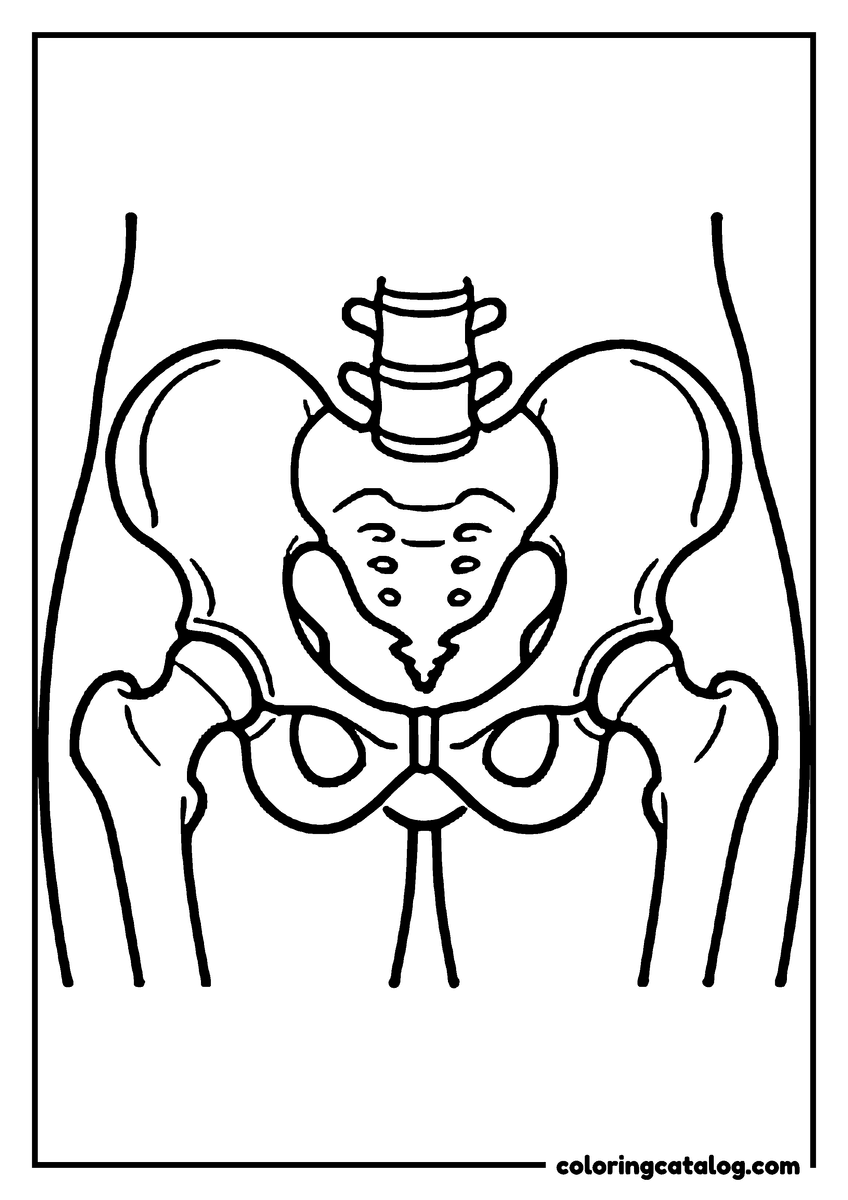
The skeleton gets the most pages: a full standing skeleton, a skull from the front, the rib cage with its sternum, the pelvis and hips, the knee and shoulder joints, the bones of the hand and wrist, and a femur cut open to show the spongy bone and the marrow cavity. Three study sheets carry labels: the spine with its cervical, thoracic and lumbar regions, the bones of the foot (tarsals, metatarsals, phalanges, calcaneus and arch) and the inside of a tooth (enamel, dentin, pulp, root canal, jawbone). A figure shows the heart with its blood vessels and lymph nodes, another the muscles of the face, and the rows of teeth are seen from above.
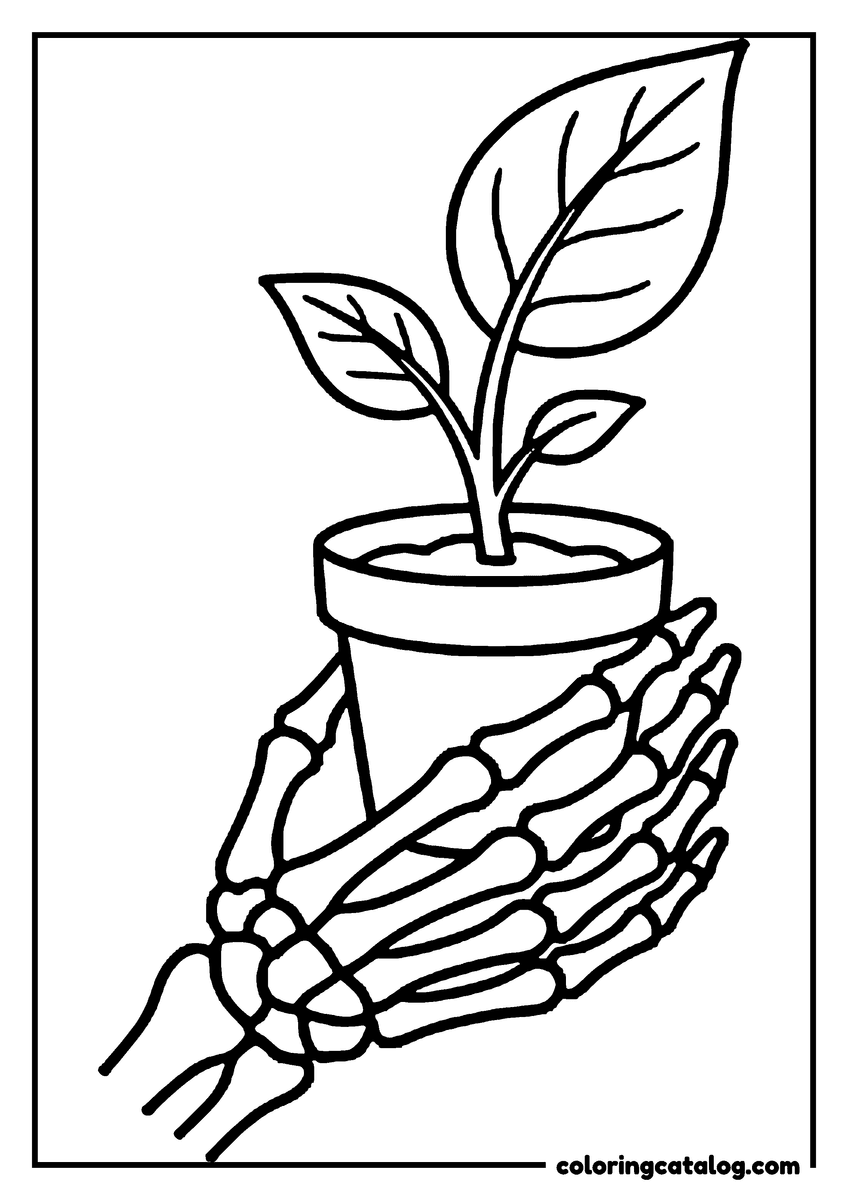
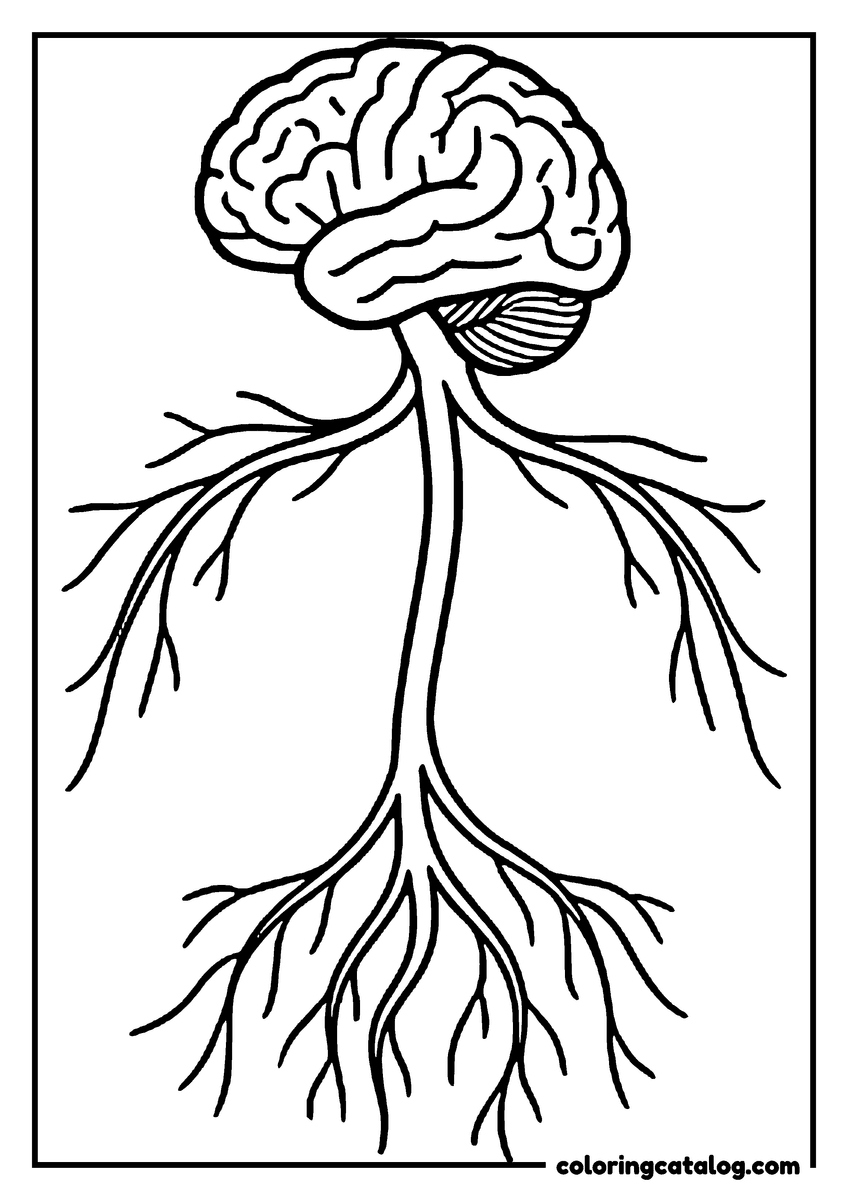
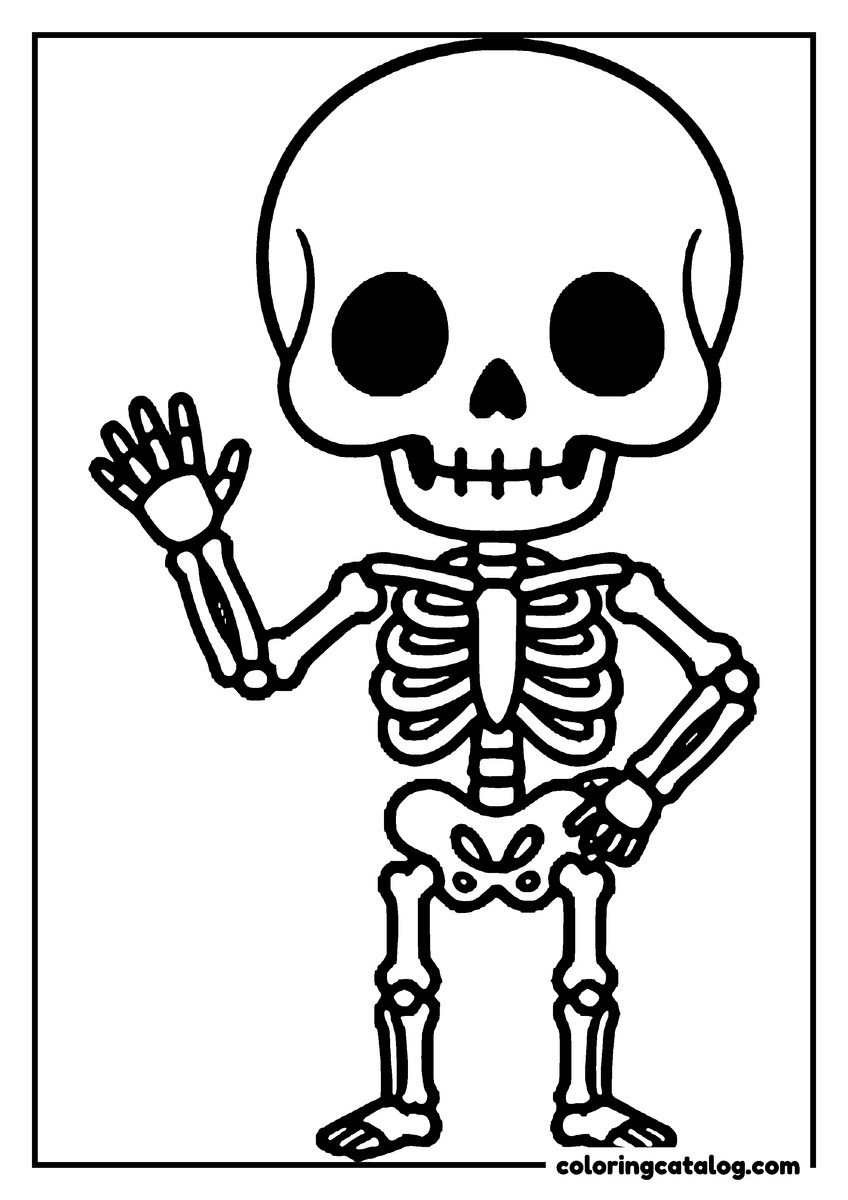
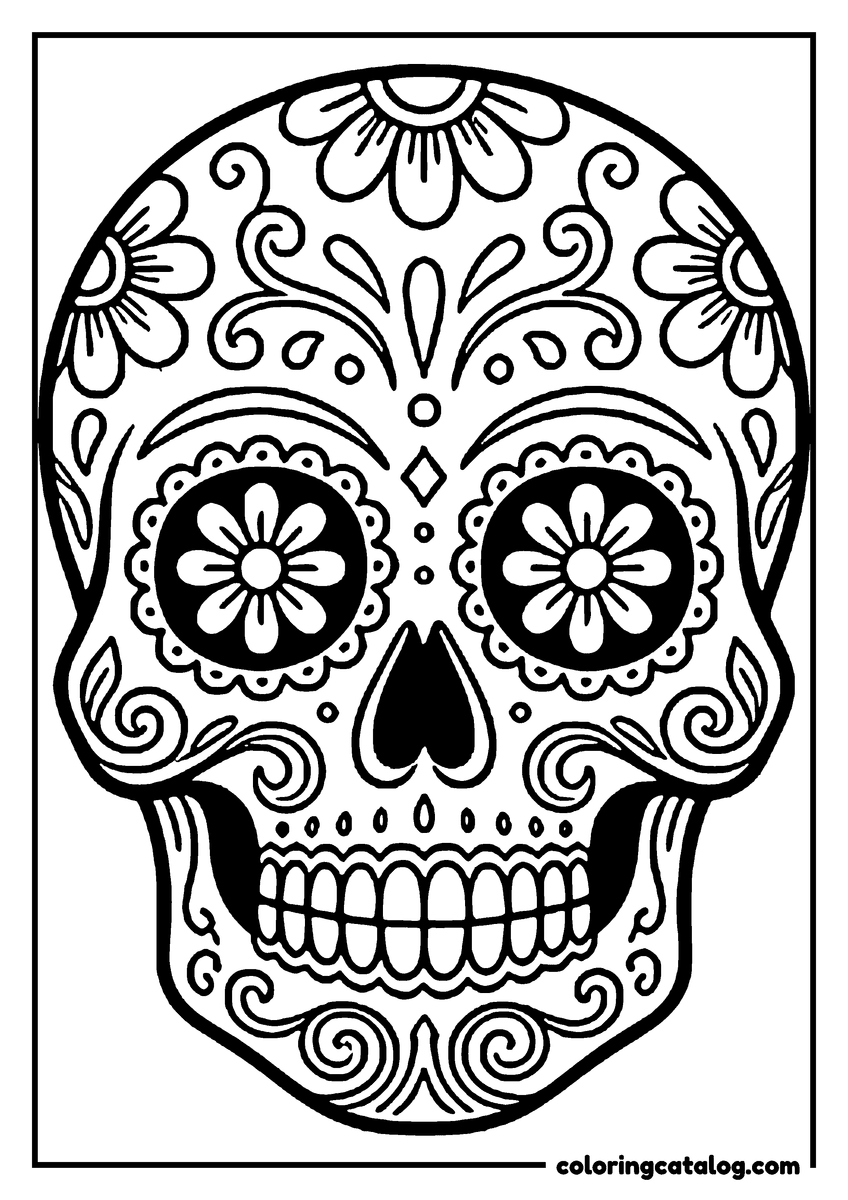
Some pages are for the pleasure of the drawing rather than the lesson: an anatomical heart in bloom and another wrapped in roses, lungs drawn as leafy branches, the brain and spinal cord with nerves spreading like tree roots, skeletal hand bones holding a seedling, a decorated sugar skull, a friendly cartoon skeleton waving hello, and a baby curled up in the womb.
The colors anatomy diagrams use
Real organs are mostly shades of pink, red and cream, which makes a colored page hard to read. Textbooks and anatomy atlases use a set of conventional colors instead, and it helps to follow them:
- Arteries in red, carrying blood away from the heart.
- Veins in blue. Blood in veins is not actually blue, it is a darker red, but the convention makes the two networks easy to tell apart.
- Nerves in yellow, and the brain and spinal cord often in a pale yellow or cream.
- Lymph vessels and nodes in green.
- Bones in off-white or pale beige, with cartilage in a light blue-gray.
- Muscles in a deep red or brick color, tendons in white.
On the anatomical heart, color the aorta and the arteries red and the veins that bring blood back blue, and the page becomes a small diagram of the circulation.
How to study with a coloring page
For a student, the method that works best is simple. Choose one color per structure, write a small key in the margin, and color each part while saying its name out loud. On the labeled spine, give the cervical, thoracic and lumbar regions three different colors: the regions then stay in memory as blocks. On the foot, color the tarsals, metatarsals and phalanges in three shades of the same color, lightest at the heel. On the tooth, work from the outside in: enamel, dentin, pulp.
For the unlabeled pages, try labeling them yourself before looking anything up, then check. A skull or a rib cage colored this way, bone by bone, teaches more than an hour of reading.
Big shapes and fine detail
The simplest pages hold one large structure with few inner lines, like the friendly skeleton and the femur. Quick to color, above the grid, begins with:
- The knee joint
- Inside the femur
- Anatomical heart
The detailed pages fill every space with branches, muscle fibers or tiny bones, which is exactly what a slow evening of coloring wants. Lots of detail begins with:
- Heart in bloom
- Rib cage
- Sugar skull
Which pages for which age
Younger children usually start with the cartoon skeleton, the tooth and the brain, which they can name, and a skeleton is a friendly way into the body before a school topic on bones. Older children and teenagers can take the labeled study sheets alongside a biology class. The full skeleton, the face muscles and the heart and lungs are closer to what a nursing, medical or art student works from, and the anatomical hearts among flowers are made for adults who simply like the look of them.
Printing a study set
Every page is a free A4 PDF drawn at 300 dpi. A4 prints at full size, and on US Letter "fit to page" shrinks the drawing by about six percent so every label stays on the paper. The printing guide shows the setting. Add to pack puts a whole study set into one file, a skeleton unit or an organ unit, ready to staple into a booklet. More teeth are in the tooth coloring pages, more hearts in the heart coloring pages, decorated skulls in the Day of the Dead coloring pages, and slow, patterned pages in the mandala coloring pages.
Anatomy Coloring Pages: questions and answers
Are these anatomy coloring pages accurate enough to study with?
They are drawn for coloring and general study, and the labeled sheets use standard names. For an exam, check the details against your textbook or course atlas, which is the reference your teacher will use.
What colors should I use for arteries and veins?
By convention, arteries in red and veins in blue, nerves in yellow and lymph in green. Blood in veins is really a darker red; the blue is only there to tell the two networks apart.
Which pages have labels?
The spine, the bones of the foot and the inside of a tooth are labeled. The other pages are unlabeled, which makes them good for testing yourself.
Which anatomy page is easiest for a child?
The friendly skeleton and the femur: big shapes and few inner lines. Quick to color shows the simplest.
Same drawer