Supplies
The best colored pencils for coloring
What separates a school pencil from an artist one is not the number of colors in the box. It is how soft the core is, and what binder holds the pigment together.
Colored pencils are the one coloring medium that works on paper you already own. Nothing soaks through the sheet, nothing has to dry, and a wrong color can be softened instead of starting over. That makes them the default for coloring pages printed at home, and it makes the choice between sets simpler than the shelf suggests.
Wax or oil based: what the binder changes
Every colored pencil is pigment held together by a binder, usually wax, sometimes oil. A softer, waxier core lays down a thick, opaque layer, and thick layers are what let a second color mix into the first on the page rather than sitting next to it. That is blending, and it is mostly what you pay for when you move up from a school box.
The trade-offs are real. Soft cores wear down faster, need sharpening more often, and snap if dropped. Firmer cores do the opposite: they hold a point through a whole page, give clean edges in small shapes, and blend less willingly. Neither is better overall. For a page full of tiny shapes, a firmer core is less frustrating; for big areas you want to shade smoothly, a softer one gets there faster.
This site sorts sheets the same way. On any collection, Lots of detail filters to pages where much of the drawing is made of small shapes, like most of the mandalas, and those reward a sharp, firm point. Quick to color shows the pages with large open areas, where a soft core covers ground fast.
The mid-range, where most adults should start
Between the school box and the artist tin sits the wax-based set sold in boxes of 48, 72 or 120: soft enough to blend, good enough pigment to cover paper grain, and priced for someone who colors in the evening rather than someone who sells drawings. For most people asking for the best colored pencils for adult coloring books, this is the answer.
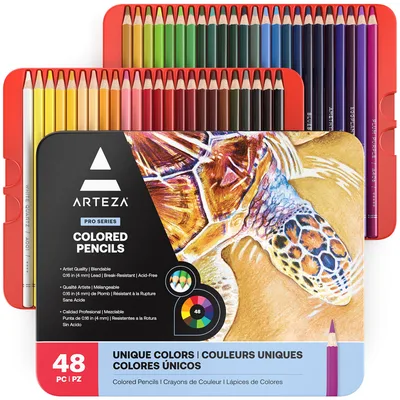
Arteza, 48 colorsPencils
A sensible first set of colored pencils. Forty-eight is about where you stop layering to reach ordinary skin, foliage and shadow tones, and everything above it is refinement.
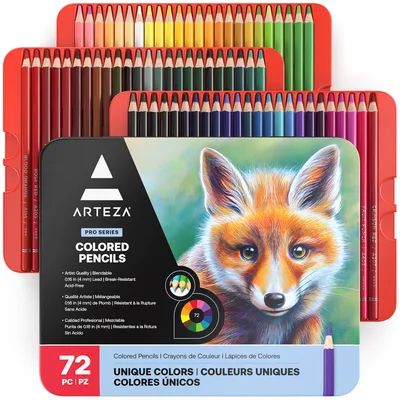
Arteza Pro Series, 72 colorsPencils
Soft wax-based cores, so a second color blends into the first instead of sitting beside it, which is the real difference from a school pencil. Seventy-two colors covers skin, foliage and shadow without layering to reach them.
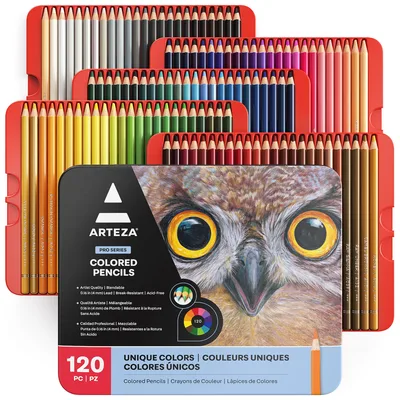
Arteza, 120 colorsPencils
The set to buy when the range itself is the pleasure. Past seventy-two, the extra shades sit close to ones you already have, so a coloring page rarely needs them.
The three differ mainly in how many pencils are in the set, and that matters less than it looks. Around forty-eight, you stop running short: below that you are layering to reach ordinary skin, foliage and shadow. Seventy-two is comfortable. A hundred and twenty is for the pleasure of the range, and there is nothing wrong with that as long as nobody pretends the page needs it.
Colored pencils for kids: buy the sturdy box on purpose
This is not a compromise. A child filling big shapes with flat color gets nothing from a soft artist core except a point that breaks on the first hard press. What matters for kids is a firm core, a thick enough pencil to hold, and a box with enough colors that nobody asks for one that is missing.
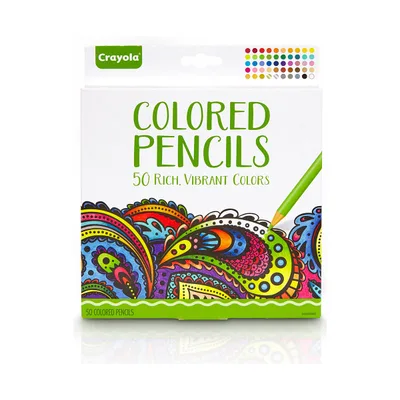
Crayola colored pencils, 50 colorsPencils
A firmer core than an artist pencil, which suits a child pressing hard to fill big shapes. Fifty colors is enough that nobody asks for one that is not in the box.
Two habits make a box last. Sharpen for them, or teach a slow, gentle turn: most snapped leads come from a dull sharpener grinding the tip, or from a pencil dropped earlier that cracked inside the wood. And give younger kids pages from the Quick to color band, such as many of the dinosaur and animal sheets, where big shapes fill quickly before attention runs out.
Stocking a classroom
Teachers usually get the most from a few ordinary boxes rather than one large set.
- Split sets into table cups so four or five kids share one mixed cup. Colors get spread around the room instead of one child holding all the blues.
- Keep one good sharpener at the teacher’s desk. A handheld sharpener with a container, or a desk sharpener with an adjustable point, breaks fewer leads than the loose blade sharpeners that end up in pencil cases.
- Print on ordinary copy paper. Pencils do not need anything heavier, which keeps a class set of pages cheap. The printing guide covers settings for a school printer.
Erasable pencils, for when a mistake should not be permanent
Erasable colored pencils are one of the most underrated boxes on the shelf, and not only for children. They lift a wrong color off a light first pass and soften an edge that went too dark. They do not erase like a graphite pencil, and anyone selling them that way is overstating it, but forgiving still counts for a lot with a nervous beginner.
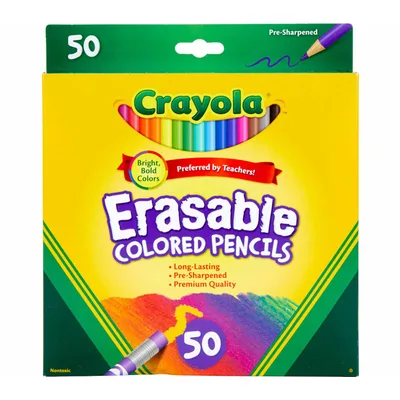
Crayola erasable, 50 colorsPencils
Colored pencils that partly erase. Not completely, and best on a light first pass, but enough that a wrong color stops being permanent, which helps a beginner or a child who hates mistakes.
Watercolor pencils, which are two things at once
They behave like ordinary colored pencils until a wet brush touches them, and then the strokes dissolve into a wash. That makes them a way to fill a large area smoothly without reaching for a marker, and one tin covers both the detail and the sky behind it.
The catch is paper. Water buckles anything under 200 gsm, so a page colored wet from edge to edge dries with a ripple in it. Print on heavy paper if you plan to add water. Used dry, they work on ordinary printer paper like any other pencil.
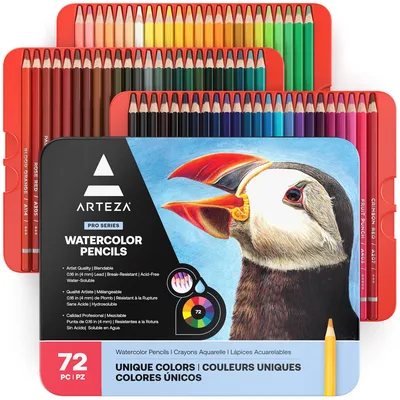
Arteza watercolor pencils, 72Pencils
Colored pencils until a wet brush touches them, then a smooth wash. Use them dry on printer paper, or wet on 200 gsm paper so the page does not buckle.
The tier above: oil based colored pencils
Faber-Castell Polychromos and Prismacolor Premier are the two names that come up whenever artists discuss pencils, and they split on their binder. Prismacolor Premier are wax-based: soft, creamy, fast to blend, and prone to wax bloom, the faint haze that can rise on a heavily worked area. Polychromos are oil-based: firmer, so the point lasts longer, with no bloom and layers that stay clean.
For coloring pages, oil-based pencils win more often than the forums suggest. Coloring pages are full of small enclosed shapes, and a core that keeps its point is worth more there than one that blends in two strokes.
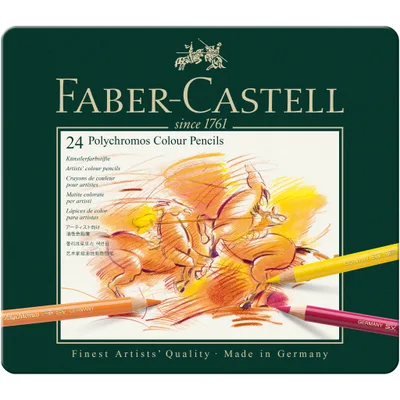
Faber-Castell Polychromos, tin of 24Pencils
The low-risk way to find out whether oil-based cores suit your hand. Twenty-four colors is thin for a finished page, but enough to decide before you spend on a larger set.
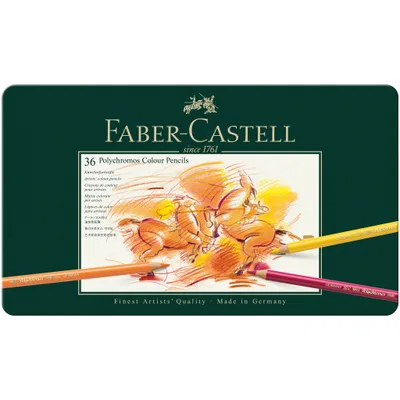
Faber-Castell Polychromos, tin of 36Pencils
Oil-based rather than wax, so the core holds a sharp point for small shapes and heavy layers do not develop a waxy haze. The step above the mid-range, worth it if you layer colors.
The tin of twenty-four is the low-risk way to find out. It is thin for a finished page, but after an evening you will know whether a firmer oil core suits your hand before you commit to a larger set.
Buy either when you are layering four or five colors into one area and the result matters. Do not buy them to fill a page with one flat tone: on that job they look the same as a set costing a fraction as much.
Budget brands you will see recommended
Below the mid-range sits a shelf of brands sold mostly online. Castle Art Supplies and Kalour come up often in coloring groups, both selling large sets of soft wax-based pencils. They make sense for someone trying adult coloring for the first time. The usual trade at that price is cores that break more easily and colors that vary a little from pencil to pencil. If you color every day that will start to annoy you; if you color on a Sunday, it probably will not.
How to blend colored pencils
Two shades of the same color do most of the work. Put the lighter one across the whole shape, then the darker one only where the shape meets another, along the underside and in the corners. That reads as shadow without any real blending skill. Then go back over the join with the lighter pencil to soften it.
Press lightly first. Color built in two or three light passes stays even and can still be adjusted. One heavy pass fills the tooth of the paper, and nothing added on top will stick well after that.
Finish with a colorless blender or a white pencil if you want a smooth, polished surface. Pressing firmly over the layers pushes the pigment into the grain and hides the white specks of paper, which is most of what makes a page look finished.
Then print something to try it on. The catalog is free, and the supplies page covers the paper, printers and books that go around all this.
Links to Amazon on this page are affiliate links. As an Amazon Associate I earn from qualifying purchases: the price is the same for you either way, and nothing here is recommended because of it. How this site is paid for.
Keep browsing
Colored pencil questions
What are the best colored pencils for adult coloring books?
A soft, wax-based mid-range set of 48 to 72 colors. It blends, it covers the grain of ordinary book paper, and it costs a fraction of an artist set. Move up to oil-based pencils only if you layer several colors into one area and want a point that lasts through a detailed page.
What is the difference between wax and oil based colored pencils?
Wax-based cores are softer, oil-based cores are firmer. Wax lays down color quickly and blends in a few strokes, but wears down faster and can leave a faint white haze (wax bloom) on heavily worked areas. Oil-based pencils keep a sharper point, layer cleanly and do not bloom, but take more passes to build strong color.
Why do my colored pencils keep breaking?
Usually the core broke inside the wood before you sharpened it. A pencil dropped on a hard floor can crack along its length, and the lead then snaps every time you sharpen. Use a sharp sharpener, turn the pencil gently, and keep sets in their case. Soft artist cores are the most fragile, which is one reason to give kids a sturdier box.
Do erasable colored pencils really erase?
Partly, and never completely. They lift enough to fix a wrong color or soften an edge, especially on a light first pass, but pigment pressed hard into the paper stays. Treat them as forgiving rather than reversible, which is often the difference between finishing a page and starting again.
How many colors do I need?
Between 36 and 72. Under 36 you spend the evening layering to reach skin, foliage and shadow tones. Over 72 the additions are close neighbors you will struggle to tell apart on paper. Large sets are bought for the pleasure of the range, which is a fair reason, but not something a page needs.
Pencils or markers for a printed coloring page?
Pencils, unless you have bought heavier paper. They work on the 80 gsm paper already in your printer, never reach the table underneath, and a mistake can be softened. Markers give a flatter, more finished look, but they need 120 gsm paper. The markers guide covers that side.