For little ones · 36 free printables
Emotions Coloring Pages
Animal faces showing one feeling each, with the small moment below that caused it: a lost balloon, a fallen tower, a missing puzzle piece.
36 free printable emotions coloring pages
Tap a drawing to see it full size and flip through the set. Press + to collect several and print them as one PDF.
- See it on Amazon
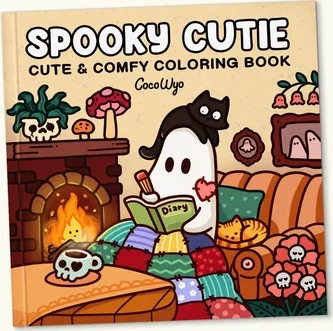
The same cozy rooms as Cozy Friends, with a jack-o-lantern in them: creepy characters drawn round and friendly. Eighty-eight pages printed one side only, so a marker that goes through does not ruin the next drawing.
Creepy characters drawn round and friendly, printed one side only.
- See it on Amazon
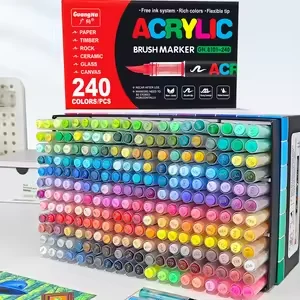
Guangna acrylic paint markers, 240 colorsMarkers
Opaque acrylic ink through a brush tip that goes from 1 mm to 6 mm, for the flat solid color that bold-and-easy pages look best in and a felt tip cannot match. They need weight under them: a single-sided book page or 120 gsm paper, not ordinary copy paper.
Opaque brush-tip acrylic for flat, solid color on bold pages.
- See it on Amazon
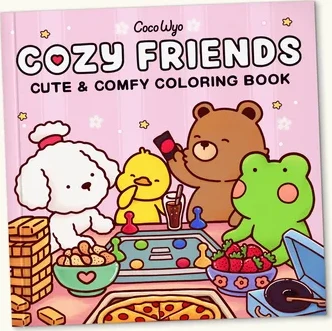
The book that made the cozy style what it is. Bold, simple outlines with cute animal characters, which is the opposite of the dense hunt books and finishes in an evening.
Bold, simple outlines and cute animals, done in an evening.
- See it on Amazon
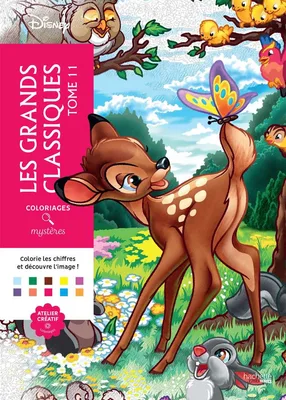
Coloriages Mystères: Grands Classiques 11Book
The eleventh volume of the French series, illustrated by Jeremy Mariez. A hundred numbered pages across Encanto, Tangled and Cars, in the large format the series keeps. French cover, English-free contents.
Numbered mystery pages across Encanto, Tangled and Cars.
- See it on Amazon
The same cozy rooms as Cozy Friends, with a jack-o-lantern in them: creepy characters drawn round and friendly. Eighty-eight pages printed one side only, so a marker that goes through does not ruin the next drawing.
Creepy characters drawn round and friendly, printed one side only.
- See it on Amazon
Guangna acrylic paint markers, 240 colorsMarkers
Opaque acrylic ink through a brush tip that goes from 1 mm to 6 mm, for the flat solid color that bold-and-easy pages look best in and a felt tip cannot match. They need weight under them: a single-sided book page or 120 gsm paper, not ordinary copy paper.
Opaque brush-tip acrylic for flat, solid color on bold pages.
- See it on Amazon
The book that made the cozy style what it is. Bold, simple outlines with cute animal characters, which is the opposite of the dense hunt books and finishes in an evening.
Bold, simple outlines and cute animals, done in an evening.
Keep going
More free coloring pages to print next
Same 300 dpi PDFs, still free. Sheets you added to your pack stay there when you switch collections.
Thick lines, big shapes and nothing smaller than a crayon tip.
Friends sharing, helping and playing through the seasons, animal pairs that stick together, and a friendship bracelet to start.
Animals doing what people do, from the farm, the zoo and the woods.
Strawberries, teapots, cat loaves and washing machines, each one with a small face and rosy cheeks.
A feeling is easier to talk about when it belongs to someone else. These emotions coloring pages give each feeling to an animal: a big, round face that shows it clearly, and underneath, the small everyday moment that caused it. A child coloring the bunny whose balloon floated away over the fence is already halfway to talking about the last time something like that happened to them.
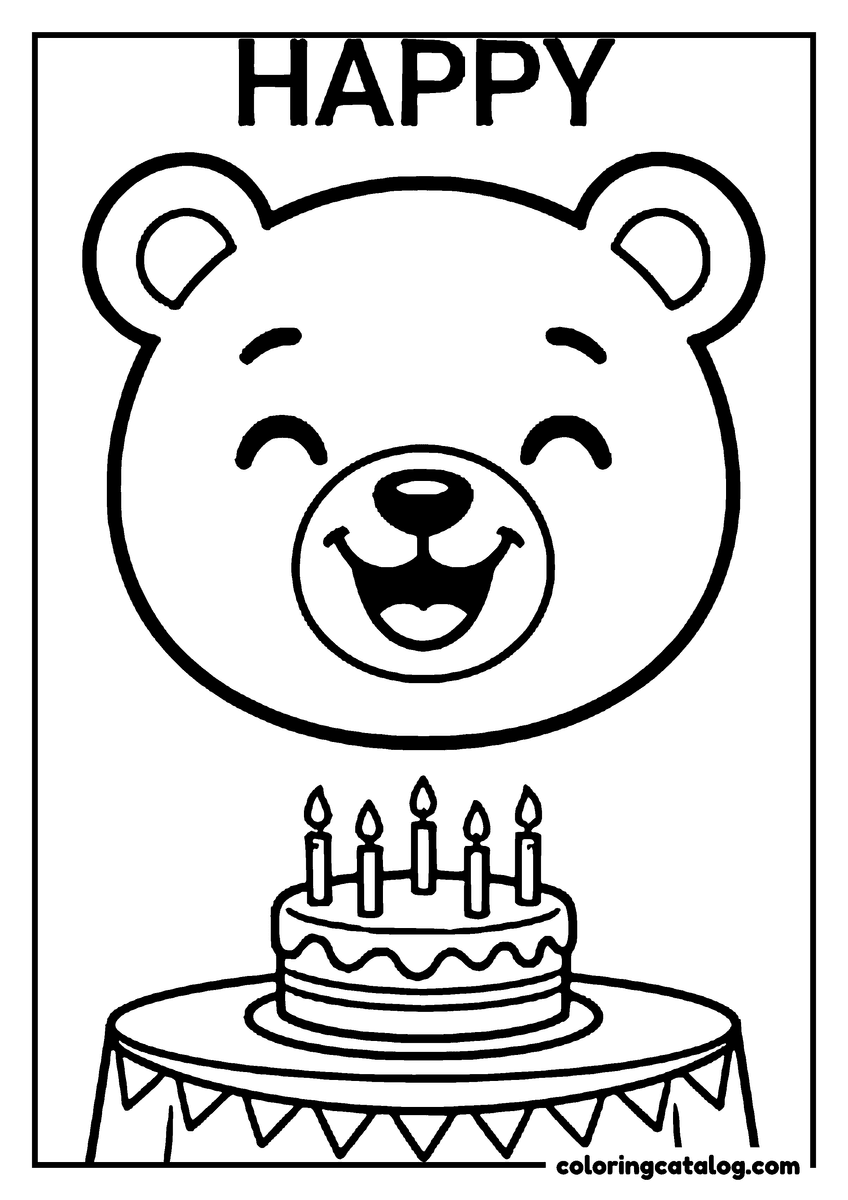
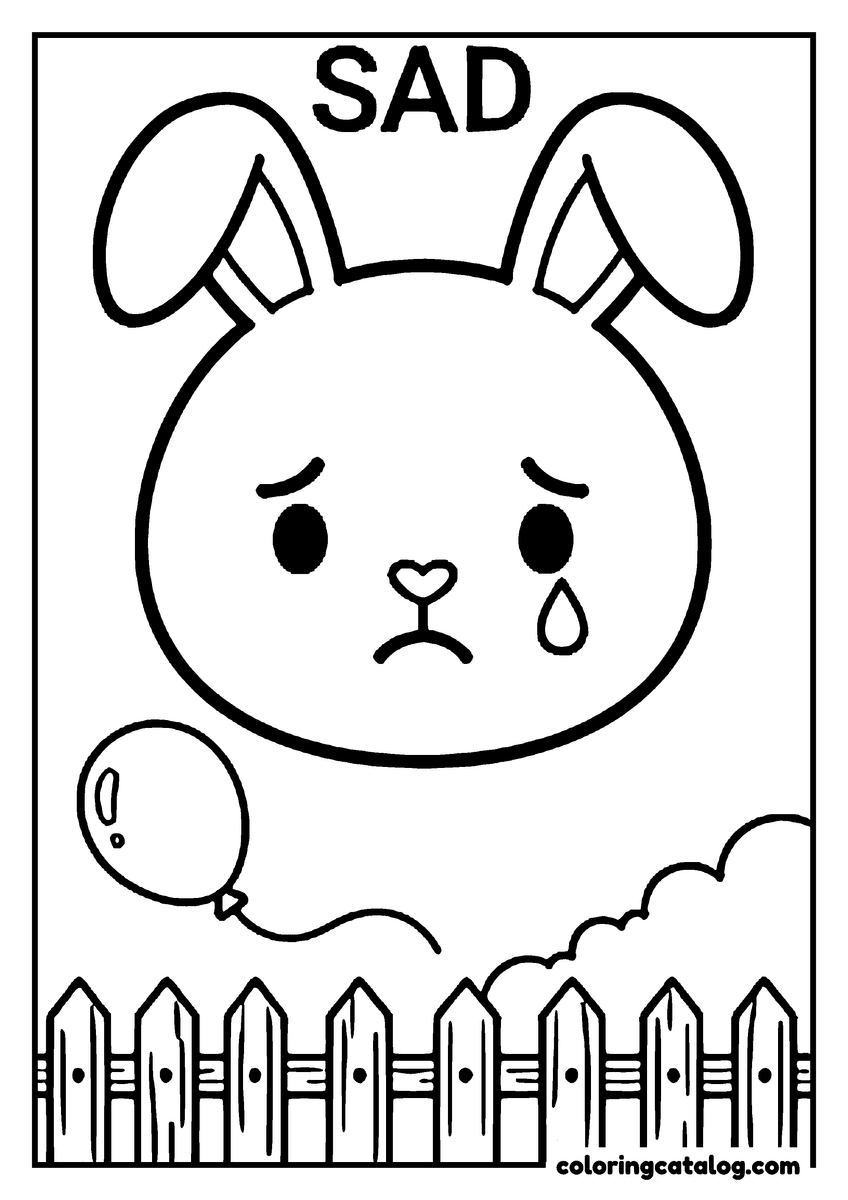
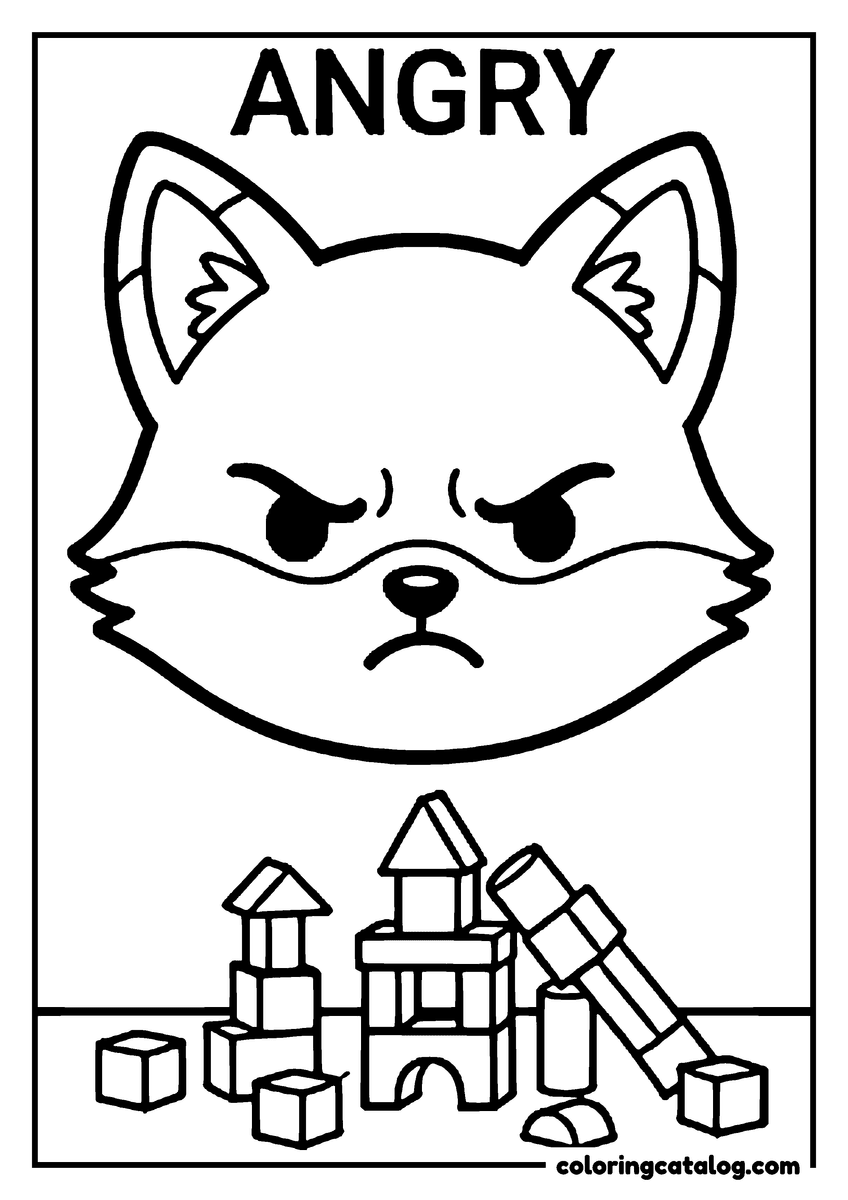
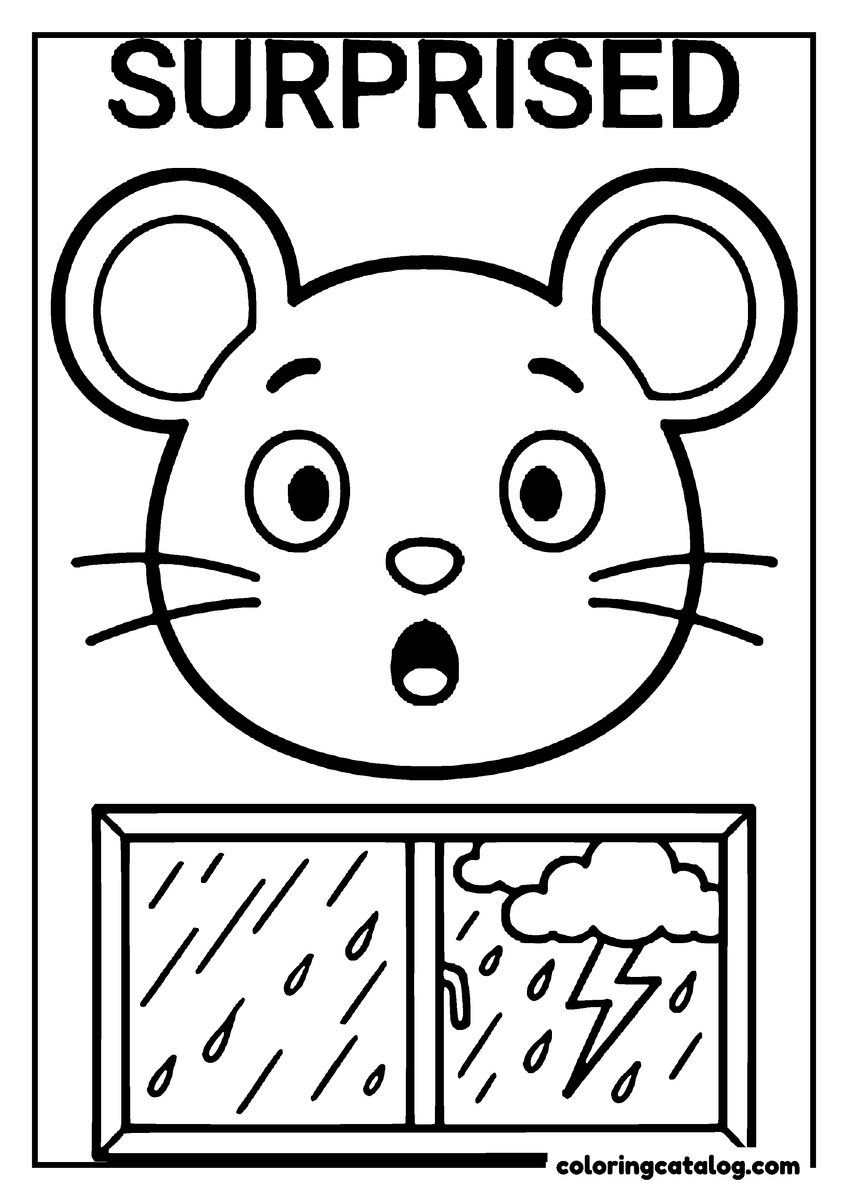
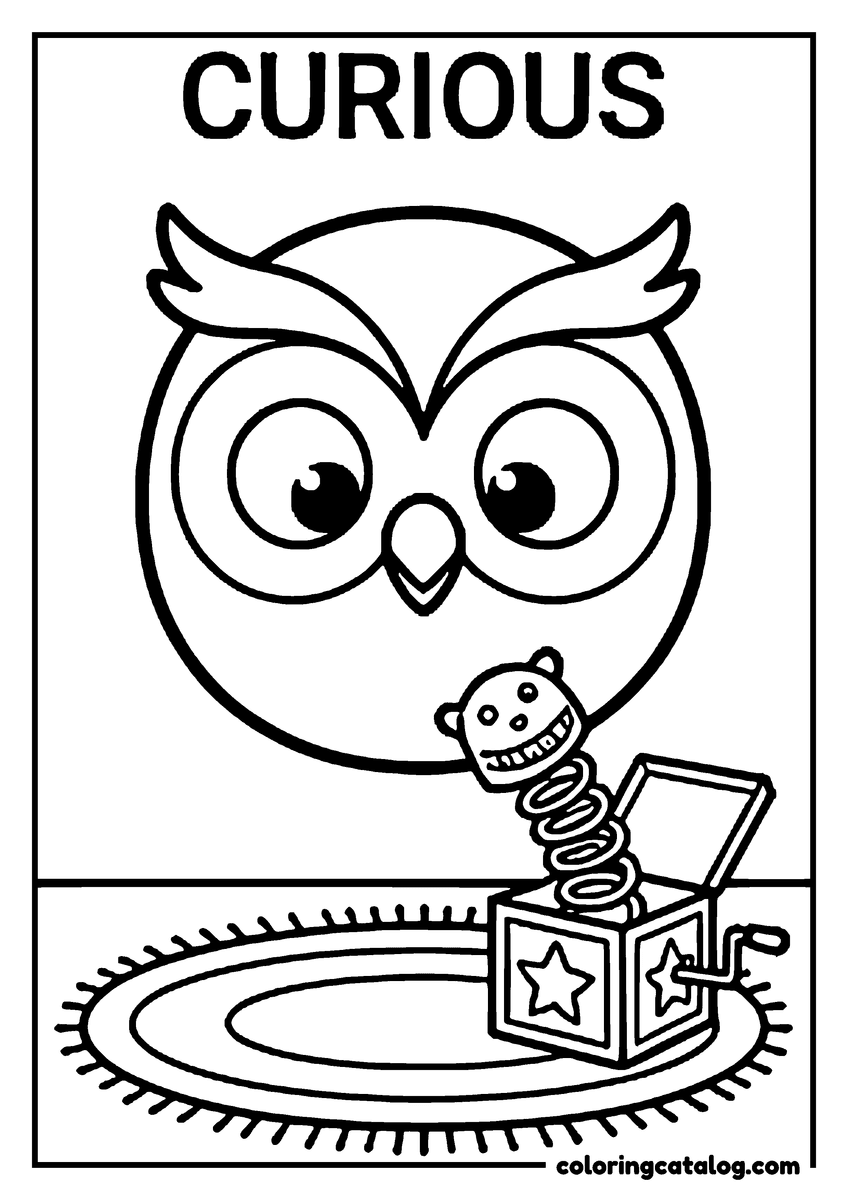
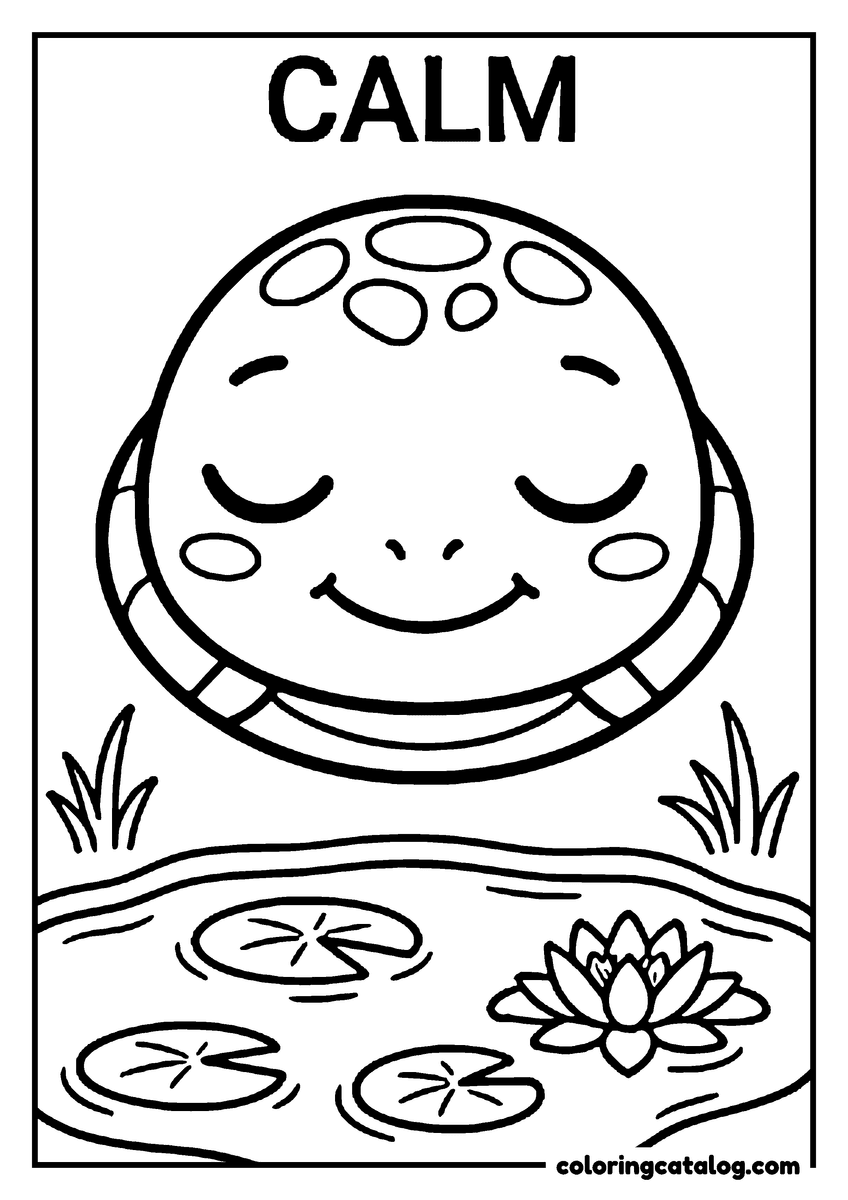
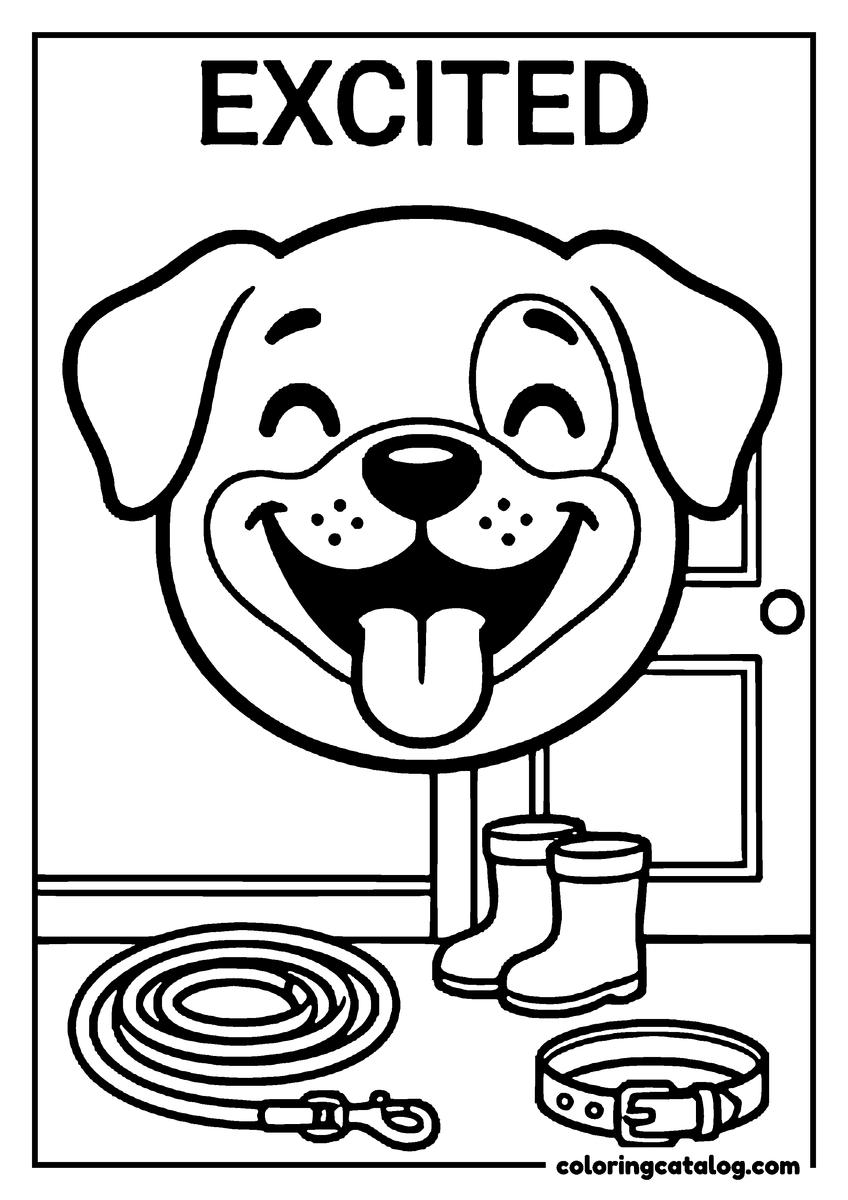
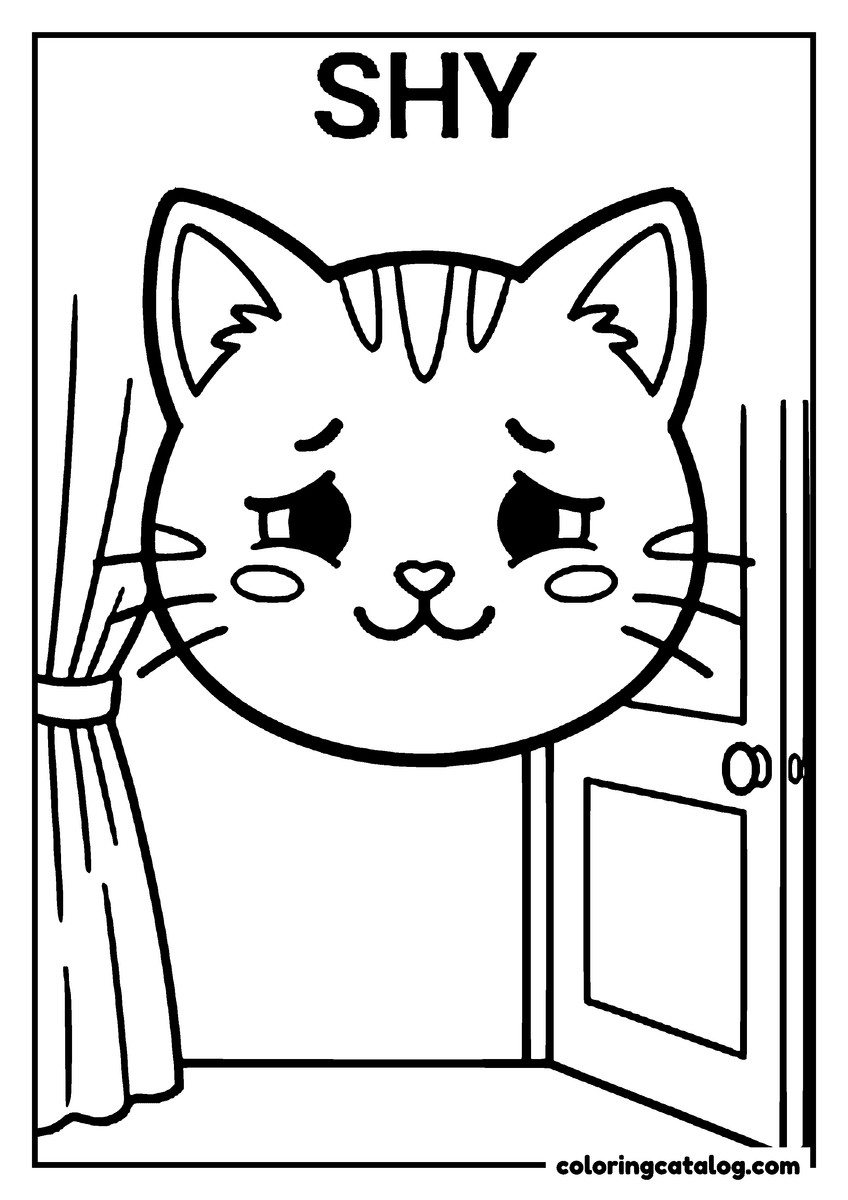
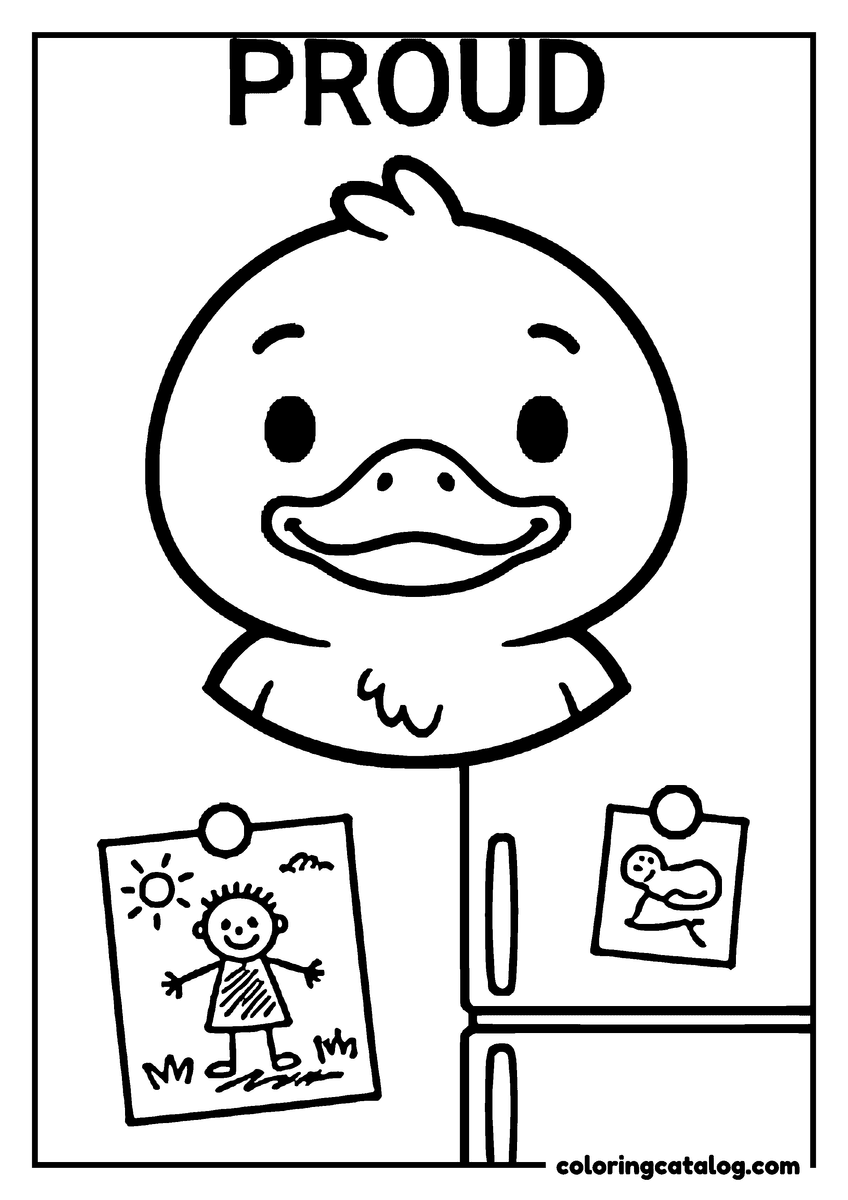
The first pages carry the name of the feeling in big letters above the face, for children who are learning to read the words as well as the expressions. A laughing bear is happy next to a birthday cake, a bunny is sad as its balloon drifts off, a fox is angry over a knocked-down block tower, a mouse is surprised by a storm at the window, an owl is curious about a jack-in-the-box, a turtle is calm by a lily pond, a puppy is excited next to its leash and boots, a kitten is shy behind a curtain and a duckling is proud of the drawing on the fridge.
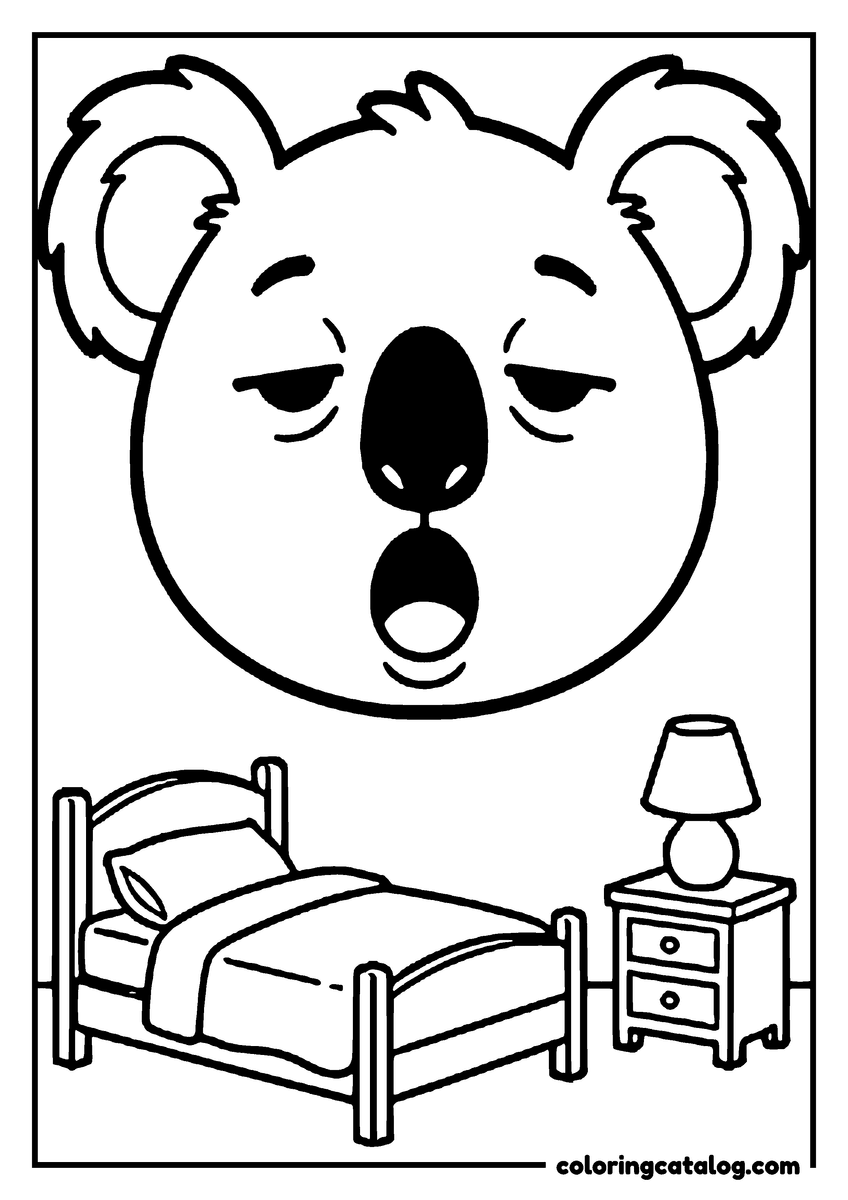
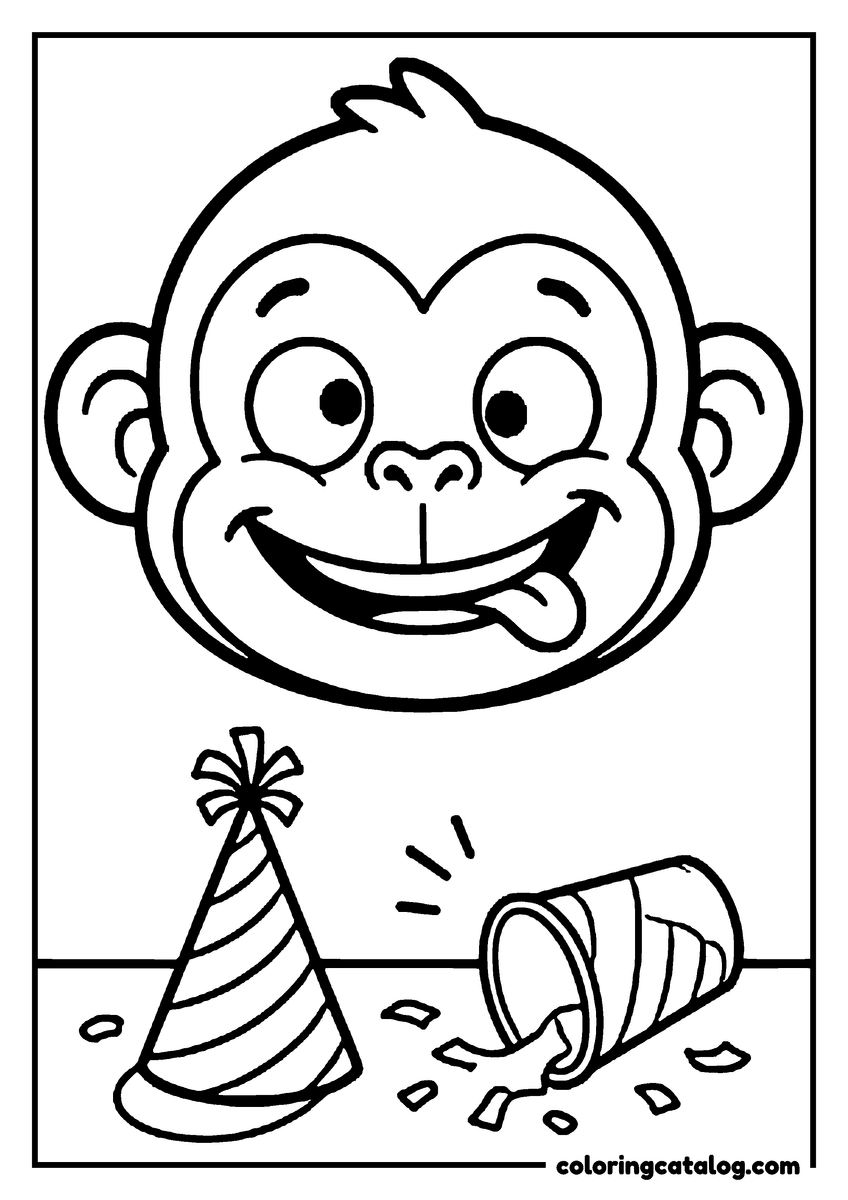
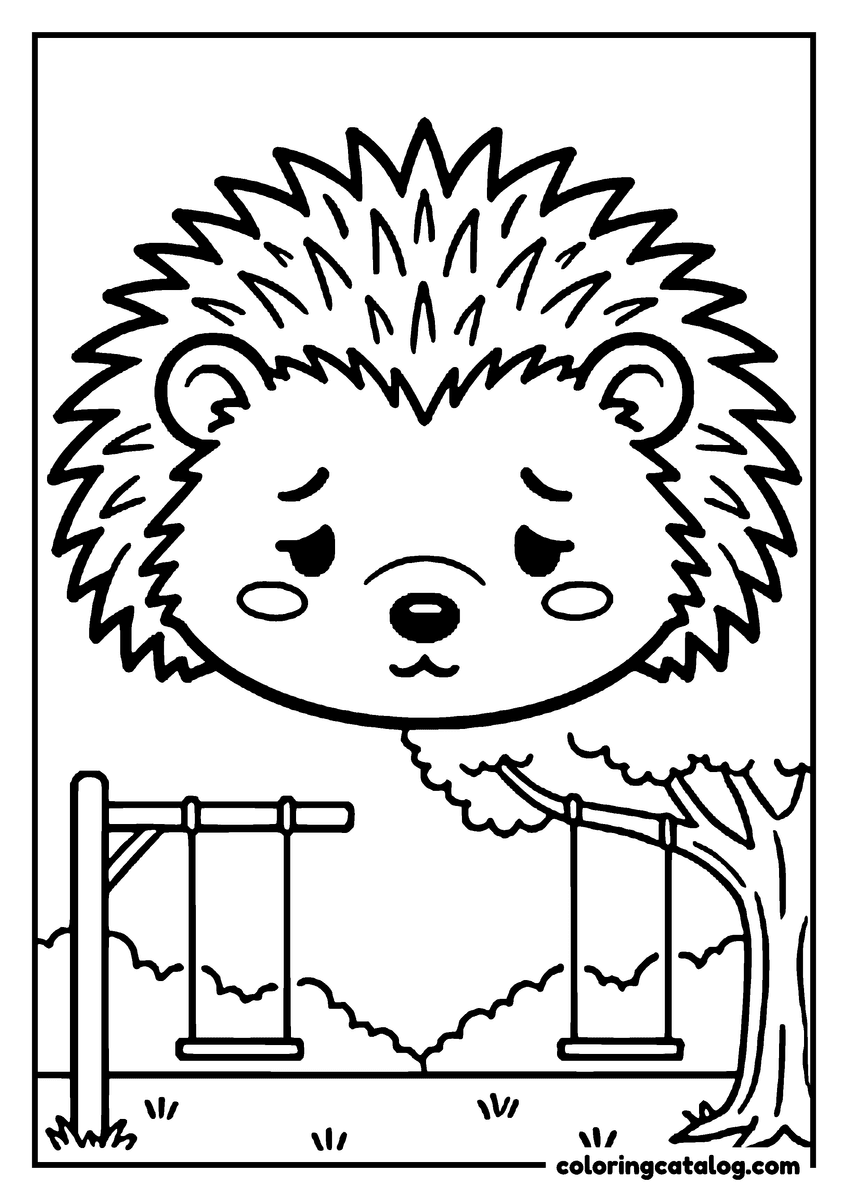
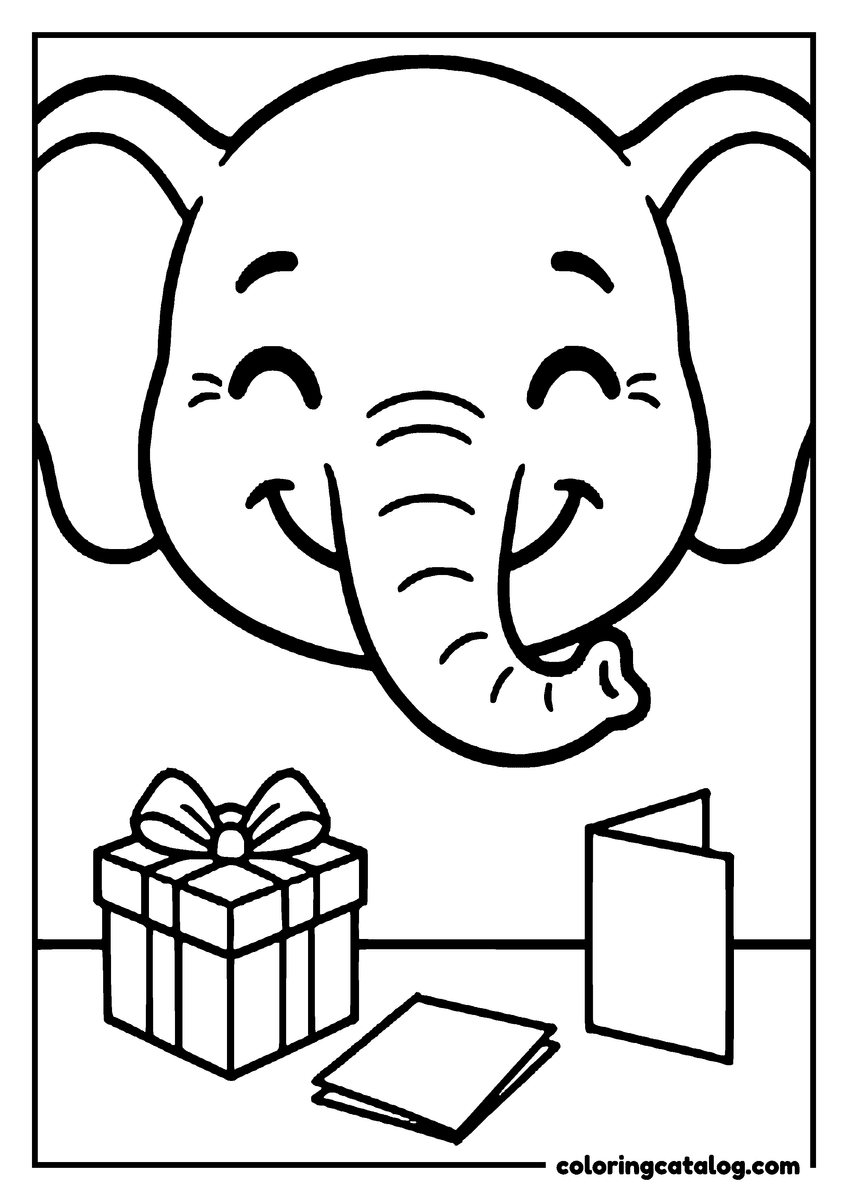
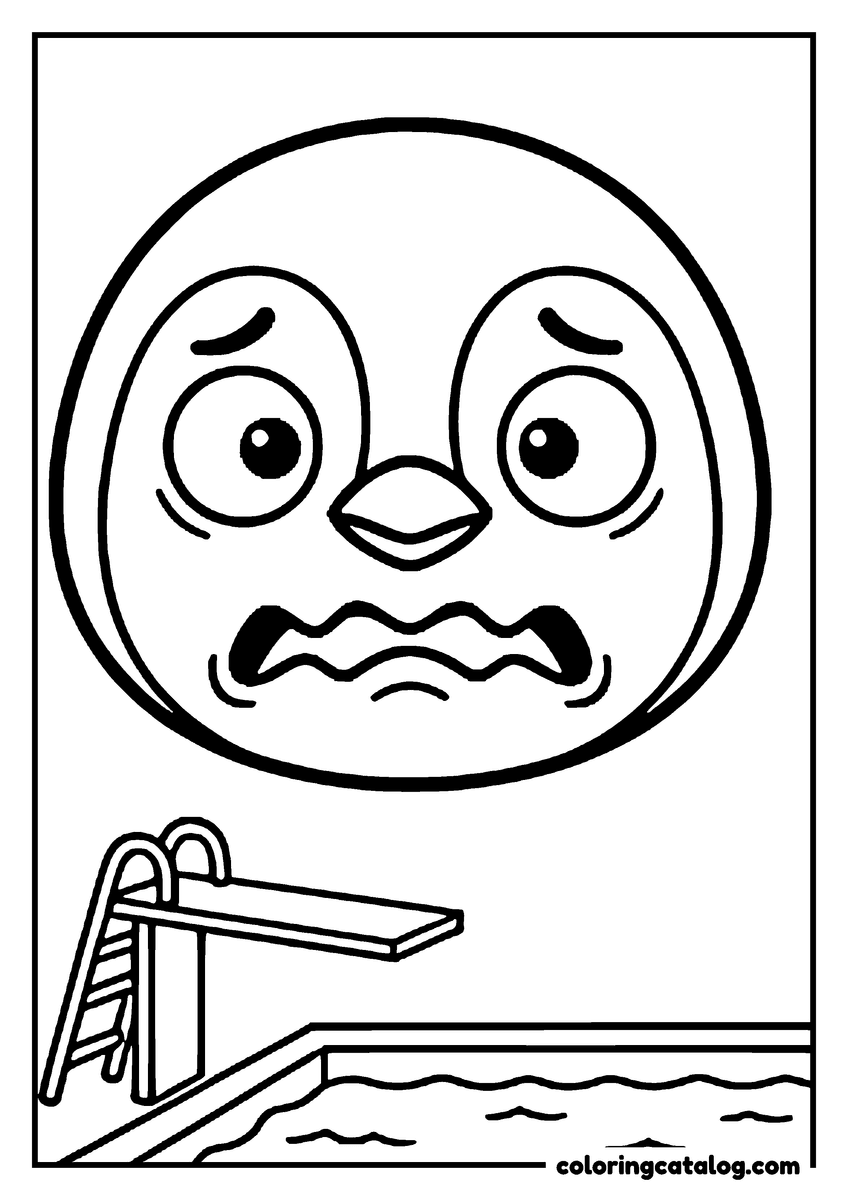
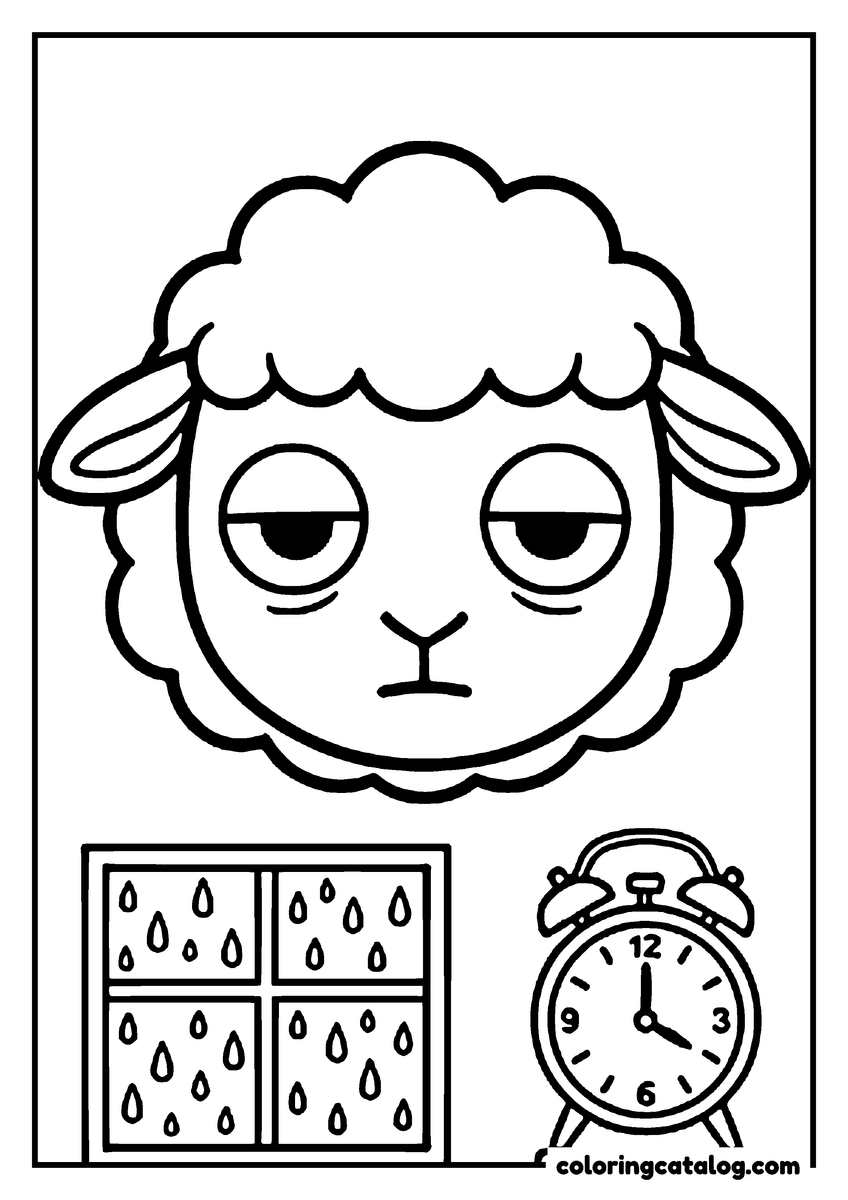
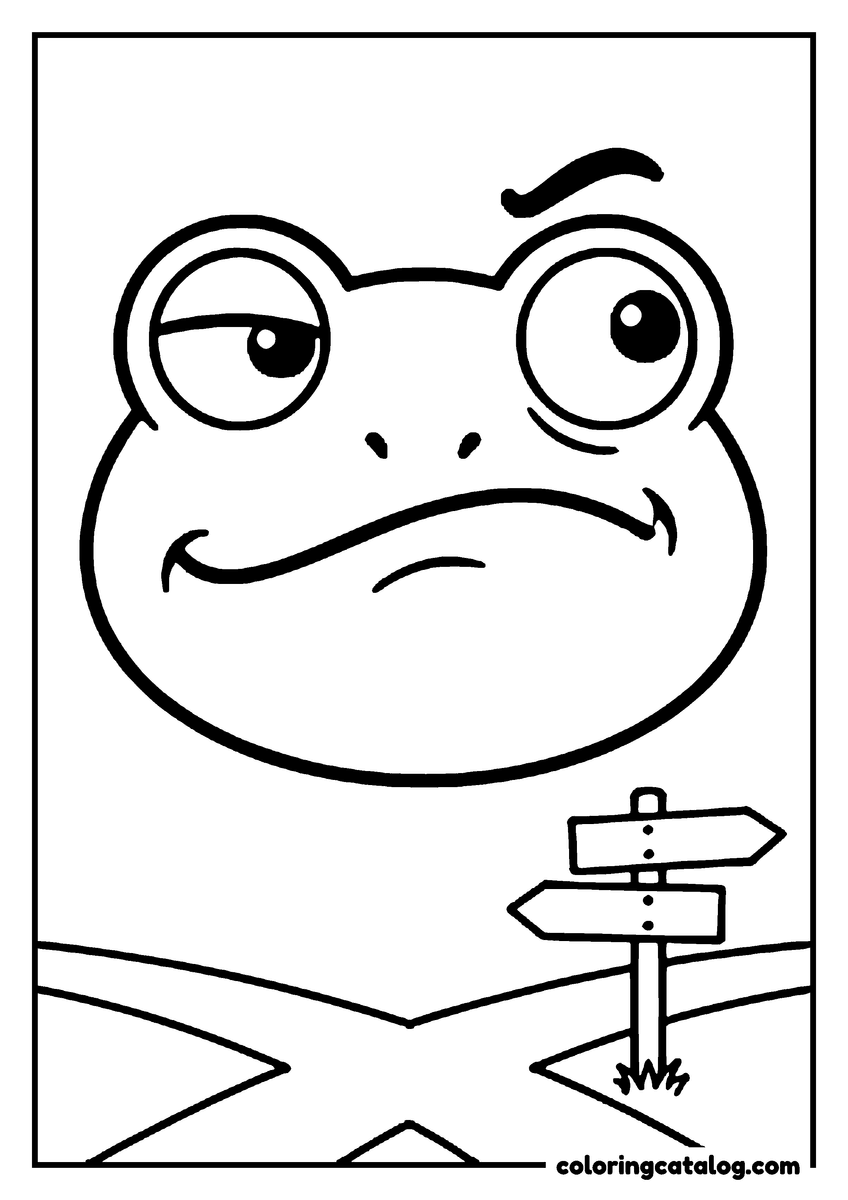
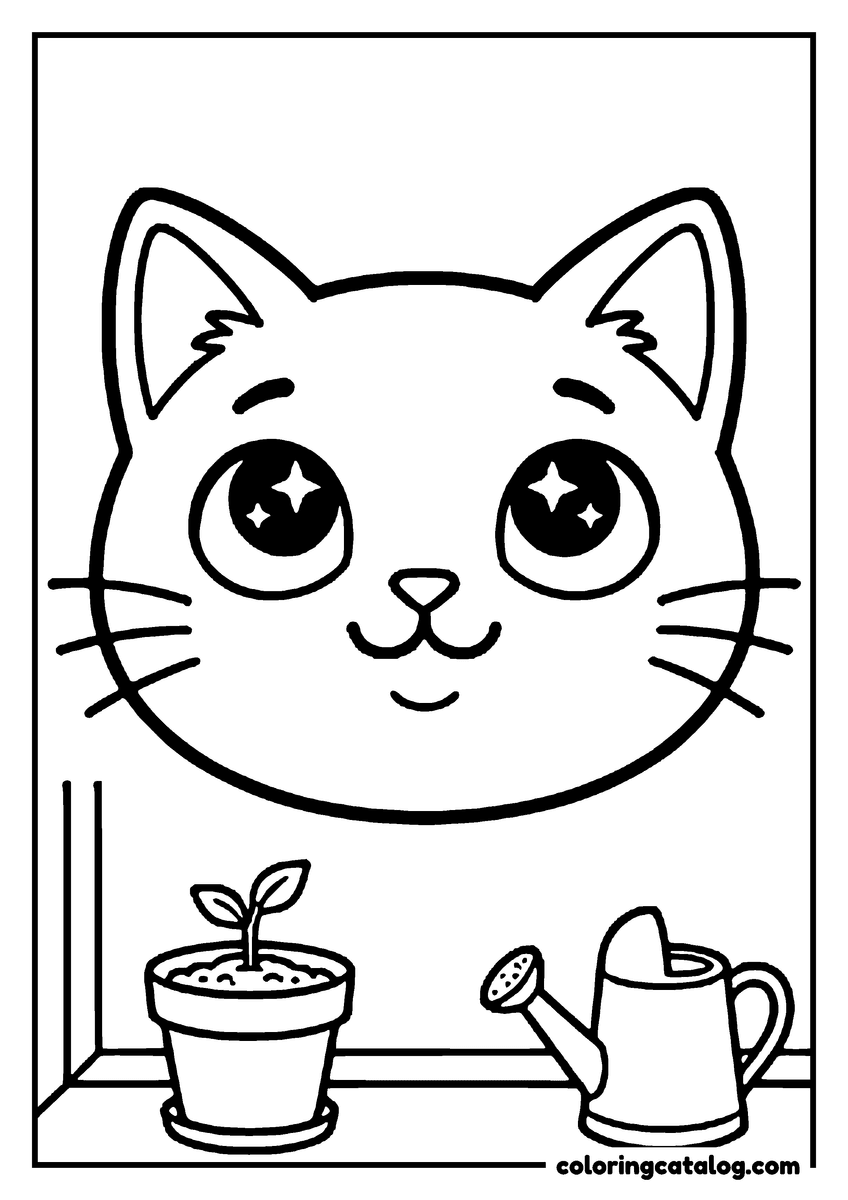
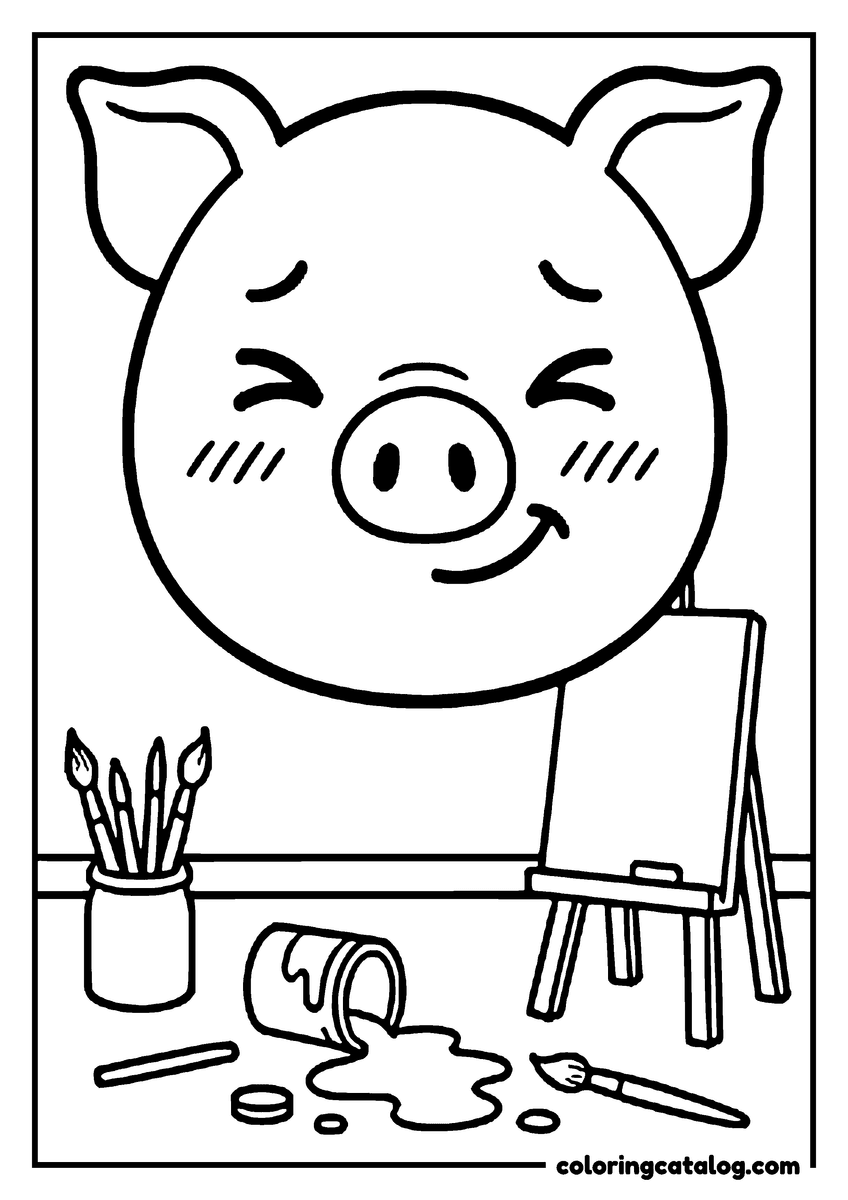
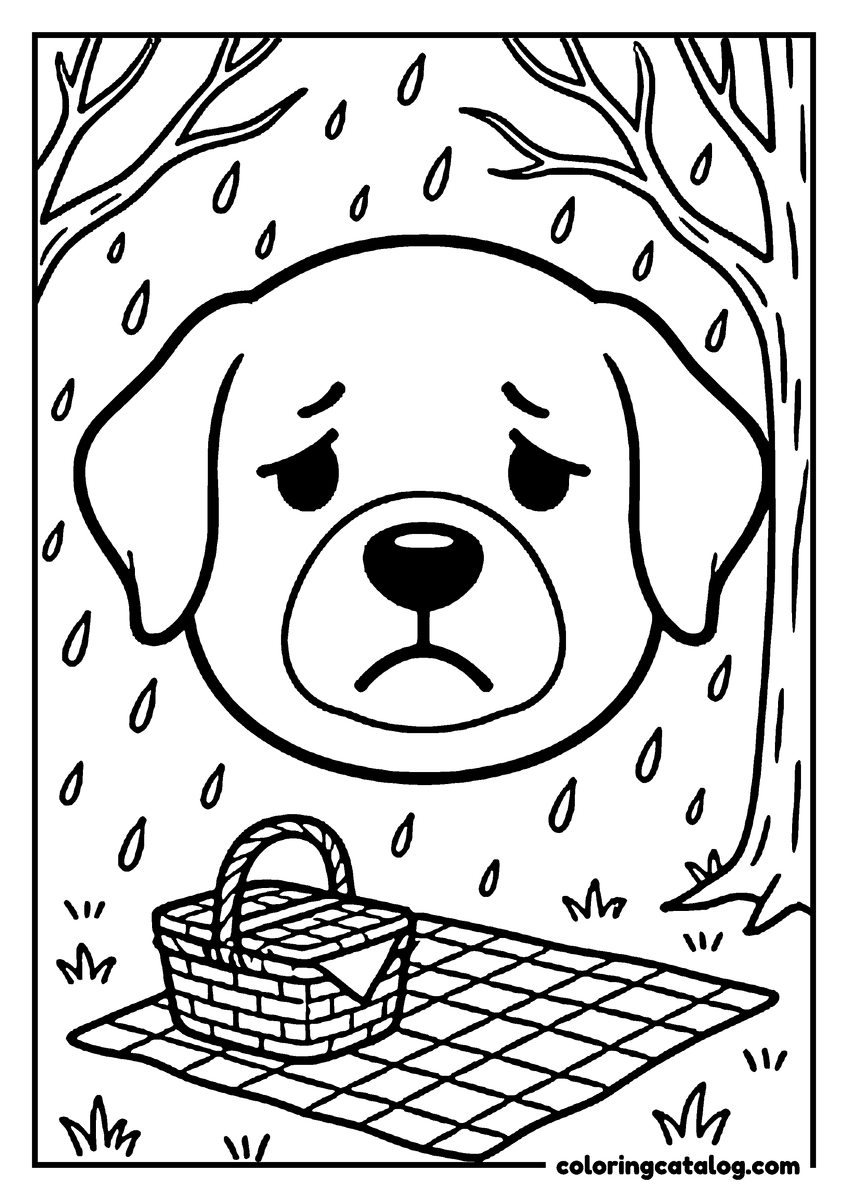
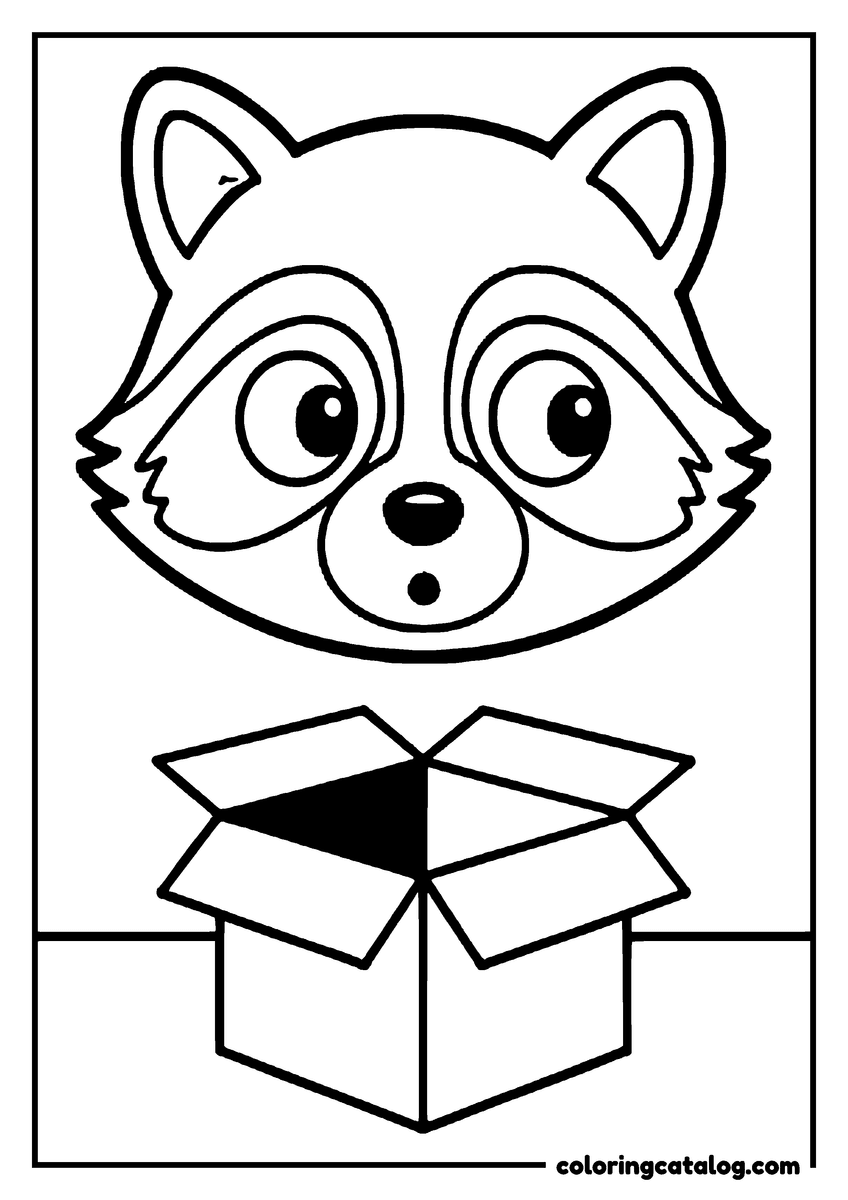
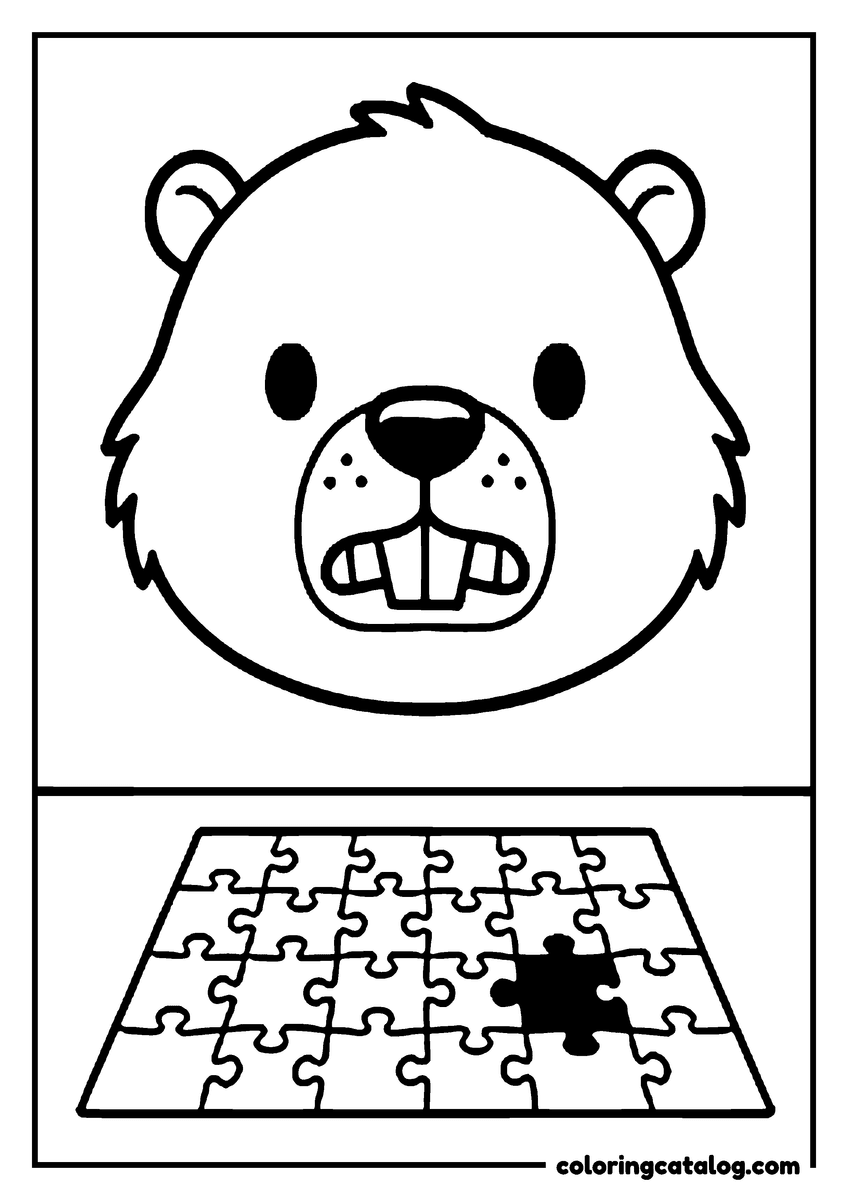
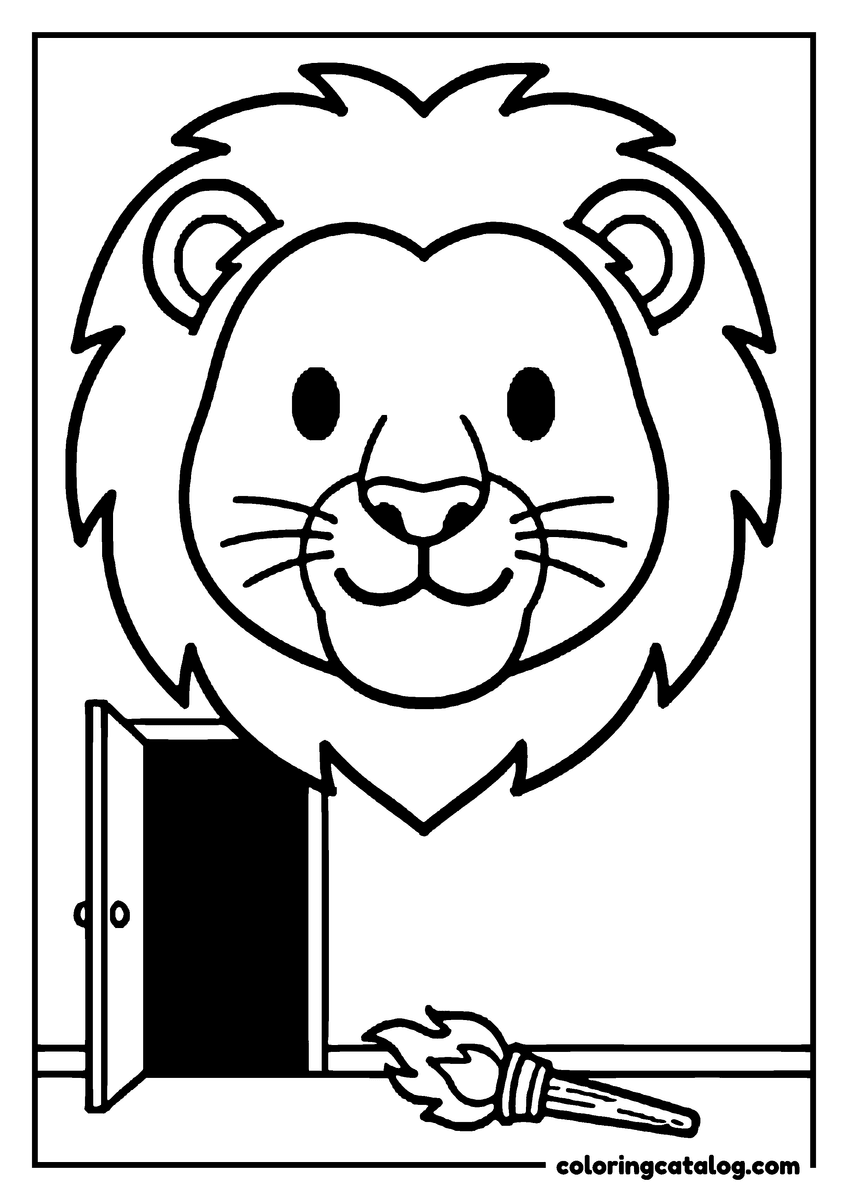
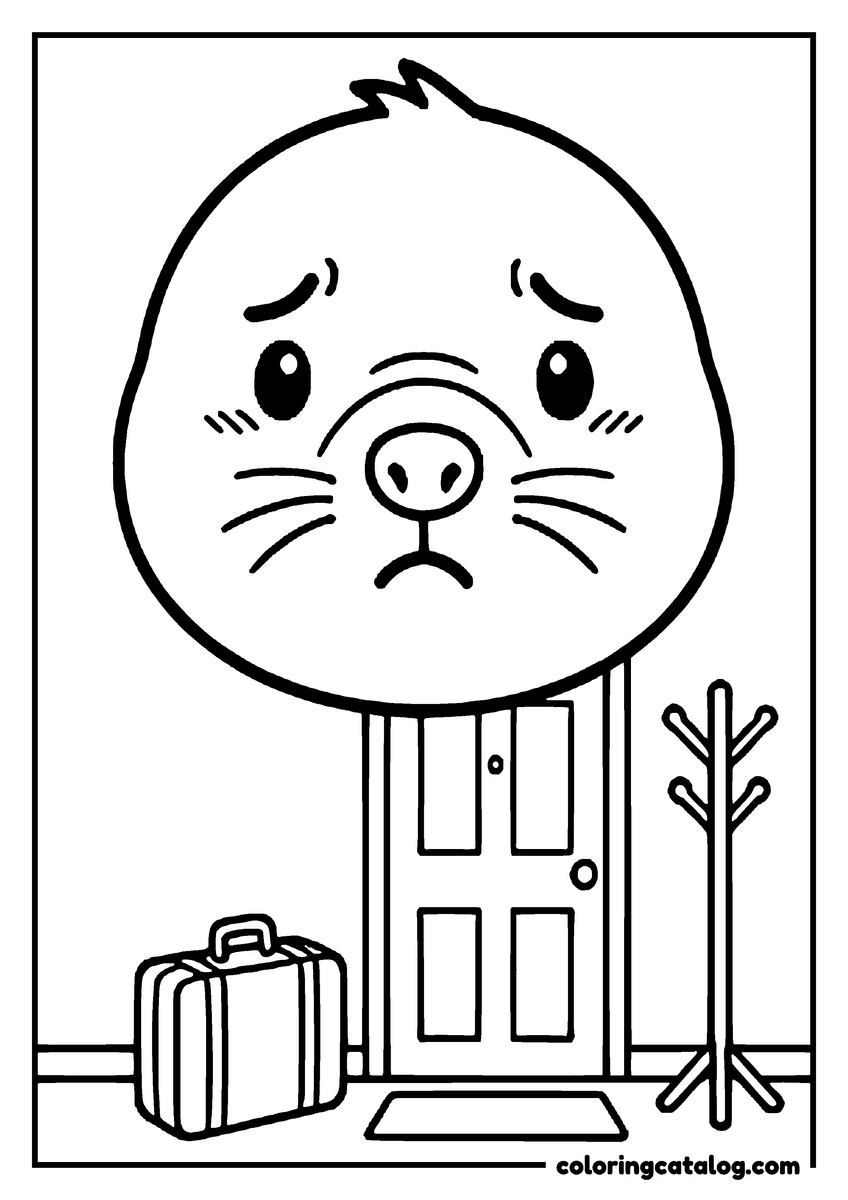
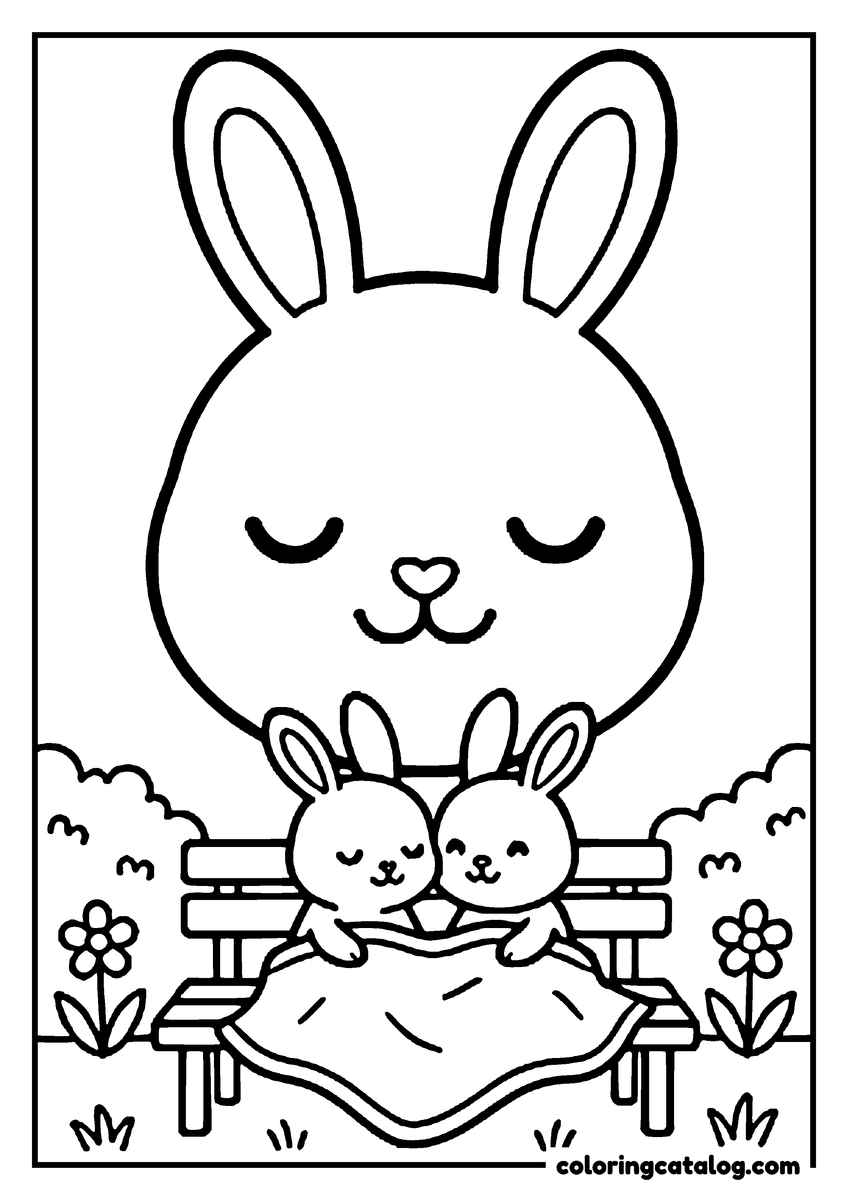
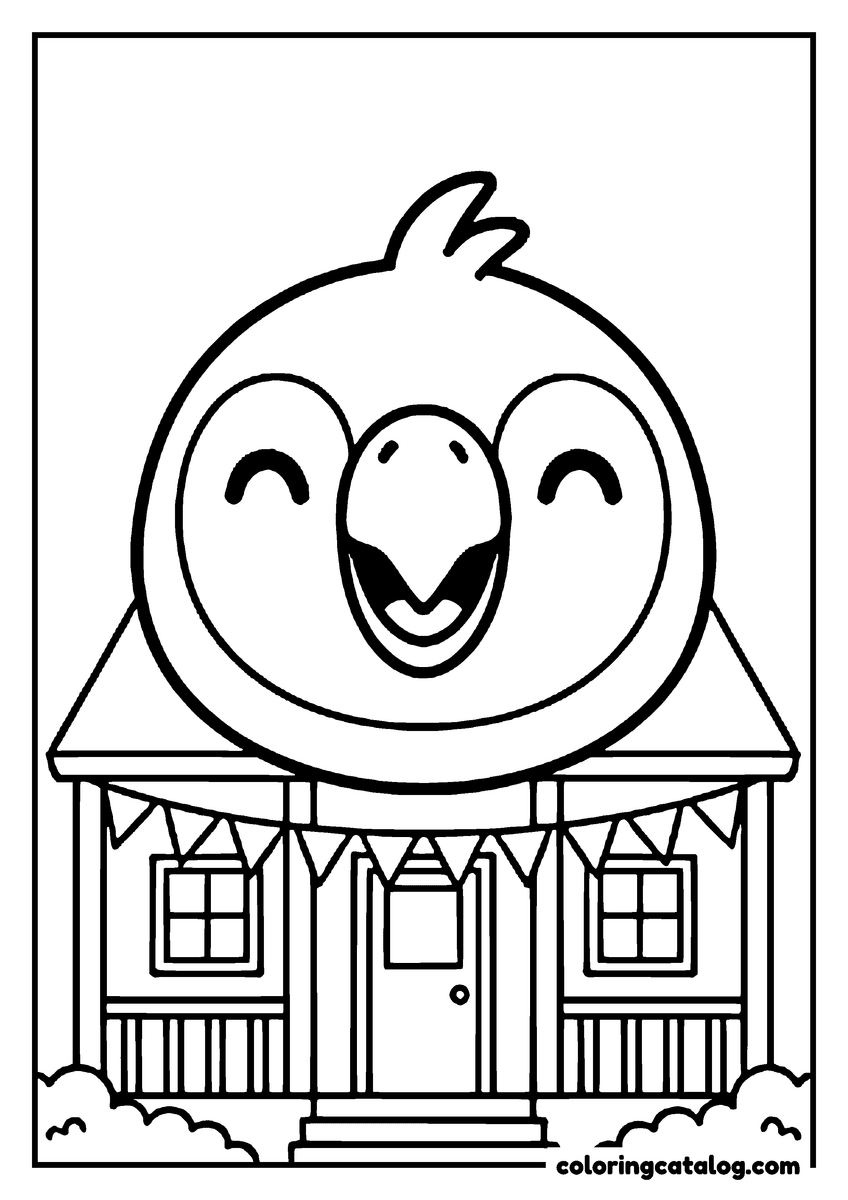
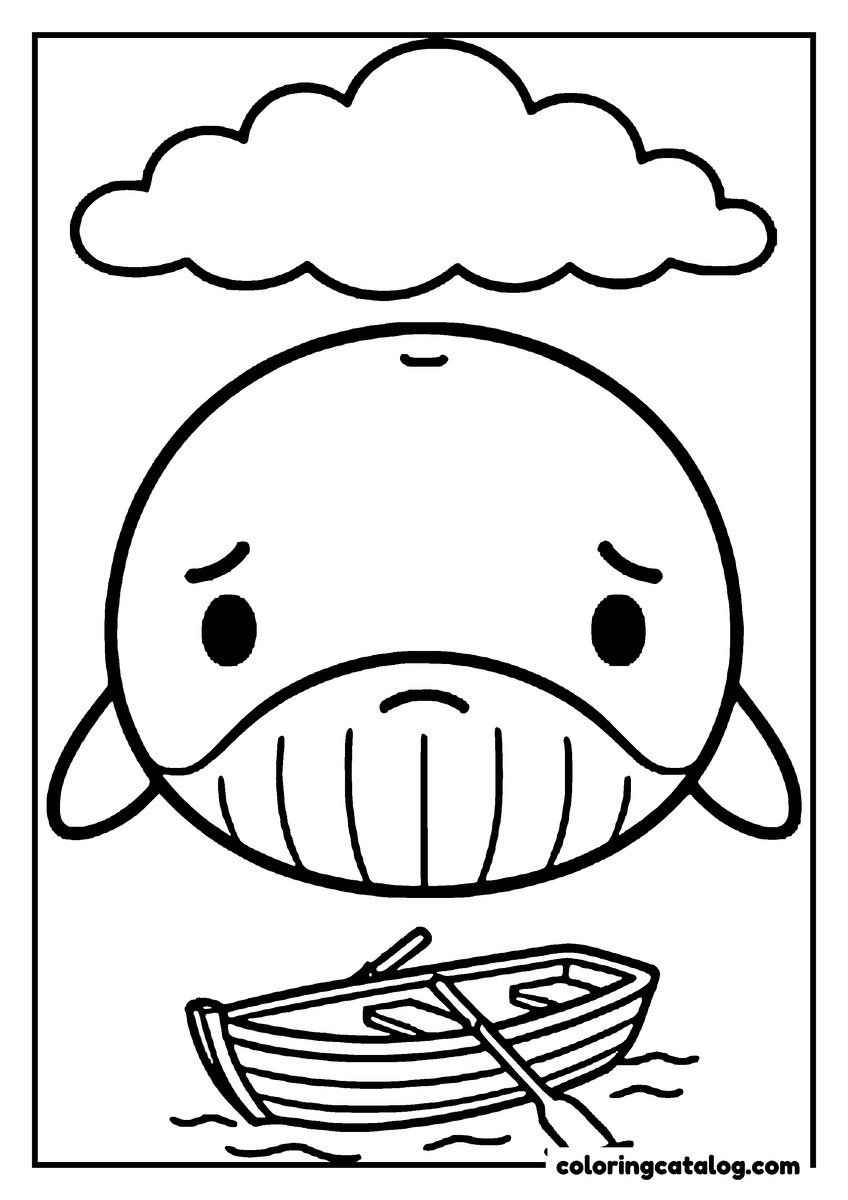
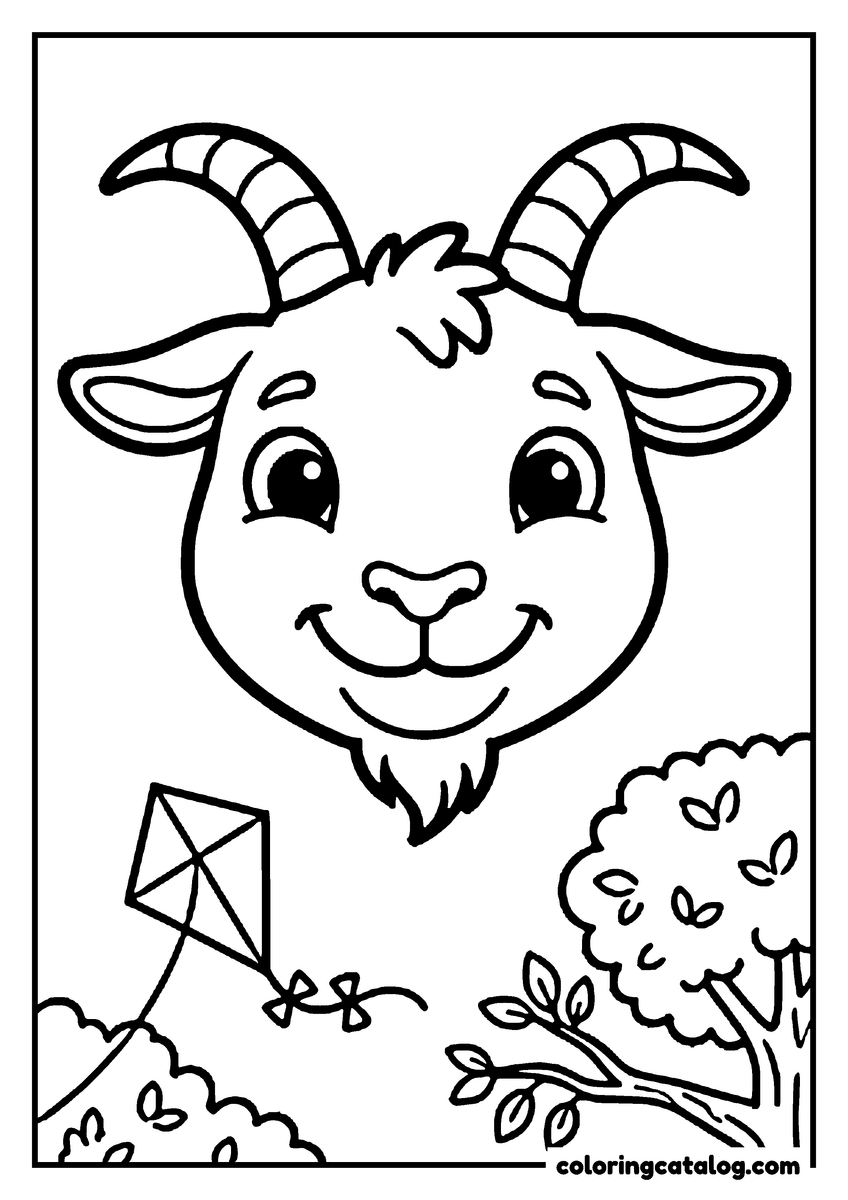
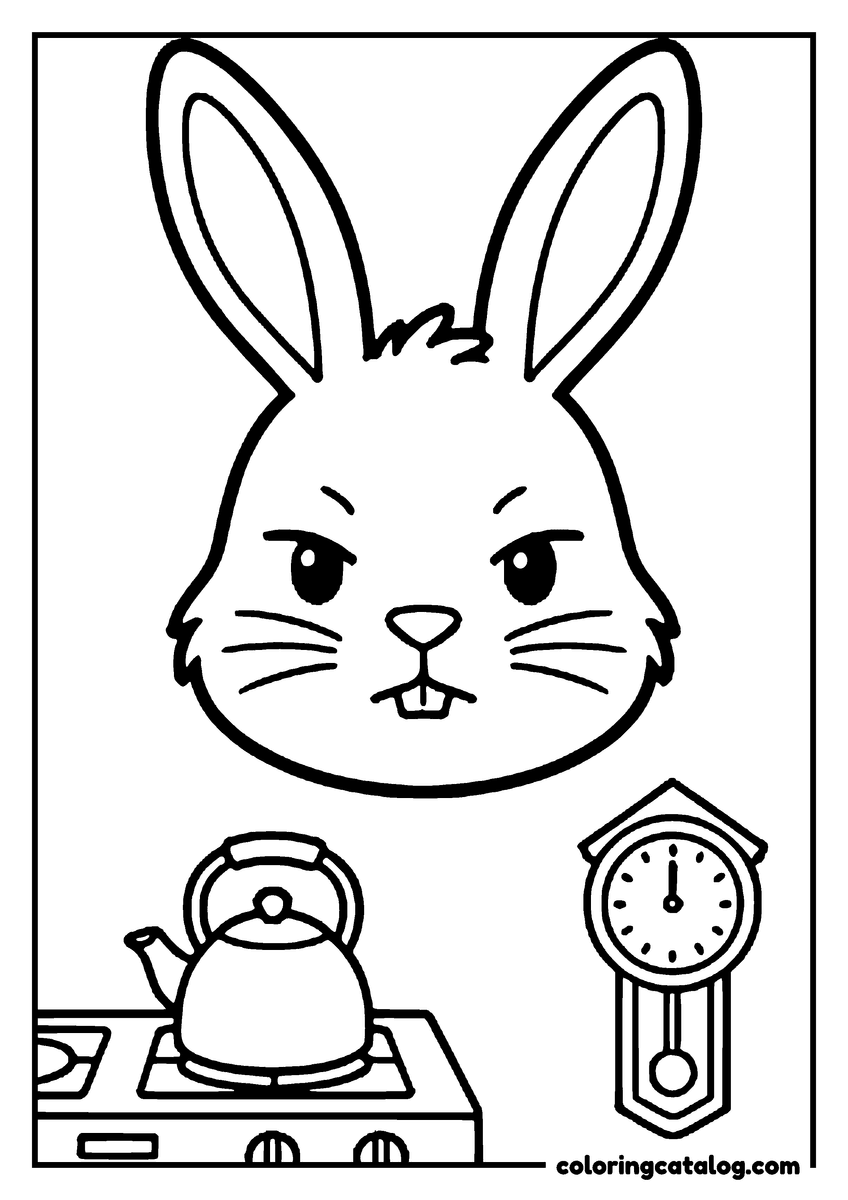
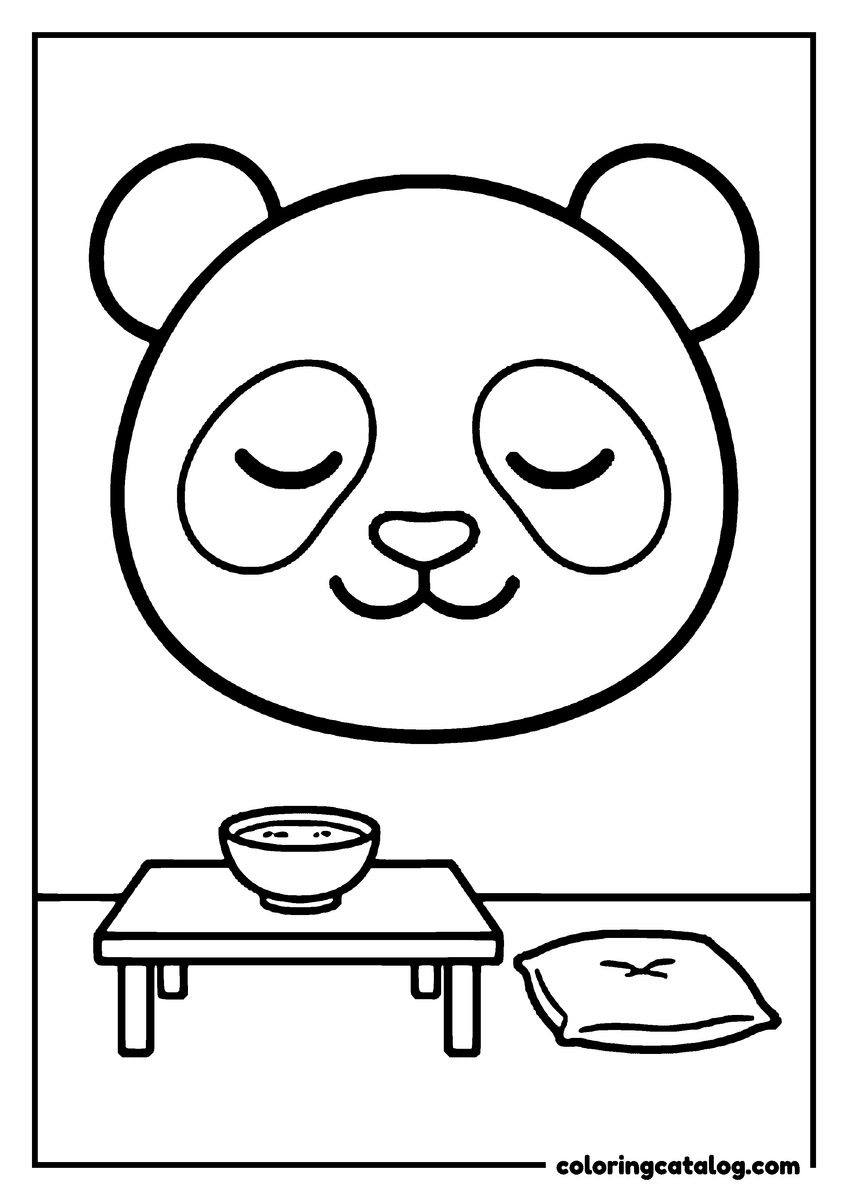
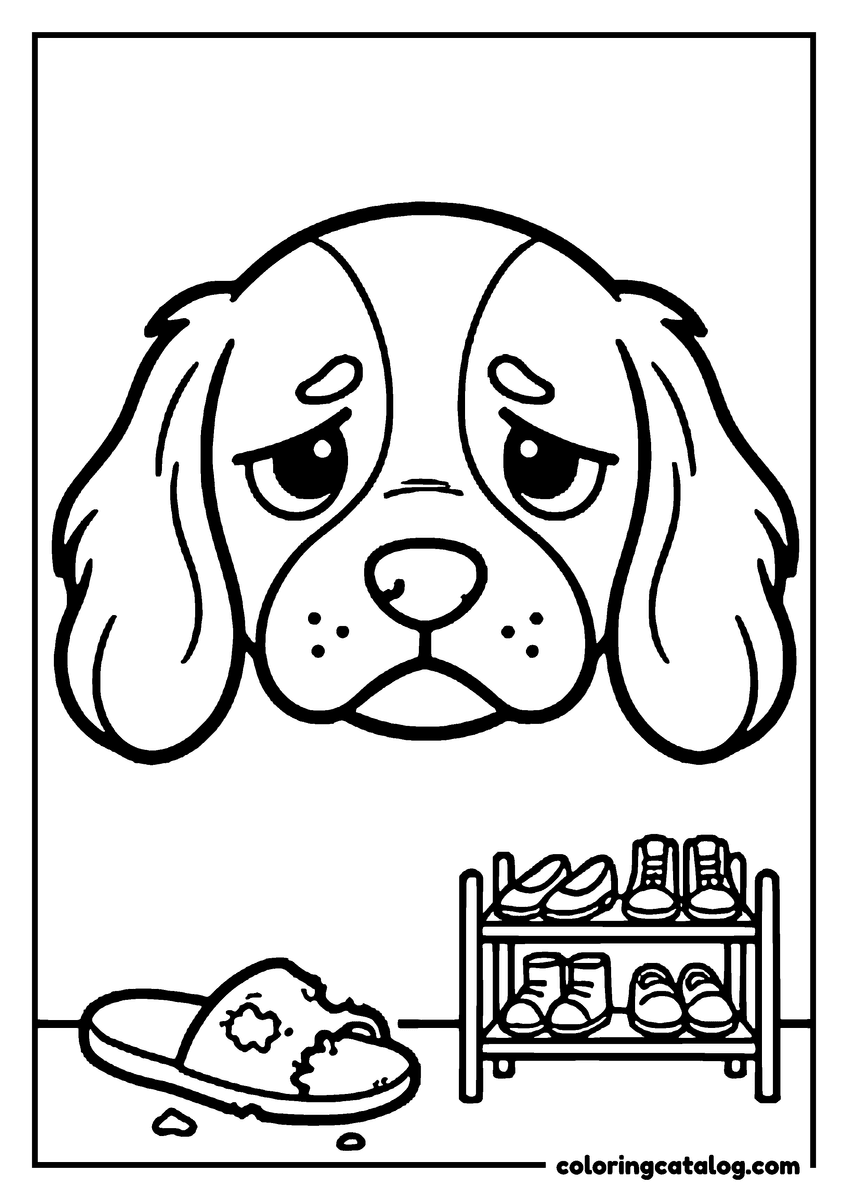
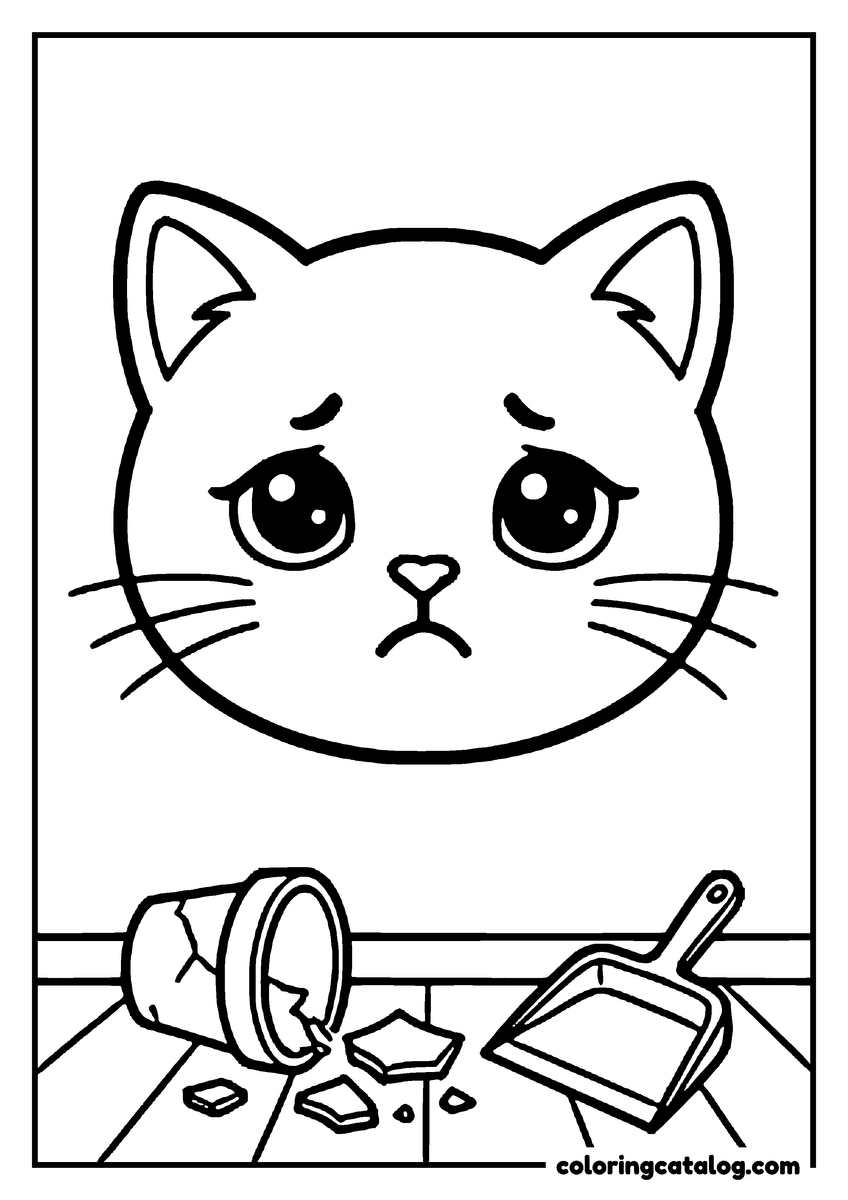
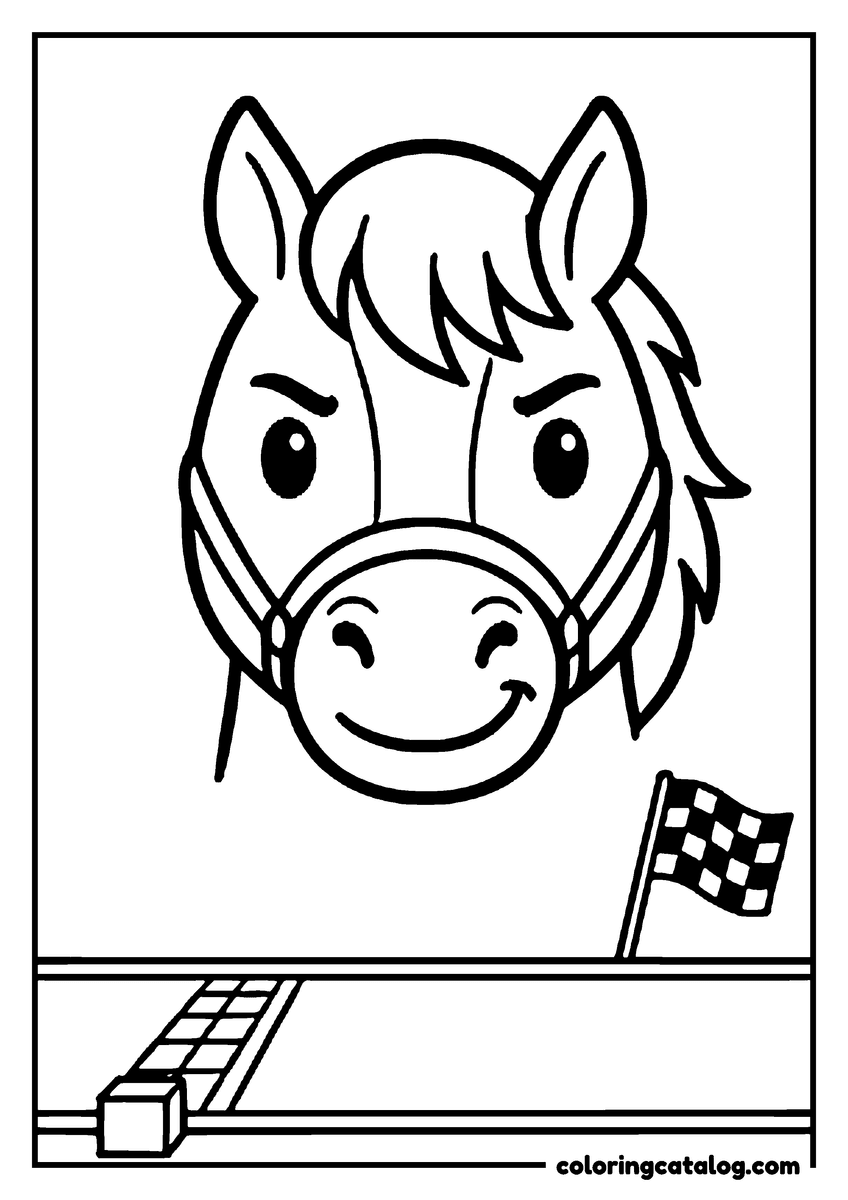
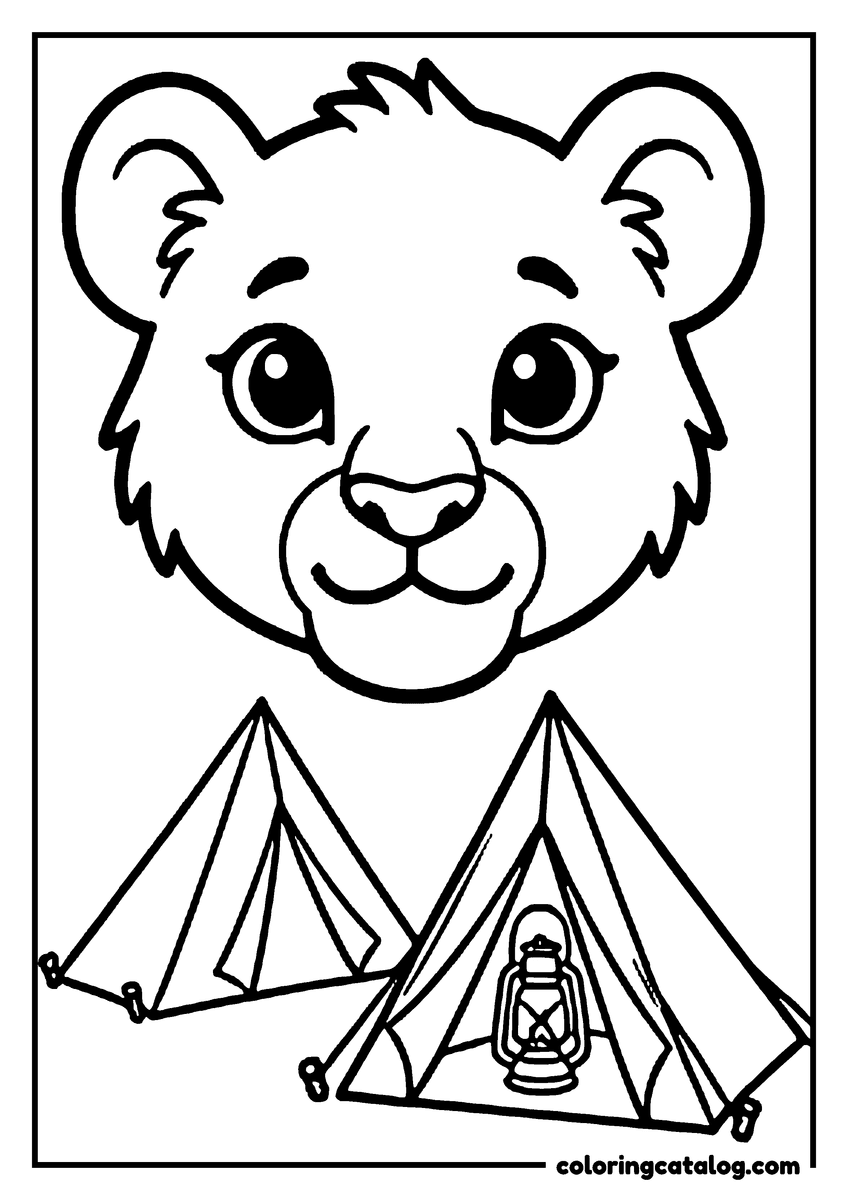
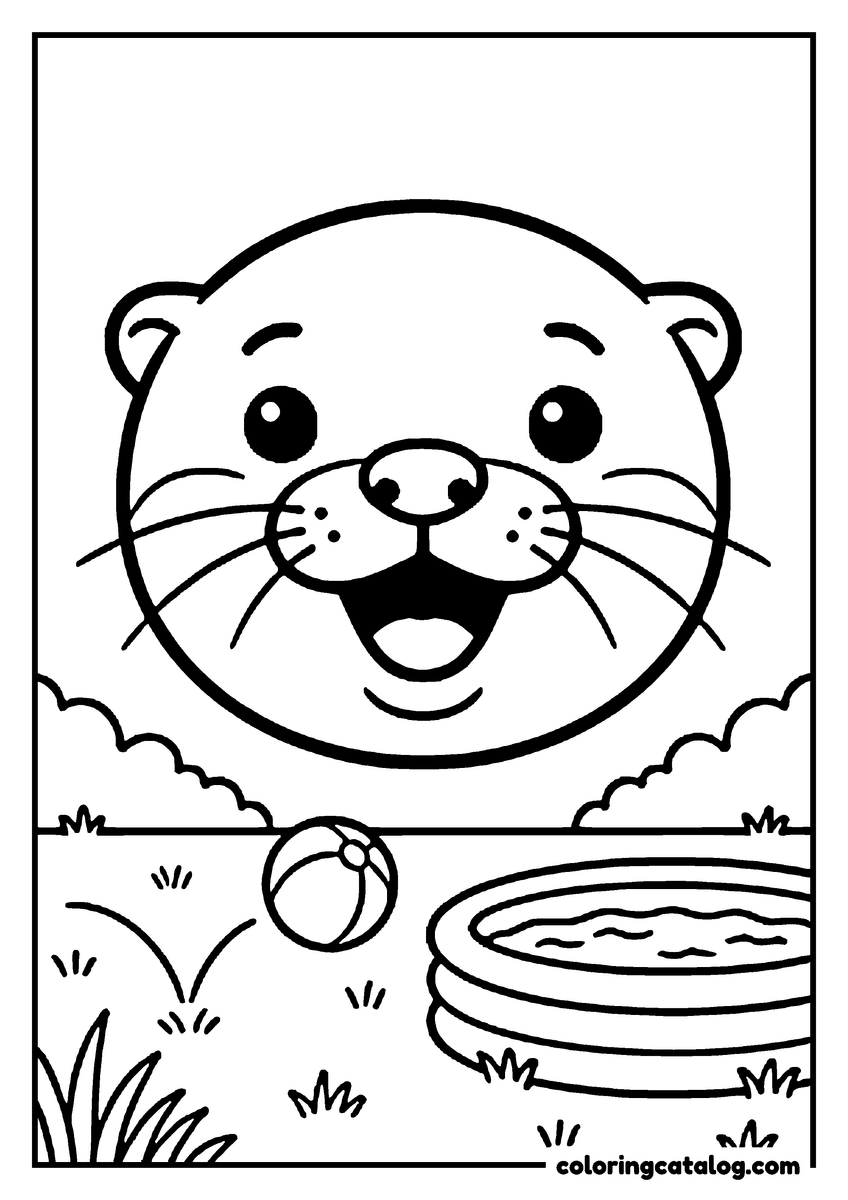
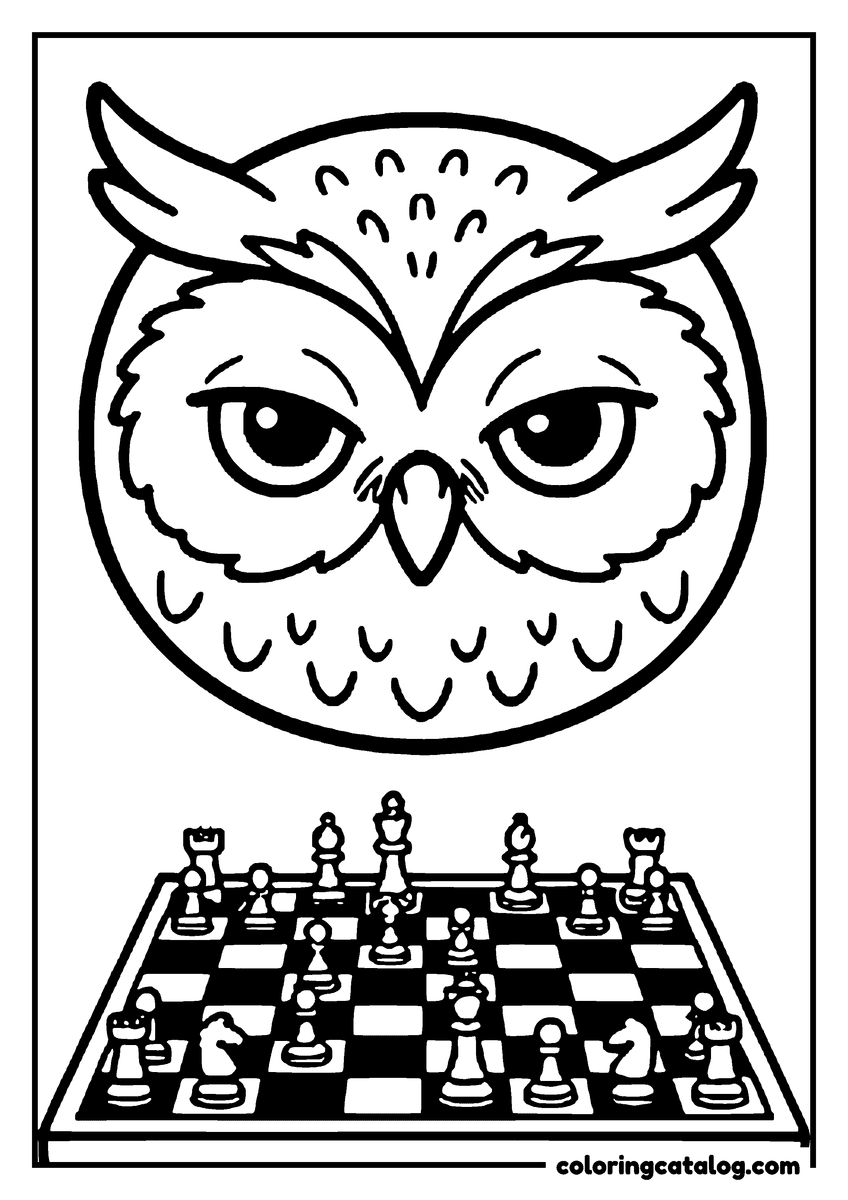
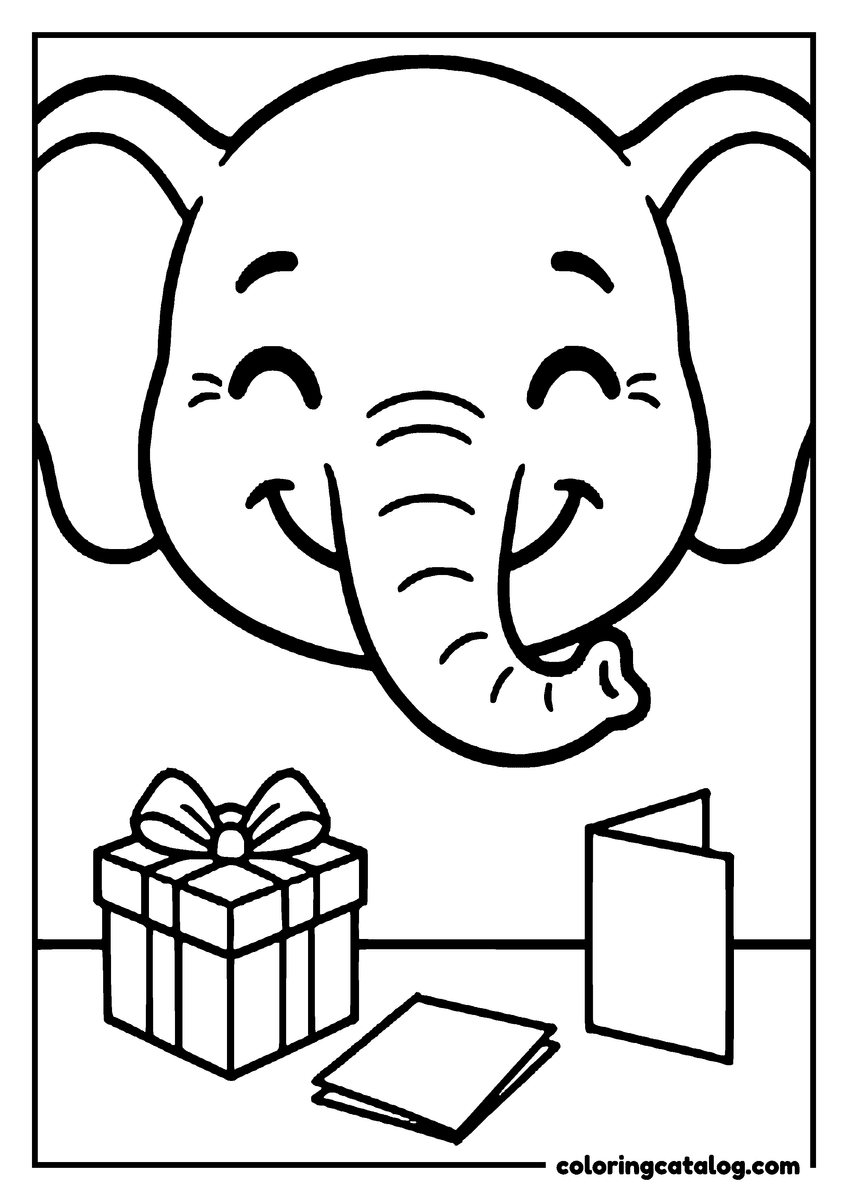
The rest leave the word out, so the child can name the feeling themselves. A koala yawns above its bed, a monkey pulls a silly face after a party, a hedgehog smiles a little sadly by an empty swing set, an elephant is thankful for a present and a card, a penguin looks nervous at the top of the diving board, and a sheep is bored by a rainy window and a slow clock. A frog is unsure at a signpost, a kitten is hopeful beside a seedling, a piglet blushes over spilled paint, a puppy is disappointed by a rainy picnic, a raccoon is puzzled by an empty box and a beaver is frustrated by a puzzle with one piece missing. A lion is brave at a dark doorway, a mole is worried by a suitcase at the front door, a bunny is full of love for two little bunnies, a parrot is joyful at a house hung with bunting, a whale is gloomy under its rain cloud and a goat is playful with a kite. A bunny waits impatiently for the kettle, a panda sits peacefully by a bowl, a puppy looks guilty next to a chewed slipper, a kitten is sorry about a broken flowerpot, a horse is determined at the starting line, a bear cub is content between two tents, an otter laughs by a paddling pool and an owl concentrates over a game of chess.
Why name a feeling at all
Young children feel strongly long before they have the words for it. A child who can say "I'm frustrated" instead of throwing the puzzle has a way out of the moment, and a child who hears the word "disappointed" often enough learns that the feeling has a name, that other people have it too and that it passes. Teachers and parents often call this building an emotional vocabulary, and it starts with the simple ones (happy, sad, angry, scared) before moving on to finer words like nervous, embarrassed or proud.
These pages are built for that. Each face shows one feeling with the eyebrows and mouth doing most of the work, and each scene gives a reason, so the conversation can go beyond "he looks sad" to "why is he sad, and what could help?"
Talking while coloring
Coloring is a good moment for these conversations because nobody has to look anyone in the eye. A few questions that work with almost every page:
- What is this animal feeling? For the pages without a word, let the child decide. There is often more than one right answer.
- What happened? Point at the scene below the face.
- Has that ever happened to you? Listen more than you talk.
- What could help? A hug, a new balloon, trying the puzzle again tomorrow.
Color can be part of the answer too. Some children choose blues and grays for the sad pages and bright yellows for the happy ones without being told; others do the opposite, and that is worth asking about as well.
Big faces for small hands
The faces are drawn large with thick outlines, so most pages suit preschoolers and children in the first years of school. Quick to color, above the grid, begins with:
- Puzzled raccoon
- Unsure frog
- Bored sheep
A few scenes below the faces, like the chessboard and the tents, have more small shapes. Lots of detail begins with:
- Disappointed puppy
- Joyful parrot
A feelings chart for the wall
Once a few pages are colored, cut out the faces and stick them in a row on the fridge or the classroom wall with a clothespin for each child. In the morning, or after a hard moment, each child clips their pin to the face that matches how they feel. It takes a minute and gives a child who cannot yet explain a way to show it. The pages without words are also good for a guessing game: hold up a face and let the others name the feeling.
Printing the feelings
Every page is a free A4 PDF drawn at 300 dpi. A4 prints at full size, and on US Letter "fit to page" shrinks the drawing by about six percent so every face and word stays on the paper. The printing guide shows the setting. Add to pack gathers a whole set of feelings into one file. More pages for the youngest are in the preschool coloring pages, pages about getting along in the friendship coloring pages, and more faces in the animal coloring pages and the kawaii coloring pages.
Emotions Coloring Pages: questions and answers
Which emotions are included?
Happy, sad, angry, surprised, curious, calm, excited, shy and proud come with their word printed on the page. Others, like nervous, bored, frustrated, brave, worried, guilty and thankful, are left without a word so the child can name them.
What age are these emotions pages for?
Mostly preschool to about seven. The faces are big and the scenes are simple, and the pages without words also work for older children as a guessing game.
Can I use them in a classroom?
Yes. They are free to print for home and classroom use, and they work well as a feelings chart or a circle time activity.
Which emotions page is easiest?
The faces with the least around them, like the happy bear and the calm turtle. Quick to color shows the simplest.
Same drawer